Image for Industrial Electrician Apprenticeship

Apprenticeship

Industrial Electrician Apprenticeship

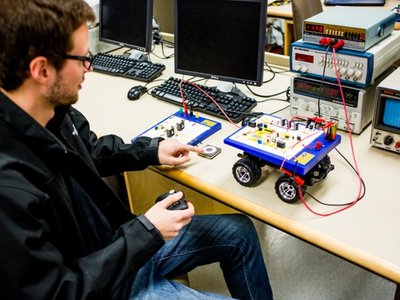
In the Industrial Electrician Apprenticeship program, you will learn how to install, maintain, and troubleshoot industrial electrical systems through hands-on lab work and structured on-the-job training.

Program Start Options

IntakeDurationFormatCampusDomesticInternational
442A Trade code
Any Time
2–5 years (varies by trade)
Part-Time
In-Person
Thunder Bay
Domestic students accepted
International students not accepted

The Industrial Electrician Apprenticeship is a comprehensive program designed to equip apprentices with the skills, knowledge, and hands-on experience necessary to excel in the industrial electrical trade. This program focuses on various key aspects of the industrial electrician's role, including installation, maintenance, troubleshooting, and repair of complex electrical systems in an industrial setting.

Program Structure

  • Duration: The apprenticeship duration aligns with industry standards, offering a balanced mix of on-the-job training and in-class theoretical learning.
  • Updated Training Standards: Following the implementation of the new standard as of February 1, 2018, the program includes expanded skill sets and updated competencies to meet current industry demands.

An Industrial Electrician Apprenticeship is generally trained in areas such as:

  • Canadian Electrical Code
  • Installation Methods
  • Electrical Theory
  • Industrial Fluid Power – Advanced level only
  • Prints
  • Instrumentation
  • Monitor and Communications

Top Highlights

  • In-depth Training: Apprentices will learn to lay out, inspect, assemble, install, and maintain a wide range of electrical fixtures, control equipment, and wiring systems specific to industrial environments. This includes motors, generators, distribution systems, lighting systems, and more.
  • Skill Development: The program emphasizes developing skills in systematically diagnosing faults in electrical and electronic systems, repairing or replacing components, and ensuring the efficient operation of various industrial electrical systems.
  • Hands-On Experience: Apprentices gain practical experience in measuring, cutting, threading, bending, assembling, and installing conduits and other electrical conductor raceways, along with splicing and terminating electrical conductors.
  • Safety and Compliance: A strong focus is placed on following safety procedures, particularly when working with hazardous substances and electrical hazards, ensuring compliance with industry standards and regulations.
  • Updated Curriculum: Reflecting the changes in the industry, the program incorporates the latest skills such as handling arc flash and arc blast rated personal protective equipment, working with automated control systems, and understanding new wiring systems and power distribution methods.
  • Red Seal Trade Accreditation: As a Red Seal trade, this program aligns with the highest standards of the electrical trade, allowing for national recognition of the skills and knowledge acquired.

Ideal Candidate Profile

This program is ideal for individuals who have an interest in electrical systems, problem-solving, and working in industrial environments. Candidates should be prepared for physically demanding work and have an aptitude for technical tasks and safety compliance.

Contact Information

Admission Requirements

Any Time

Any Time (442A Trade code)

Admission Requirements for Domestic Students

  1. To be eligible for an apprenticeship, you must:
    • Be at least 18 years of age (16 years of age in limited cases)
    • Have legal permission to work in Canada (i.e., have a valid social insurance number)
    • Meet the educational requirements of the trade.
      Grade 12 or equivalent is the generally accepted standard, however, grade 10 or equivalent may be accepted by some sponsors.
    • Have a sponsor located in Ontario. This can be a private employer, association or union.
  2. Apply for an apprenticeship through Skilled Trades Ontario(opens in new window). This step is usually completed when you have received an offer of employment from a sponsor.
  3. After completing the apprenticeship application, a Registered Training Agreement will be drafted by the Ministry of Labour, Immigration, Training and Skills Development (MLITSD). The apprentice and their sponsor will both sign this document, officially recognizing the apprentice to begin the training process through their employer.

Admission Requirements for International Students

This program is not currently available for international students.
To enroll in an apprenticeship program, international students must meet specific criteria, including possessing a valid Social Insurance Number (SIN) and securing a sponsor.

Prerequisites

People who want to become apprentices must apply directly to employers, unions or joint apprenticeship training committees for the trade they are interested in. Most trades require between two and five years of work and training to become certified. During that time apprentices will be notified of offers to attend in-class training at the closest available training facility.

Apprentices are permitted to attend other training facilities within Ontario if they choose by making arrangements with their local Ministry office in advance

Student Accessibility and Essential Program Requirements

Confederation College is committed to providing an accessible and inclusive learning environment and will provide reasonable accommodations to students with disabilities in accordance with the Ontario Human Rights Code, the Accessibility for Ontarians with Disabilities Act (AODA), and College policy.

Students who require accommodations are encouraged to engage with Student Accessibility Services and are responsible for initiating and participating in the accommodation process. Accommodation is a collaborative process involving the student, Student Accessibility Services, faculty, and the Academic School. Requests for accommodation are considered on an individual basis, and the College will work with students to identify reasonable accommodations that provide equitable access to learning while maintaining the integrity of the program.

Students are expected to demonstrate the essential knowledge, skills, professional behaviours, learning outcomes, and competencies required to successfully complete their program. While the manner in which these requirements are demonstrated may be accommodated where appropriate, the essential requirements themselves must still be achieved.

For programs involving laboratories, field work, clinical placements, aviation environments, trades training, equipment operation, simulations, community placements, or other environments where health and safety are critical, accommodations must also be consistent with applicable legislation, professional standards, licensing requirements, accreditation standards, and workplace safety obligations.

In some circumstances, a requested accommodation may not be reasonable or possible where it would:

  • Fundamentally alter an essential program requirement, competency, or learning outcome.
  • Compromise the health or safety of the student or others.
  • Conflict with provincial or federal legislation.
  • Conflict with the requirements of an external regulatory, licensing, accreditation, or professional body.
  • Prevent the student from demonstrating competencies required for safe and effective professional practice.
Note

Where a particular accommodation cannot be provided, the College will work collaboratively with the student to identify whether an alternative accommodation can appropriately address the student’s disability-related needs while maintaining essential program requirements.


Tuition & Fees

Unique in its structure, this program only runs for Level 3 at $500.00.

Note

Fees are subject to change, and it is advisable to confirm the current fees for accurate planning.

Note

Please note that fees are estimated and are subject to change.

Fees shown on this page are for full-time students attending the main Thunder Bay campus for Fall 2026.

Costing for Regional Campuses & Distance Education Students:

If this program is available at Regional Campuses, or to Distance Education students, see the following links for costing information.

Courses

  1. Electrical Fundamentals
    • Introduction to basic electrical concepts
    • Electrical laws and principles
  2. Blueprint Reading and Schematic Interpretation
    • Understanding and interpreting electrical blueprints and schematics
    • Creating and modifying electrical drawings
  3. Industrial Electrical Equipment
    • Introduction to motors, generators, and transformers
    • Operation and maintenance of industrial electrical equipment
  4. Safety and Code Compliance
    • Electrical safety standards and practices
    • Overview of the Canadian Electrical Code
  5. Wiring Methods and Practices
    • Techniques for installing various wiring systems
    • Conduit bending and cable installation
  6. Control Systems and Automation
    • Basics of automated control systems, including PLCs
    • Installation and troubleshooting of control systems
  7. Instrumentation and Measurement
    • Use and maintenance of test and measuring equipment
    • Understanding instrumentation devices
  8. Power Distribution and Systems
    • Study of low and high-voltage power distribution
    • Installation and maintenance of power systems
  9. Motor Drives and Control Systems
    • Working with AC and DC motor drives
    • Installation and maintenance of motor control systems
  10. Renewable Energy Systems
    • Introduction to renewable energy technologies
    • Installation and maintenance of solar and wind power systems
  11. Communication and Signalling Systems
    • Installation and maintenance of low-voltage communication systems
    • Understanding of communication and signalling in industrial settings
  12. Practical Lab and Workshop Training
    • Hands-on practice in a simulated industrial environment
    • Application of learned skills in real-world scenarios
  13. Workplace Communication Skills
    • Effective communication in an industrial setting
    • Use of communication devices and computers in the trade
  14. Advanced Electrical Theory and Practice
    • Deep dive into complex electrical concepts
    • Advanced troubleshooting techniques
  15. Emergency and Standby Power Systems
    • Installation and maintenance of emergency power systems
    • Working with backup generators and UPS systems
  16. Capstone Project
    • Integrative project to showcase skills and knowledge
    • Real-world problem-solving in industrial electrical systems

Elective Courses (Optional)

  1. Specialized Welding Techniques for Electricians
    • Basic welding skills applicable to electrical trade
    • Focus on oxy-fuel cutting and welding procedures
  2. Advanced Automation Systems
    • In-depth study of complex automation and robotic systems
    • Programming and maintenance of advanced control systems
  3. Data Centers and Critical Infrastructure
    • Electrical systems in data centers and critical facilities
    • Focus on reliability and redundancy in power systems

Courses are delivered on a rotating basis according to the number of apprentices in each level.

Meet the Program Staff

1 staff member

Careers

Diverse Career Paths

The Industrial Electrician Apprenticeship program opens the door to a wide array of employment opportunities in various sectors. Graduates are equipped with the skills necessary to excel in diverse industrial settings, including but not limited to:

  • Manufacturing Plants: Involves working with complex machinery and production line electrical systems, focusing on installation, maintenance, and optimization of electrical components.
  • Power Generation and Distribution: Opportunities in energy production facilities, such as hydroelectric, solar, and wind power plants, as well as roles in electrical distribution networks.
  • Automotive Industry: Specialized roles in the automotive sector, particularly in plants that focus on the manufacturing and assembly of vehicles, dealing with automated and robotic systems.
  • Mining and Resource Extraction Industries: Working in environments that require robust electrical systems, including mining operations and natural resource processing plants.
  • Petrochemical and Chemical Industries: Roles in industries that require intricate electrical systems for process control and safety systems in chemical processing plants.

Advanced Roles and Specializations

As industrial electricians gain experience, they can advance into more specialized or senior roles, such as:

  • Maintenance Supervisor: Overseeing maintenance teams and scheduling repairs and preventive maintenance activities in industrial settings.
  • Electrical Project Manager: Managing large-scale electrical projects, including planning, execution, and compliance with industry standards.
  • Control Systems Specialist: Specializing in automated control systems, including programming and maintenance of PLCs (Programmable Logic Controllers) and other automated machinery.
  • Safety Compliance Officer: Focusing on ensuring electrical safety standards are met, conducting safety audits, and training staff on safety protocols.

Growing Industries

With the constant evolution of technology and a growing focus on renewable energy and automation, industrial electricians are in high demand in sectors that are at the forefront of innovation, such as:

  • Renewable Energy: As the world shifts towards sustainable energy sources, opportunities in solar, wind, and other renewable energy sectors are expanding.
  • Automation and Robotics: With the increased adoption of automation in manufacturing and other industries, skilled electricians are needed to install, maintain, and troubleshoot these advanced systems.

Employment Stability and Advancement

  • Stable Career Choice: Industrial electricians benefit from a stable career path due to the essential nature of electrical systems in industrial operations.
  • Opportunities for Advancement: With experience and ongoing education, industrial electricians can advance to higher-paying roles and take on more responsibilities.
  • Red Seal Accreditation: As a Red Seal trade, certified industrial electricians have the opportunity to work across Canada, enhancing job mobility and opportunities.

Pathways

Confederation College offers a variety of articulation agreements designed to help you advance your education and career. Whether you're coming to us from another institution or planning your next steps after completing your program, our pathways make your transition seamless and effective.

Students at Confederation College

We're here to help

Have questions before you apply?

Not sure if this is the right fit? Our recruitment team can help you navigate admission requirements, program details, and campus life.