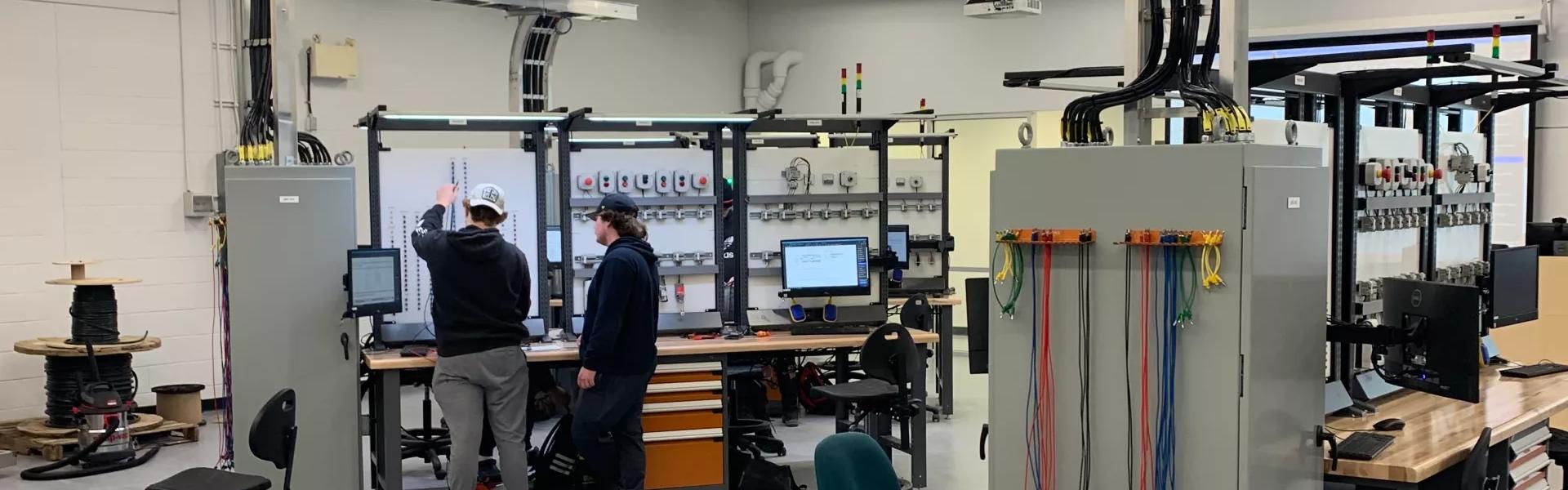
Prepare for an exciting career in the electrical industry with hands-on training in modern electrical systems, automation, and controls. This program equips you with the skills and knowledge needed to succeed in a fast-evolving field.
Program Start Options
Fall 2027 start · 0326 · Full-Time · In-Person
- Applications
Open to applications
- Duration
- 2 years4 semesters
- Applicants
- Domestic and international
Winter 2027 start · 0322 · Full-Time · In-Person
- Applications
Open to applications
- Duration
- 2 years4 semesters
- Applicants
- Domestic and international
Top Highlights
- Graduates: will have met the outcomes of Electrical Engineering Technician (Ontario College Diploma) and will also have completed the first two levels of four, for the “in school” training portion for the electrical apprenticeship program. Level 1 and Level 2 are common to Construction and Maintenance 309A, Rural Residential 309C and Industrial Electrician 442A trade curriculums.
- Optional Co-ops: Two optional co-op placements may provide valuable work experience in your field of study.
- Professional Recognition: Program recognized by the Ontario Association of Certified Engineering Technicians and Technologists (OACETT).
- Pathway to Engineering Technology: Graduates of this program may continue to the Electrical Engineering Technology program’s third year
Ideal Candidate Profile
This program is ideal for individuals who:
- Enjoy solving technical challenges and working with electrical systems.
- Have a strong interest in innovation and emerging technologies.
- Possess good analytical and mathematical skills.
- Thrive in both team settings and independent projects.
Contact Information

Steven Cormier
P.Eng.
Program Coordinator
Admission Requirements
Fall · Winter
Admission Requirements
Fall · Winter
The following 2 intakes share the same admission requirements:
Fall (0326)Winter (0322)
Admission Requirements for Domestic Students
- Ontario Secondary School Diploma (or equivalent) with courses from the College (C), University (U), University/College (U/C), or Open (O) preparation levels with Grade 12 English (C/U) Level.
- or successful completion of the Mature Student Assessment.
- or successful completion of the Canadian Adult Education Credential (CAEC) or General Education Development Test (GED), prior to May 2024.
- or appropriate credits from the Academic and Career Entrance program (ACE).
Other Courses Required
- Grade 11 Mathematics (M or U) or Grade 12 Mathematics (C or U), or equivalent, or ACE Core Math (UM602)
Admission Requirements for International Students
- A high school/senior secondary diploma with a grade 12 math credit
Original transcripts as well as a notarized, translated copy must be provided where applicable - English Proficiency
Academic IELTS: overall 6.0, with no bands lower than 5.5.
Click here for more information
Courses
2 intakes
Courses
2 intakes
Starts in Fall. Program code 0326.
Semester 1
MA 170Technology Math I
56 hours
MA 170
Technology Math I
In this introductory course, students will gain proficiency in fundamental mathematical concepts and apply problem-solving skills required in technology programs. Course content includes fractions review, algebra fundamentals, unit conversions, algebraic operations & equations, proportion & variation, factoring, algebraic fractions, functions & graphs, systems of linear equations, geometry, trigonometry, and vectors.
EL 161Electrical I
70 hours
EL 161
Electrical I
This course is divided into theory and practical exercise components. The theory component will allow students to calculate resistance, current and voltage in D.C. series, parallel, and series/parallel circuits. Students are also introduced to power supplies and meter configuration and implementation. The theory concepts will be reinforced in the practical exercise component by allowing students to predict circuit parameter values before entering the lab and verifying calculations through circuit construction and actual measurements.
EL 167Electronics I
42 hours
EL 167
Electronics I
This course introduces the students to electronic fabrication techniques and safety programs.
EL 165Digital I
42 hours
EL 165
Digital I
This course is an introduction to digital logic systems that are found in all computers. Students will focus on number systems, binary arithmetic, logic gates, Boolean algebra and integrated circuits.
EL 268Health and Safety Regulations
28 hours
EL 268
Health and Safety Regulations
This course is designed to introduce students to the culture and legislative requirements of safety. Students will be introduced to basic concepts of industrial safety such as training and committee requirements. There will be a strong reliance on the Ontario Health and Safety Act so that students are able to reference the act.
MC 165Microsoft Office
28 hours
MC 165
Microsoft Office
In this course, engineering technology students will be introduced to Microsoft Excel and Microsoft Word. Students will develop skills in creating polished, professional documents, format data, process numbers with formulas, or present data to find patterns of any other information that can be laid out in a grid. The course also familiarizes students with the college's data systems, including email, Blackboard, and the Local Area Network (LAN), using Windows 11 as the operating environment.
CS 050College Writing
42 hours
CS 050
College Writing
In this course, students will be introduced to academic writing styles with a thematic focus on current issues. This course will help students to express themselves clearly and correctly in written form. Students will critically analyse assigned readings and express their thoughts. The course will also focus on the development of an academic paper utilizing the APA style of documentation.
AS 115Success Strategies
42 hours
AS 115
Success Strategies
Success can be defined in many ways. This course will look at ways to maximize your academic, employment and personal success. Academically, topics such as study skills, learning strategies, and time management will be discussed. Problem-solving, goal setting, budgeting, and effective communication will also be discussed in a variety of contexts. Topics relating to success in employment will provide useful career strategies. By combining all of the course topics you will have a better understanding of yourself and how you define your personal success.
Semester 2
MA 270Technology Math II
56 hours
MA 270
Technology Math II
In this course, students will continue to review and sharpen their proficiency in mathematical concepts and problem-solving skills necessary in technology programs. Course content includes radian applications, complex numbers, sine & cosine graphs, trigonometric identities & equations, factoring & algebraic fractions, quadratic equations, exponents, operations & equations with radicals, systems of equations, and logarithms.
EL 261Electrical II
70 hours
EL 261
Electrical II
This course introduces the student to alternating current circuit analysis techniques. Generation of the sine wave and the relationship between frequency, peak values, RMS value and phase angle will be covered. It uses vector mathematics to calculate reactance, impedance, and voltage, current and phase angle. Students will be introduced to electronic test equipment; they will demonstrate their ability to use the oscilloscope and other measuring equipment to measure amplitude, frequency and phase angle of reactive circuits.
EL 267Electronics II
70 hours
EL 267
Electronics II
Students will examine the atomic structure of semiconductors, diode theory and applications; rectify circuits, special purpose diodes, bipolar transistors and their characteristics, biasing circuits, NPN and PNP and common-emitter configurations. This will establish the foundation for understanding the circuits found in computers today.
EL 269Introduction to CAD
28 hours
EL 269
Introduction to CAD
This course is an introduction to Computer Aided Drafting (CAD) using AutoCAD software. The student will focus on all 2-D commands of AutoCAD including basic drawing and editing functions, plotting, and general drawing file maintenance. The drawing assignment material is directed to the reproduction of electrical schematics, process flow diagrams, electrical wiring and motor control ladder logic diagrams. The student also examines the processes in an engineering project for required drawings, specifications and documentation.
EL 210Prints & Canadian Electrical Code I
56 hours
EL 210
Prints & Canadian Electrical Code I
Upon successful completion of this course, students will be able to navigate and apply relevant sections of the Canadian Electrical Code (CEC), interpret and use information from electrical drawings, specifications, and standards related to single-phase installation and maintenance, and create basic electrical drawings and schedules for practical applications.
CS 219Communications for Technology
42 hours
CS 219
Communications for Technology
In this course, students will develop effective written, oral, and visual communication skills for industrial and business settings. Students will apply technical writing principles to produce correspondence, reports, and presentations for a variety of purposes and audiences. Through research and independent activities, students will evaluate, organize, and communicate technical information clearly and concisely. Students will use current digital technologies and resources responsibly to support research, writing, and professional communication.
EL 211Installation Methods
56 hours
EL 211
Installation Methods
After successful completion of this course, students will be able to summarize electrical trade practices related to safety requirements and the proper use of tools and equipment. They will also be able to demonstrate the installation and maintenance of single-phase service, distribution, and branch circuit equipment, as well as develop corresponding electrical schematics.
Semester 3
MA 370Technology Math III
56 hours
MA 370
Technology Math III
In this intermediate technical mathematics course, students will solve problems involving the conic sections and the fundamental principles of calculus. Course content includes analytical geometry of the conic sections and applications, equations in rectangular and polar forms, binomial expansion, limits for functions, meaning of the derivative, derivatives and applications, and introductory integration.
EL 343Power Systems I
56 hours
EL 343
Power Systems I
This course introduces the fundamental principles of electrical power systems, including AC circuit behavior, magnetism, transformers, and three-phase systems. Students analyze voltage, current, power, and power factor, and apply mathematical methods to solve electrical problems. Emphasis is placed on single-phase and three-phase transformer operation, system configuration, and code-based calculations. Laboratory activities reinforce safe work practices, measurement techniques, and the analysis of electrical power equipment and systems.
EL 321Canadian Electrical Code II
42 hours
EL 321
Canadian Electrical Code II
Upon successful completion, the student is able to determine code requirements and perform calculations for maximum circuit loading, continuous and non-continuous duty motor branch circuits (single motor), lighting branch circuits, electric heating branch circuits, emergency systems, fire alarm systems and fire pumps, protection and control devices, fibre optics and communication cables and equipment, service and feeders for apartments and row housing, and patient care areas.
EL 320Drawings, Specifications & Standards
42 hours
EL 320
Drawings, Specifications & Standards
Upon successful completion, the student is able to navigate, use and apply drawings and specifications, prepare as-built sketches as well as explain the processes to install and maintain electric heating, HVAC systems, luminaires, wiring devices and exit and emergency lighting systems.
EL 307Industrial Data Networks
42 hours
EL 307
Industrial Data Networks
This course introduces industrial data communication systems used in automation and control. Students examine data transmission methods, serial communication standards, and network architectures. Emphasis is placed on configuring and troubleshooting industrial networks, including cable installation, termination, splicing, and testing of UTP and fibre-optics, as well as implementation of Modbus, Modbus TCP and Ethernet IP networks.
EL 327Industrial Electronic Applications I
56 hours
EL 327
Industrial Electronic Applications I
This course introduces the operation, application, measurement, and troubleshooting of electronic devices and circuits used in industrial equipment and control systems. Students develop practical skills using electronic test and measurement instruments to characterize and apply BJTs, MOSFETs, IGBTs, SCRs, TRIACs, relays, and optically isolated circuits. Topics include semiconductor switching and gate-drive requirements, relay operation and industrial control circuits, AC power control, phase-angle control, snubber circuits, optical isolation, EMI powerline filtering, and applicable IEC requirements. Fundamental operational amplifier circuits, including comparators, voltage followers, amplifiers, differentiators, and integrators, are also investigated through practical circuit measurement, and waveform analysis.
Choose one course from this group:
S01
SY 066Sociology of Community: The Indigenous Context
42 hours
SY 066
Sociology of Community: The Indigenous Context
This course will provide students with an introduction to the history of colonization of Indigenous communities in Canada. Contemporary Indigenous community issues within Northwestern Ontario (NWO) and Canada will be examined. Students will explore the unique socio-political relationships between Canada and Indigenous peoples with an emphasis on colonial, legal and political issues. With a broader understanding of the context of colonization, students will analyze contemporary relationships and efforts towards renewed relationships and reconciliation.
LV 100History of Indigenous Canadian Relations
42 hours
LV 100
History of Indigenous Canadian Relations
This course provides a comprehensive overview of the complex and evolving relationship between Indigenous peoples and the Canadian state from contact to present day. It will explore the different worldviews at contact, the years of cooperation and negotiation through the fur trade and treaty making era, and the impact of government colonial policy on Indigenous nations. The course will also explore the constitutional recognition of Aboriginal rights, which provides an important context for understanding contemporary issues between Indigenous and Canadian societies including land claims, treaties, and self-government.
Semester 4
EN 015Professional Practice
28 hours
EN 015
Professional Practice
This course is designed to prepare students to successfully write the Ontario Association of Certified Engineering Technicians and Technologists (OACETT) Professional Practice Examination (PPE), required for certification for engineering technicians and technologists by this professional certifying body. The basics of the association's structure, contract law, ethics, and professional practice will be examined. The student assessment will include practice examinations similar to OACETT's PPE.
EL 612Quality Assurance
28 hours
EL 612
Quality Assurance
This course will introduce the student to the concepts of quality control and quality assurance in the workplace.
EL 463Machines & Drives I
56 hours
EL 463
Machines & Drives I
This course introduces the operation, analysis, and application of electrical machines and drive systems. Students study the fundamentals of magnetism and electric generation, along with the performance characteristics of DC and AC machines. Emphasis is placed on configuring and troubleshooting DC and PWM AC drives, interpreting technical data, and applying safe work practices. Laboratory activities reinforce practical skills in installation, operation, and testing of rotating electrical equipment using industry-standard tools and methods.
EL 431Automation Control Systems I
56 hours
EL 431
Automation Control Systems I
This course provides students with the knowledge and practical skills required to analyze, design, install, and troubleshoot industrial motor control and automation systems. Emphasis is placed on interpreting and producing electrical schematics and relay ladder logic, selecting and applying control devices, and verifying circuit operation using appropriate test equipment. Students develop competencies in designing and commissioning motor control circuits, including start/stop, sequencing, interlocking, and timing applications. The course also introduces programmable logic controllers (PLCs), including hardware configuration, wiring, and ladder logic programming for automated systems. Additionally, students explore discrete instrumentation and sensing devices and their integration within control systems. Through a combination of theory and hands-on applications, students gain the skills necessary to implement, test, and maintain modern industrial control systems in accordance with industry standards and codes.
EL 422Monitoring & Communication Systems
42 hours
EL 422
Monitoring & Communication Systems
Upon successful completion, the student is able to demonstrate the installation, operation, testing, verification and troubleshooting of security and surveillance systems, fire alarm systems and communication systems and their components.
EL 427Industrial Electronic Applications II
56 hours
EL 427
Industrial Electronic Applications II
42 hours
Starts in Winter. Program code 0322.
Semester 1
AS 115Success Strategies
42 hours
AS 115
Success Strategies
Success can be defined in many ways. This course will look at ways to maximize your academic, employment and personal success. Academically, topics such as study skills, learning strategies, and time management will be discussed. Problem-solving, goal setting, budgeting, and effective communication will also be discussed in a variety of contexts. Topics relating to success in employment will provide useful career strategies. By combining all of the course topics you will have a better understanding of yourself and how you define your personal success.
CS 050College Writing
42 hours
CS 050
College Writing
In this course, students will be introduced to academic writing styles with a thematic focus on current issues. This course will help students to express themselves clearly and correctly in written form. Students will critically analyse assigned readings and express their thoughts. The course will also focus on the development of an academic paper utilizing the APA style of documentation.
EL 161Electrical I
70 hours
EL 161
Electrical I
This course is divided into theory and practical exercise components. The theory component will allow students to calculate resistance, current and voltage in D.C. series, parallel, and series/parallel circuits. Students are also introduced to power supplies and meter configuration and implementation. The theory concepts will be reinforced in the practical exercise component by allowing students to predict circuit parameter values before entering the lab and verifying calculations through circuit construction and actual measurements.
EL 165Digital I
42 hours
EL 165
Digital I
This course is an introduction to digital logic systems that are found in all computers. Students will focus on number systems, binary arithmetic, logic gates, Boolean algebra and integrated circuits.
EL 167Electronics I
42 hours
EL 167
Electronics I
This course introduces the students to electronic fabrication techniques and safety programs.
EL 268Health and Safety Regulations
28 hours
EL 268
Health and Safety Regulations
This course is designed to introduce students to the culture and legislative requirements of safety. Students will be introduced to basic concepts of industrial safety such as training and committee requirements. There will be a strong reliance on the Ontario Health and Safety Act so that students are able to reference the act.
MA 170Technology Math I
56 hours
MA 170
Technology Math I
In this introductory course, students will gain proficiency in fundamental mathematical concepts and apply problem-solving skills required in technology programs. Course content includes fractions review, algebra fundamentals, unit conversions, algebraic operations & equations, proportion & variation, factoring, algebraic fractions, functions & graphs, systems of linear equations, geometry, trigonometry, and vectors.
MC 165Microsoft Office
28 hours
MC 165
Microsoft Office
In this course, engineering technology students will be introduced to Microsoft Excel and Microsoft Word. Students will develop skills in creating polished, professional documents, format data, process numbers with formulas, or present data to find patterns of any other information that can be laid out in a grid. The course also familiarizes students with the college's data systems, including email, Blackboard, and the Local Area Network (LAN), using Windows 11 as the operating environment.
Semester 2
CS 219Communications for Technology
42 hours
CS 219
Communications for Technology
In this course, students will develop effective written, oral, and visual communication skills for industrial and business settings. Students will apply technical writing principles to produce correspondence, reports, and presentations for a variety of purposes and audiences. Through research and independent activities, students will evaluate, organize, and communicate technical information clearly and concisely. Students will use current digital technologies and resources responsibly to support research, writing, and professional communication.
EL 210Prints & Canadian Electrical Code I
56 hours
EL 210
Prints & Canadian Electrical Code I
Upon successful completion of this course, students will be able to navigate and apply relevant sections of the Canadian Electrical Code (CEC), interpret and use information from electrical drawings, specifications, and standards related to single-phase installation and maintenance, and create basic electrical drawings and schedules for practical applications.
EL 211Installation Methods
56 hours
EL 211
Installation Methods
After successful completion of this course, students will be able to summarize electrical trade practices related to safety requirements and the proper use of tools and equipment. They will also be able to demonstrate the installation and maintenance of single-phase service, distribution, and branch circuit equipment, as well as develop corresponding electrical schematics.
EL 261Electrical II
70 hours
EL 261
Electrical II
This course introduces the student to alternating current circuit analysis techniques. Generation of the sine wave and the relationship between frequency, peak values, RMS value and phase angle will be covered. It uses vector mathematics to calculate reactance, impedance, and voltage, current and phase angle. Students will be introduced to electronic test equipment; they will demonstrate their ability to use the oscilloscope and other measuring equipment to measure amplitude, frequency and phase angle of reactive circuits.
EL 267Electronics II
70 hours
EL 267
Electronics II
Students will examine the atomic structure of semiconductors, diode theory and applications; rectify circuits, special purpose diodes, bipolar transistors and their characteristics, biasing circuits, NPN and PNP and common-emitter configurations. This will establish the foundation for understanding the circuits found in computers today.
EL 269Introduction to CAD
28 hours
EL 269
Introduction to CAD
This course is an introduction to Computer Aided Drafting (CAD) using AutoCAD software. The student will focus on all 2-D commands of AutoCAD including basic drawing and editing functions, plotting, and general drawing file maintenance. The drawing assignment material is directed to the reproduction of electrical schematics, process flow diagrams, electrical wiring and motor control ladder logic diagrams. The student also examines the processes in an engineering project for required drawings, specifications and documentation.
MA 270Technology Math II
56 hours
MA 270
Technology Math II
In this course, students will continue to review and sharpen their proficiency in mathematical concepts and problem-solving skills necessary in technology programs. Course content includes radian applications, complex numbers, sine & cosine graphs, trigonometric identities & equations, factoring & algebraic fractions, quadratic equations, exponents, operations & equations with radicals, systems of equations, and logarithms.
Semester 3
EL 307Industrial Data Networks
42 hours
EL 307
Industrial Data Networks
This course introduces industrial data communication systems used in automation and control. Students examine data transmission methods, serial communication standards, and network architectures. Emphasis is placed on configuring and troubleshooting industrial networks, including cable installation, termination, splicing, and testing of UTP and fibre-optics, as well as implementation of Modbus, Modbus TCP and Ethernet IP networks.
EL 320Drawings, Specifications & Standards
42 hours
EL 320
Drawings, Specifications & Standards
Upon successful completion, the student is able to navigate, use and apply drawings and specifications, prepare as-built sketches as well as explain the processes to install and maintain electric heating, HVAC systems, luminaires, wiring devices and exit and emergency lighting systems.
EL 321Canadian Electrical Code II
42 hours
EL 321
Canadian Electrical Code II
Upon successful completion, the student is able to determine code requirements and perform calculations for maximum circuit loading, continuous and non-continuous duty motor branch circuits (single motor), lighting branch circuits, electric heating branch circuits, emergency systems, fire alarm systems and fire pumps, protection and control devices, fibre optics and communication cables and equipment, service and feeders for apartments and row housing, and patient care areas.
EL 327Industrial Electronic Applications I
56 hours
EL 327
Industrial Electronic Applications I
This course introduces the operation, application, measurement, and troubleshooting of electronic devices and circuits used in industrial equipment and control systems. Students develop practical skills using electronic test and measurement instruments to characterize and apply BJTs, MOSFETs, IGBTs, SCRs, TRIACs, relays, and optically isolated circuits. Topics include semiconductor switching and gate-drive requirements, relay operation and industrial control circuits, AC power control, phase-angle control, snubber circuits, optical isolation, EMI powerline filtering, and applicable IEC requirements. Fundamental operational amplifier circuits, including comparators, voltage followers, amplifiers, differentiators, and integrators, are also investigated through practical circuit measurement, and waveform analysis.
EL 343Power Systems I
56 hours
EL 343
Power Systems I
This course introduces the fundamental principles of electrical power systems, including AC circuit behavior, magnetism, transformers, and three-phase systems. Students analyze voltage, current, power, and power factor, and apply mathematical methods to solve electrical problems. Emphasis is placed on single-phase and three-phase transformer operation, system configuration, and code-based calculations. Laboratory activities reinforce safe work practices, measurement techniques, and the analysis of electrical power equipment and systems.
MA 370Technology Math III
56 hours
MA 370
Technology Math III
In this intermediate technical mathematics course, students will solve problems involving the conic sections and the fundamental principles of calculus. Course content includes analytical geometry of the conic sections and applications, equations in rectangular and polar forms, binomial expansion, limits for functions, meaning of the derivative, derivatives and applications, and introductory integration.
Choose one course from this group:
S01
SY 066Sociology of Community: The Indigenous Context
42 hours
SY 066
Sociology of Community: The Indigenous Context
This course will provide students with an introduction to the history of colonization of Indigenous communities in Canada. Contemporary Indigenous community issues within Northwestern Ontario (NWO) and Canada will be examined. Students will explore the unique socio-political relationships between Canada and Indigenous peoples with an emphasis on colonial, legal and political issues. With a broader understanding of the context of colonization, students will analyze contemporary relationships and efforts towards renewed relationships and reconciliation.
LV 100History of Indigenous Canadian Relations
42 hours
LV 100
History of Indigenous Canadian Relations
This course provides a comprehensive overview of the complex and evolving relationship between Indigenous peoples and the Canadian state from contact to present day. It will explore the different worldviews at contact, the years of cooperation and negotiation through the fur trade and treaty making era, and the impact of government colonial policy on Indigenous nations. The course will also explore the constitutional recognition of Aboriginal rights, which provides an important context for understanding contemporary issues between Indigenous and Canadian societies including land claims, treaties, and self-government.
Semester 4
EL 422Monitoring & Communication Systems
42 hours
EL 422
Monitoring & Communication Systems
Upon successful completion, the student is able to demonstrate the installation, operation, testing, verification and troubleshooting of security and surveillance systems, fire alarm systems and communication systems and their components.
EL 427Industrial Electronic Applications II
56 hours
EL 427
Industrial Electronic Applications II
EL 431Automation Control Systems I
56 hours
EL 431
Automation Control Systems I
This course provides students with the knowledge and practical skills required to analyze, design, install, and troubleshoot industrial motor control and automation systems. Emphasis is placed on interpreting and producing electrical schematics and relay ladder logic, selecting and applying control devices, and verifying circuit operation using appropriate test equipment. Students develop competencies in designing and commissioning motor control circuits, including start/stop, sequencing, interlocking, and timing applications. The course also introduces programmable logic controllers (PLCs), including hardware configuration, wiring, and ladder logic programming for automated systems. Additionally, students explore discrete instrumentation and sensing devices and their integration within control systems. Through a combination of theory and hands-on applications, students gain the skills necessary to implement, test, and maintain modern industrial control systems in accordance with industry standards and codes.
EL 463Machines & Drives I
56 hours
EL 463
Machines & Drives I
This course introduces the operation, analysis, and application of electrical machines and drive systems. Students study the fundamentals of magnetism and electric generation, along with the performance characteristics of DC and AC machines. Emphasis is placed on configuring and troubleshooting DC and PWM AC drives, interpreting technical data, and applying safe work practices. Laboratory activities reinforce practical skills in installation, operation, and testing of rotating electrical equipment using industry-standard tools and methods.
EL 612Quality Assurance
28 hours
EL 612
Quality Assurance
This course will introduce the student to the concepts of quality control and quality assurance in the workplace.
EN 015Professional Practice
28 hours
EN 015
Professional Practice
This course is designed to prepare students to successfully write the Ontario Association of Certified Engineering Technicians and Technologists (OACETT) Professional Practice Examination (PPE), required for certification for engineering technicians and technologists by this professional certifying body. The basics of the association's structure, contract law, ethics, and professional practice will be examined. The student assessment will include practice examinations similar to OACETT's PPE.
42 hours
Learning Outcomes
The graduate has reliably demonstrated the ability to:
- Interpret and produce electrical and electronics drawings including other related documents and graphics.
- Analyze and solve routine technical problems related to electrical systems by applying mathematics and science principles.
- Use, verify, and maintain instrumentation equipment and systems.
- Assemble, test, modify and maintain electrical circuits and equipment to fulfill requirements and specification under the supervision of a qualified person.
- Install and troubleshoot static and rotating electrical machines and associated control systems under the supervision of a qualified person.
- Verify acceptable functionality and apply troubleshooting techniques for electrical and electronic circuits, components, equipment, and systems under the supervision of a qualified person.
- Analyze, assemble and troubleshoot control systems under the supervision of a qualified person.
- Use computer skills and tools to solve routine electrical related problems.
- Assist in creating and conducting quality assurance procedures under the supervision of a qualified person.
- Prepare and maintain records and documentation systems.
- Install, test and troubleshoot telecommunication systems under the supervision of a qualified person.
- Apply health and safety standards and best practices to workplaces.
- Perform tasks in accordance with relevant legislation, policies, procedures, standards, regulations, and ethical principles.
- Configure installation and apply electrical cabling requirements and system grounding and bonding requirements for a variety of applications under the supervision of a qualified person.
- Assist in commissioning, testing and troubleshooting electrical power systems under the supervision of a qualified person.
- Select electrical equipment, systems and components to fulfill the requirements and specifications under the supervision of a qualified person.
- Apply project management principles to assist in the implementation of projects.
Meet the Program Staff
1 staff member
Meet the Program Staff
1 staff member

Steven Cormier
P.Eng.
Program Coordinator
Careers
Careers
Graduates of this program are prepared for roles in:
- Electrical system design and maintenance.
- Renewable energy systems and smart grid technologies.
- Industrial automation and control systems.
- Construction, utilities, and manufacturing sectors.
Career pathways also include opportunities to advance into Electrical Engineering Technologist or further study in related fields.
Pathways
Pathways
Confederation College offers a variety of articulation agreements designed to help you advance your education and career. Whether you're coming to us from another institution or planning your next steps after completing your program, our pathways make your transition seamless and effective.
Student Accessibility and Essential Program Requirements
Student Accessibility and Essential Program Requirements
Confederation College is committed to providing an accessible and inclusive learning environment and will provide reasonable accommodations to students with disabilities in accordance with the Ontario Human Rights Code, the Accessibility for Ontarians with Disabilities Act (AODA), and College policy.
Students who require accommodations are encouraged to engage with Student Accessibility Services and are responsible for initiating and participating in the accommodation process. Accommodation is a collaborative process involving the student, Student Accessibility Services, faculty, and the Academic School. Requests for accommodation are considered on an individual basis, and the College will work with students to identify reasonable accommodations that provide equitable access to learning while maintaining the integrity of the program.
Students are expected to demonstrate the essential knowledge, skills, professional behaviours, learning outcomes, and competencies required to successfully complete their program. While the manner in which these requirements are demonstrated may be accommodated where appropriate, the essential requirements themselves must still be achieved.
For programs involving laboratories, field work, clinical placements, aviation environments, trades training, equipment operation, simulations, community placements, or other environments where health and safety are critical, accommodations must also be consistent with applicable legislation, professional standards, licensing requirements, accreditation standards, and workplace safety obligations.
In some circumstances, a requested accommodation may not be reasonable or possible where it would:
- Fundamentally alter an essential program requirement, competency, or learning outcome.
- Compromise the health or safety of the student or others.
- Conflict with provincial or federal legislation.
- Conflict with the requirements of an external regulatory, licensing, accreditation, or professional body.
- Prevent the student from demonstrating competencies required for safe and effective professional practice.
Note
Where a particular accommodation cannot be provided, the College will work collaboratively with the student to identify whether an alternative accommodation can appropriately address the student’s disability-related needs while maintaining essential program requirements.
Program Gallery
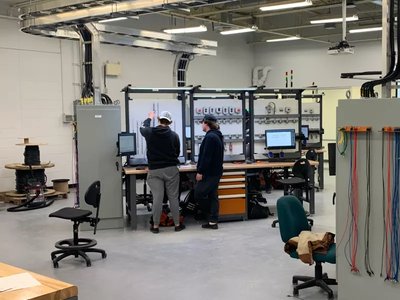
Slide 1 of 4
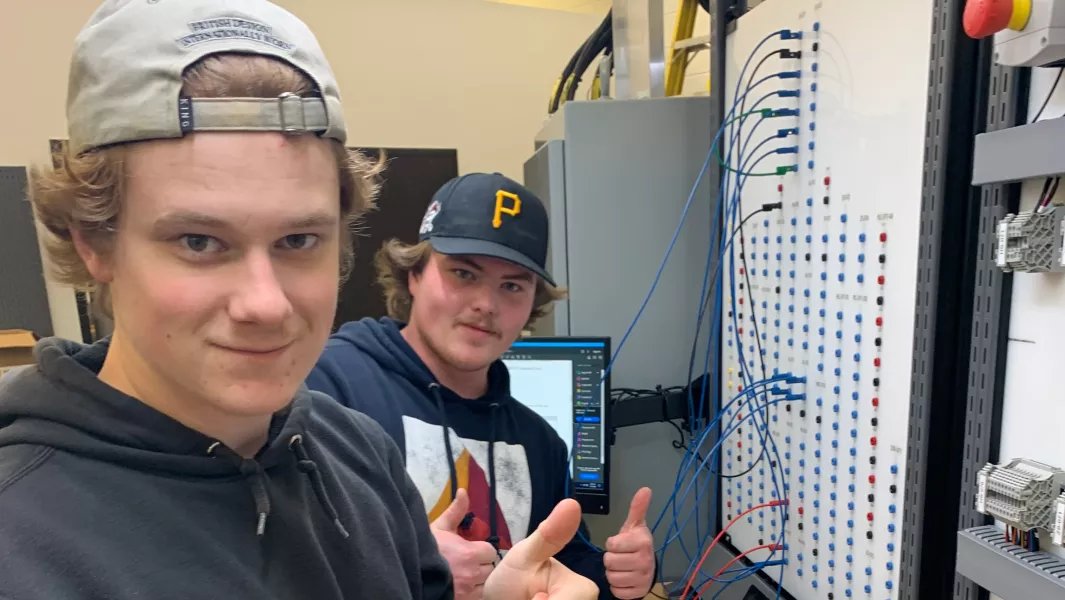
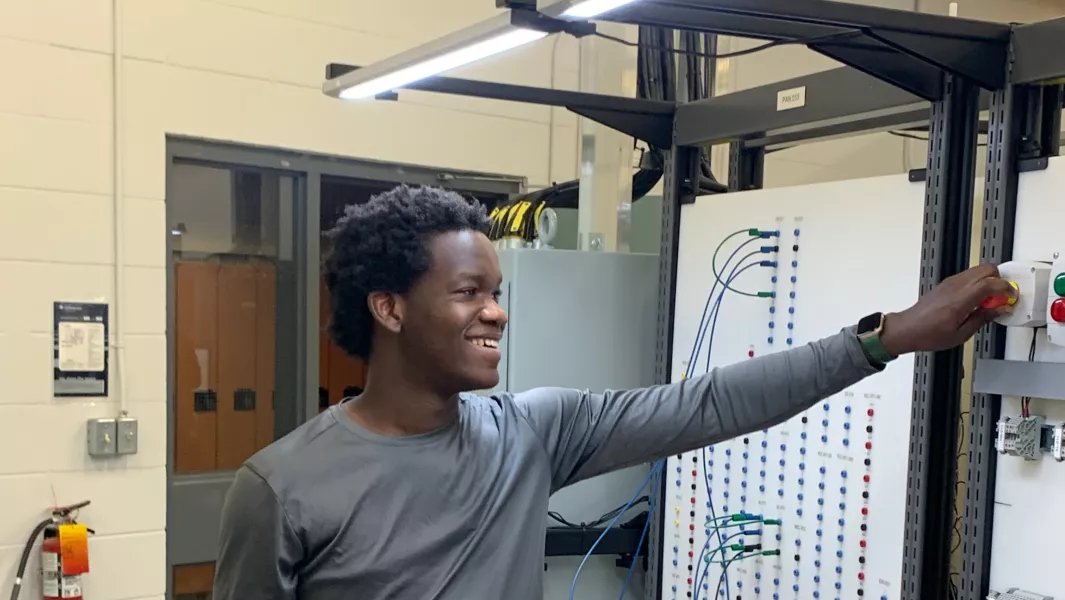
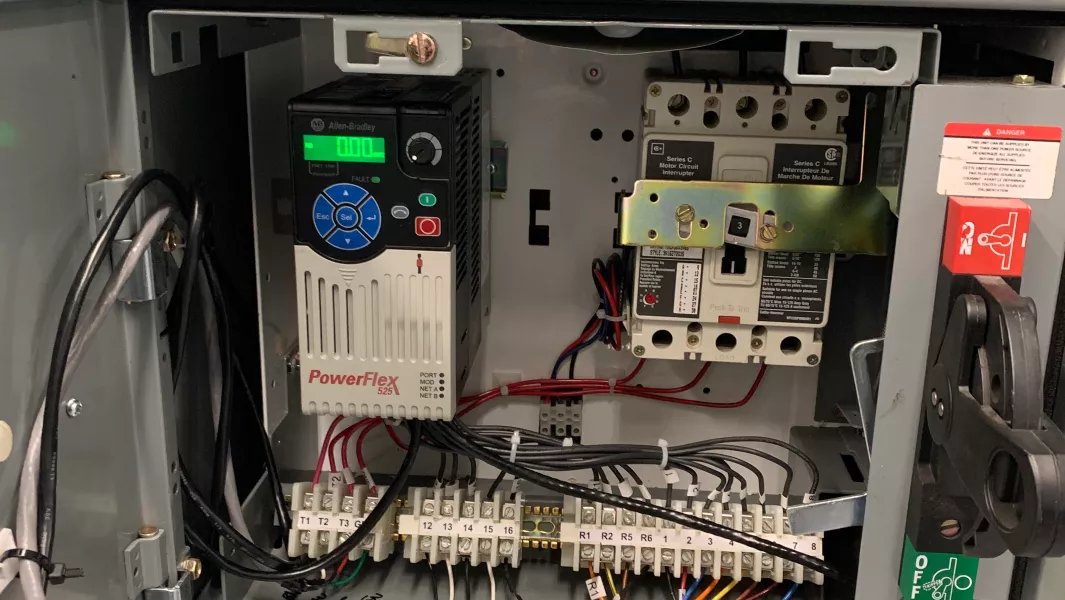
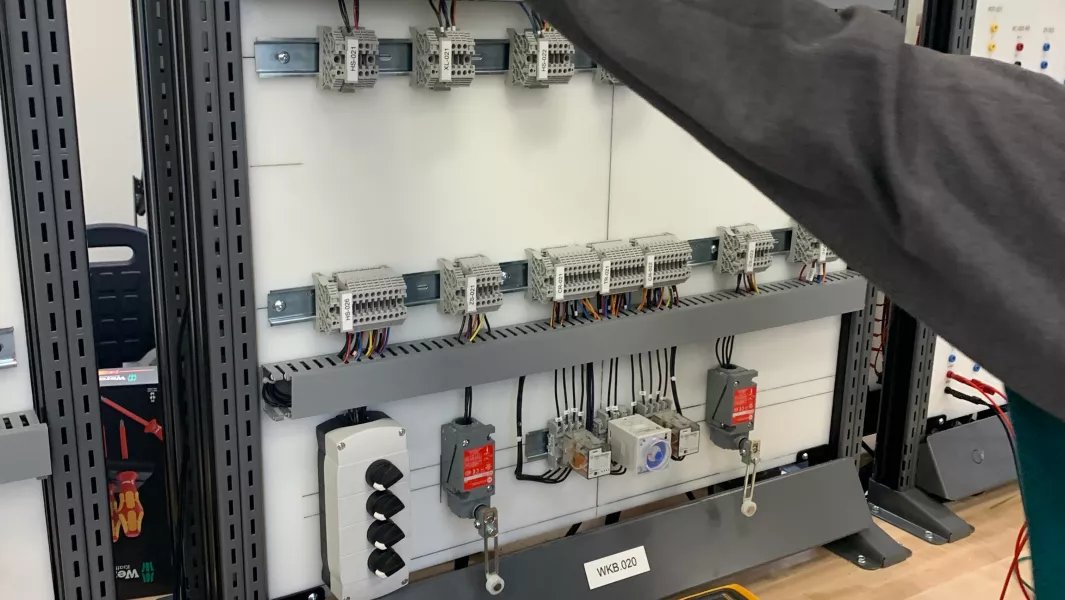
Your future, your way
Related Programs
Explore similar programs that might interest you
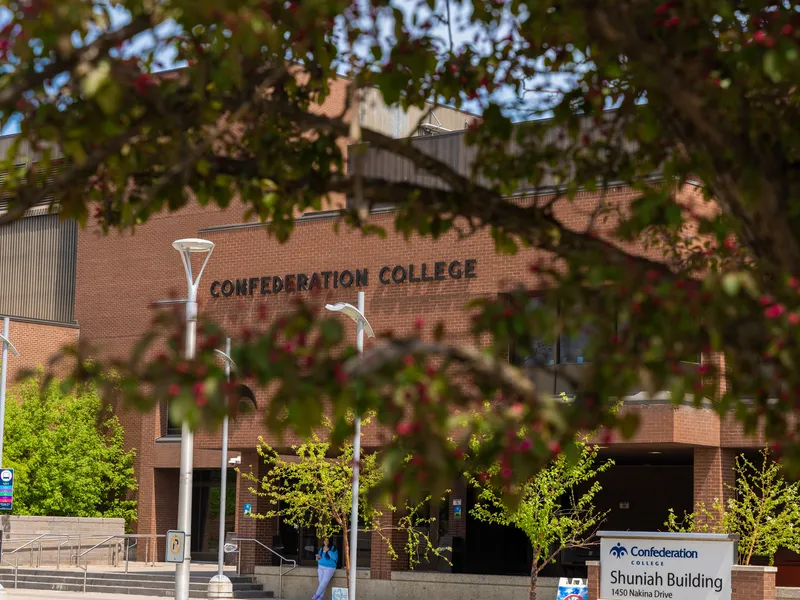
We're here to help
Have questions before you apply?
Not sure if this is the right fit? Our recruitment team can help you navigate admission requirements, program details, and campus life.