Welding Techniques Program

Ontario College Certificate

Welding Techniques

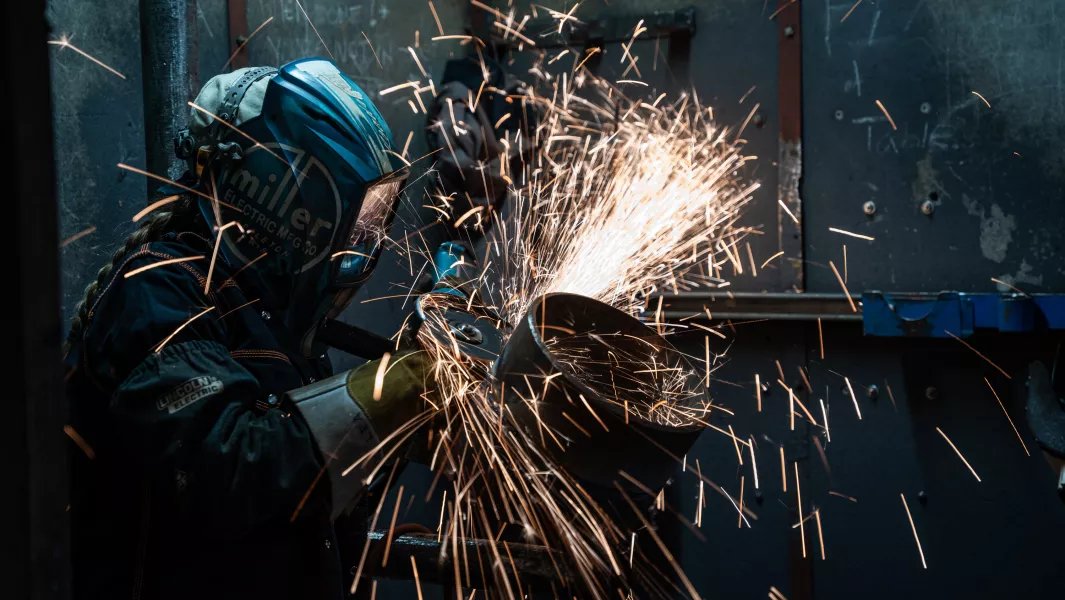
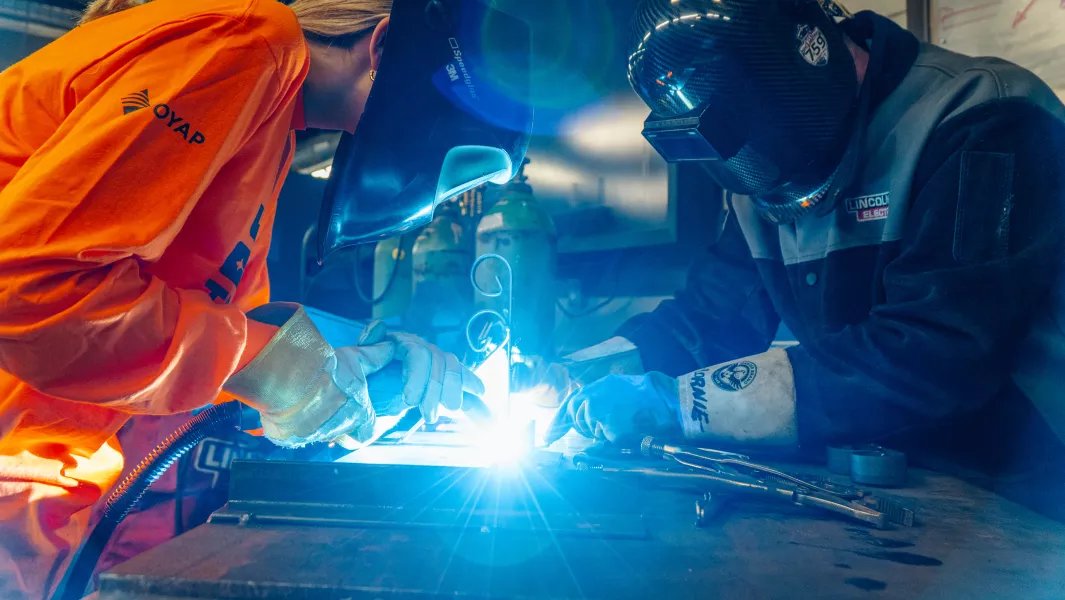
In the Welding Techniques program, you will learn how to master multiple welding processes using state‑of‑the‑art equipment in shop training, developing precision and confidence to pursue hands‑on metal fabrication roles.

CIP Code: 48.0508
PGWP Eligible
This program meets the criteria to be Post-Graduation Work Permit (PGWP) eligible as defined by Immigration, Refugees and Citizenship Canada (IRCC).

Note: PGWP eligibility does not guarantee approval. IRCC assesses all applications individually.

Program Start Options

IntakeDurationFormatCampusDomesticInternational
0375
Fall
1 year
2 semesters
Full-Time
In-Person
Thunder Bay
Domestic students accepted
International students accepted

Forge Your Own Future

Advance your career with Confederation College’s Welding Techniques certificate program. This comprehensive program covers all aspects of conventional and new welding techniques, providing you with hands-on experience and practical skills. Learn to maintain and repair various welding systems and prepare for your four-position Canadian Welding Bureau (CWB) certification.

With state-of-the-art welding power sources and shop instruction, you'll gain the knowledge needed to excel in the welding industry. Courses include basic arc welding, blueprint reading, pipe-to-plate, T-joints, basic metallurgy, pressure plate, and advanced welding. This program equips you with the foundational skills to work in almost any industry, anywhere.

Top Highlights

  • Hands-On Training: Get practical training with our conventional and modern welding equipment.
  • CWB Certification Preparation: The program prepares you for your CWB certification, the standard for employment for most shops.
  • Personalized Instruction: Benefit from plenty of one-on-one, personalized instruction.
  • Industry Standards: The program meets industrial standards, principles, practices, and trade disciplines of today’s job market.

Ideal Candidate Profile

  • Hands-on Learner: Enjoy practical, hands-on work and working with tools.
  • Detail-oriented: Focused on precision and accuracy in welding tasks.
  • Problem Solver: Capable of troubleshooting and solving welding challenges.
  • Physically Active: Comfortable standing for long periods and working in physically demanding situations and environments.
  • Team Player: Able to work collaboratively with diverse teams.

Contact Information

Program Files

Get detailed information about program requirements, courses, and student resources.

Admission Requirements

Fall

Fall (0375)

Admission Requirements for Domestic Students

  1. Ontario Secondary School Diploma (or equivalent) with courses from the College (C), University (U), University/College (U/C), or Open (O) preparation levels with Grade 12 English (C/U) Level.
  2. or successful completion of the Mature Student Assessment.
  3. or successful completion of the Canadian Adult Education Credential (CAEC) or General Education Development Test (GED), prior to May 2024.
  4. or appropriate credits from the Academic and Career Entrance program (ACE).

Admission Requirements for International Students

  1. A high school/senior secondary diploma.
    Original transcripts as well as a notarized, translated copy must be provided where applicable.
  2. English Proficiency
    Academic IELTS: overall 6.0, with no bands lower than 5.5.
    Click here for more information

Alternative Pathways

Students who do not meet the entrance requirements are encouraged to apply for the Pre Technology-Trades program to facilitate success in their technology path.

Student Accessibility and Essential Program Requirements

Confederation College is committed to providing an accessible and inclusive learning environment and will provide reasonable accommodations to students with disabilities in accordance with the Ontario Human Rights Code, the Accessibility for Ontarians with Disabilities Act (AODA), and College policy.

Students who require accommodations are encouraged to engage with Student Accessibility Services and are responsible for initiating and participating in the accommodation process. Accommodation is a collaborative process involving the student, Student Accessibility Services, faculty, and the Academic School. Requests for accommodation are considered on an individual basis, and the College will work with students to identify reasonable accommodations that provide equitable access to learning while maintaining the integrity of the program.

Students are expected to demonstrate the essential knowledge, skills, professional behaviours, learning outcomes, and competencies required to successfully complete their program. While the manner in which these requirements are demonstrated may be accommodated where appropriate, the essential requirements themselves must still be achieved.

For programs involving laboratories, field work, clinical placements, aviation environments, trades training, equipment operation, simulations, community placements, or other environments where health and safety are critical, accommodations must also be consistent with applicable legislation, professional standards, licensing requirements, accreditation standards, and workplace safety obligations.

In some circumstances, a requested accommodation may not be reasonable or possible where it would:

  • Fundamentally alter an essential program requirement, competency, or learning outcome.
  • Compromise the health or safety of the student or others.
  • Conflict with provincial or federal legislation.
  • Conflict with the requirements of an external regulatory, licensing, accreditation, or professional body.
  • Prevent the student from demonstrating competencies required for safe and effective professional practice.
Note

Where a particular accommodation cannot be provided, the College will work collaboratively with the student to identify whether an alternative accommodation can appropriately address the student’s disability-related needs while maintaining essential program requirements.


Tuition & Fees

Fees for Domestic StudentsProgram Code: 0375

Year 1
Total: $5,159.00
Fee Breakdown
Academic Fees
Total Tuition Fees:$2,834.00
College Service Fee:$863.00
Health Fee:$305.00
Bus Fee:$332.00
$4,334.00
Program Fees
Boots / Uniform:$650.00
Exam Fees, Certifications, Licenses, Apprentice or Business Registration:$175.00
$825.00

Fees for International StudentsProgram Code: 0375

Year 1
Total: $21,441.25
Fee Breakdown
Academic Fees
Total Tuition Fees:$17,644.00
College Service Fee:$863.00
Health Fee:$652.25
Bus Fee:$332.00
$19,491.25
Program Fees
Boots / Uniform:$650.00
Exam Fees, Certifications, Licenses, Apprentice or Business Registration:$175.00
$825.00
Ancillary Fees
Municipal Levy:$75.00
Student Fees:$300.00
Recovery Fee:$750.00
$1,125.00
Note

Please note that fees are estimated and are subject to change.

Fees shown on this page are for full-time students attending the main Thunder Bay campus for Fall 2026.

Costing for Regional Campuses & Distance Education Students:

If this program is available at Regional Campuses, or to Distance Education students, see the following links for costing information.

Courses

1 intake

Fall0375

Semester 1

WC 122

Basic Arc Welding

75 hours

This course exposes the students to the basic theory and practice of arc welding. The course covers safe use and care of equipment, various joints and weld types in all positions. Electrode application and classification is explained and practical welding exercises are performed.

WC 127

Blueprint Reading

45 hours

This course identifies and interprets all line types and distinguishes sectional and auxiliary views. The student will be able to interpret welding symbols, abbreviations, notes, dimensioning techniques; conduct practical exercises in component sketching; and read weldment blueprints.

WC 128

Pipe to Plate

45 hours

This course has 2 main objectives; the first is to develop techniques and practices using 6010 and 7018 electrodes and the second is to develop uphand techniques using the pipe to plate exercise.

WC 141

Welding Introduction

60 hours

This course exposes the students to the beginning of the trade, basic hand tools all the way to modern power tools. Shop safety covering all aspects of the shop and its equipment. All shop practices and procedures also including knots and rope ties.

WC 143

T-Joints (Fillet Welds)

45 hours

In this course, the student will identify the different welding procedures for T-joints in flat, horizontal, vertical and overhead positions. Welding exercises are demonstrated using 6010-11 and 7018 electrodes in these positions and specific safety precautions for overhead welding are addressed.

WC 142

Oxy Fuel Welding and Cutting

30 hours

This course introduces students to the safe handling and use of potentially dangerous equipment. The student gains an understanding of the construction, operating principles, and applications of oxy-acetylene welding and cutting equipment. Correct operating techniques in fusion welding, brazing and cutting will be achieved.

CS 030

Communications for the Trades

42 hours

In this course, students will develop the fundamental comprehension, technical, business, and oral communication skills required of employees in the trades. Upon completion of this course, you will be more adept at analyzing real-world writing scenarios; writing clearly and concisely; and communicating professionally.

Semester 2

WC 212

Pressure Plate

108 hours

This course identifies the different welding procedures and techniques for pressure plate welding using 6010 and 7018 electrodes in all positions. Visual weld checking techniques and testing procedures are also demonstrated.

WC 217

Basic Metallurgy

42 hours

This course identifies the different chemical and physical properties of ferrous and non-ferrous materials, demonstrates the effects of welding on loose material structures, defines the material classification system and discusses weldment distortion and control techniques.

WC 226

CWB Specifications

108 hours

This course defines C.W.B. welding specifications and describes procedures and techniques using 7018 electrodes. Visual weld checking techniques and testing procedures are also demonstrated.

WC 243

Blueprint Reading II

42 hours

This course is an extension of WC 127 - Blue Print Reading I. This course identifies and interprets all line types and distinguishes sectional and auxiliary views. The student will be able to interpret welding symbols, abbreviations, notes, dimensioning techniques, conduct practical exercises in component sketching and reading weldment blueprints.

WC 201

Advanced Welding

72 hours

This course exposes the student to the basic theory and practices of semi-automatic and GTAW welding. The course covers construction, safety, filler metal and gas selection, equipment set-up and operation. Practical experience will be gained.

Learning Outcomes

The graduate has reliably demonstrated the ability to:

  1. Complete all work in compliance with pertinent legislation, standards, regulations, and industry codes.
  2. Comply with current health and safety regulations, as well as organizational practices and procedures.
  3. Interpret and sketch weld symbols, drawings, and blueprints.
  4. Determine and select the correct materials required for the intended fabrication or application.
  5. Operate various stationary power equipment and hand tools in a safe and competent manner.
  6. Perform basic layout techniques.
  7. Perform basic welds and cutting operations using oxy-fuel equipment; and cutting and gouging using electric plasma arc and carbon arc equipment.
  8. Perform weld applications utilizing Shielded Metal Arc Welding (SMAW), Flux Core Welding (FCAW), Gas Metal Arc Welding (GMAW), and Gas Tungsten Arc Welding (GTAW) operations.
  9. Produce Canadian Standards Association (CSA) 47.1 visual welds in all positions for structural and pressure applications.
  10. Fabricate and construct projects from shop drawings.
  11. Identify discontinuities and defects in welds, demonstrate how to prevent them, and define methods for correcting discontinuities and defective weld quality.
  12. Meet the requirements for Canadian Welding Bureau (CWB) Welding Qualification Certification in a practice test.

Careers

Graduates of the Welding Techniques program go on to entry-level roles in various positions and industries including:

  • Construction Trades
  • Ironworker Welder
  • Boilermaker Welder
  • Millwright Welder
  • Carpenter Welder
  • Maintenance Welder
  • Heavy Equipment Repair
  • Forestry Welder
  • Transportation Welder
  • Sheet Metal Welder
  • Mining Welder

This in-demand skill is applicable in many different industries and may be combined with other Skilled Trades to expand your skill set and ultimately give you a leg up at finding a good, well-paying job.
Explore careers, current wages, employment stats, job postings, and associated education & training to kickstart your career in welding.

See Career Opportunities

Clicking the button will take you to a detailed dashboard with up-to-date job data tailored to your program, including salary ranges, job titles, and projected demand.

Pathways

Confederation College offers a variety of articulation agreements designed to help you advance your education and career. Whether you're coming to us from another institution or planning your next steps after completing your program, our pathways make your transition seamless and effective.

Students at Confederation College

We're here to help

Have questions before you apply?

Not sure if this is the right fit? Our recruitment team can help you navigate admission requirements, program details, and campus life.