| PN 422 |
Clinical Practice III: Complex Care |
180 |
Expand
This course will provide the learner with opportunities to examine the role of the Practical Nurse, when caring for individuals experiencing complex health challenges; and when caring for individuals in either a maternal-newborn, pediatric, or acute/chronic psychiatric nursing environment. The learner will continue to apply the five competency frameworks from the Entry to Practice Competencies for Registered Practical Nurses (College of Nurses of Ontario, 2019): professional practice, ethical practice, legal practice, foundations of practice, and collaborative practice. The learner will continue to integrate the Registered Nurses' Association of Ontario (RNAO) Best Practice Guidelines, Transitions in Care and Services (2023) and Diabetic Foot Ulcers: Prevention, Assessment and Management (2024); assess, plan, implement, and evaluate nursing care for adult patients in a complex care environment; practice previously acquired theoretical and practical nursing knowledge (all nursing skills and nursing assessments to date); and safely apply current theoretical and practical nursing knowledge (including medical-surgical theory, pharmacology, pathophysiology, and Semester Four nursing skills). By the end of this clinical experience, learners are expected to care for three adult patients (autonomously); refine their critical thinking skills by contributing to self-reflection exercises; and participate in simulation experiences. |
|
| PN 426 |
Nursing Arts Lab IV: Complex Care |
48 |
Expand
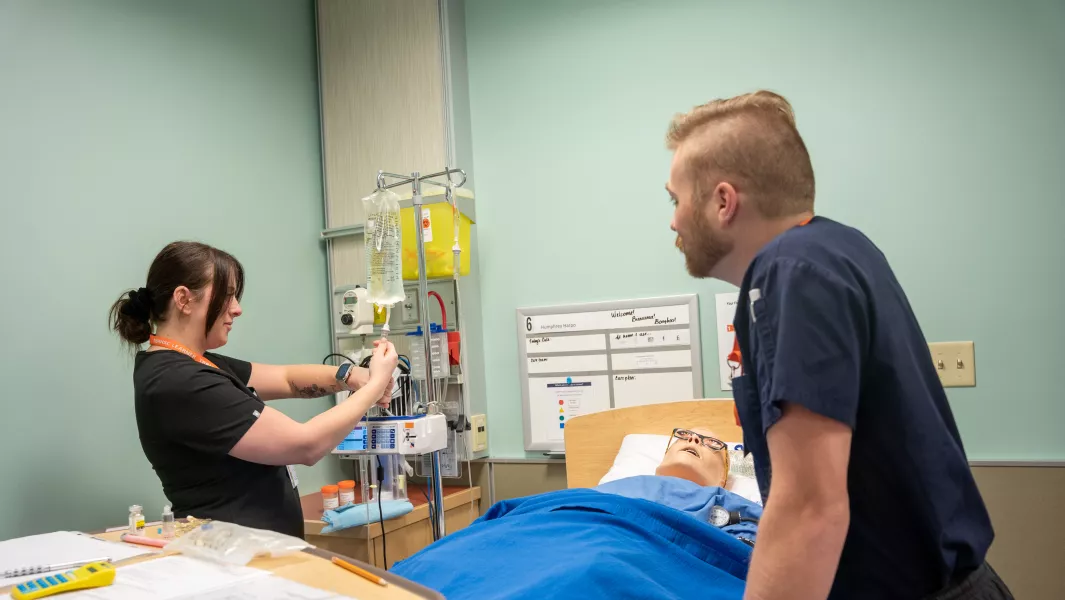
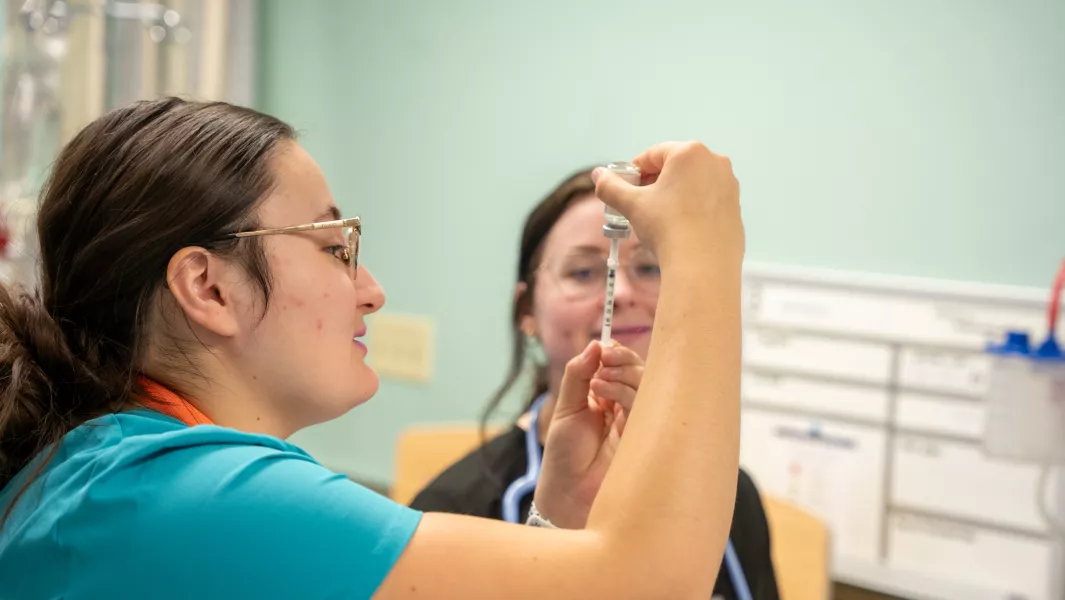
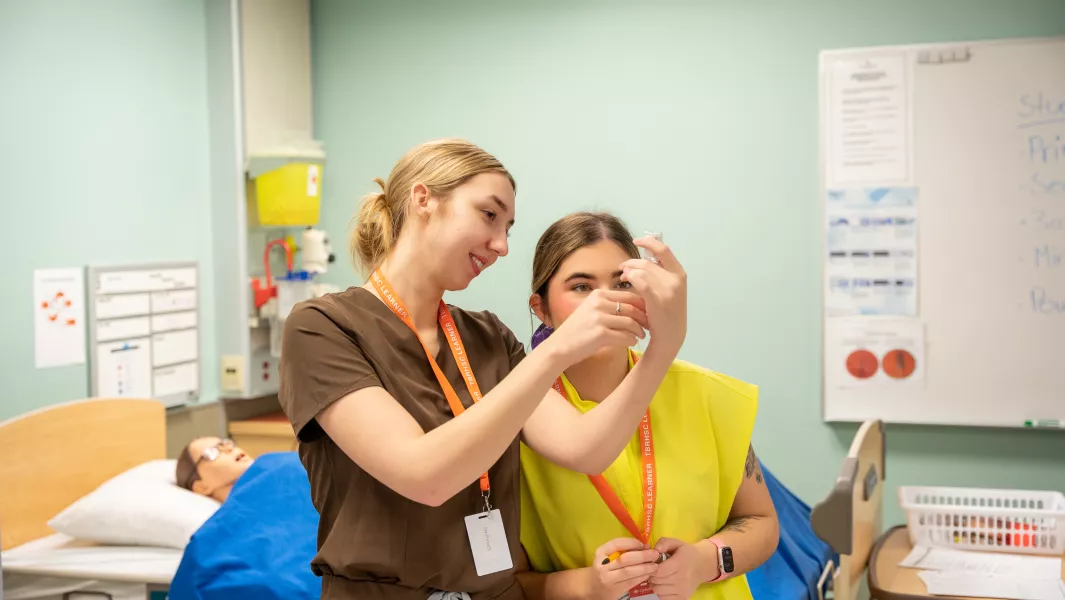
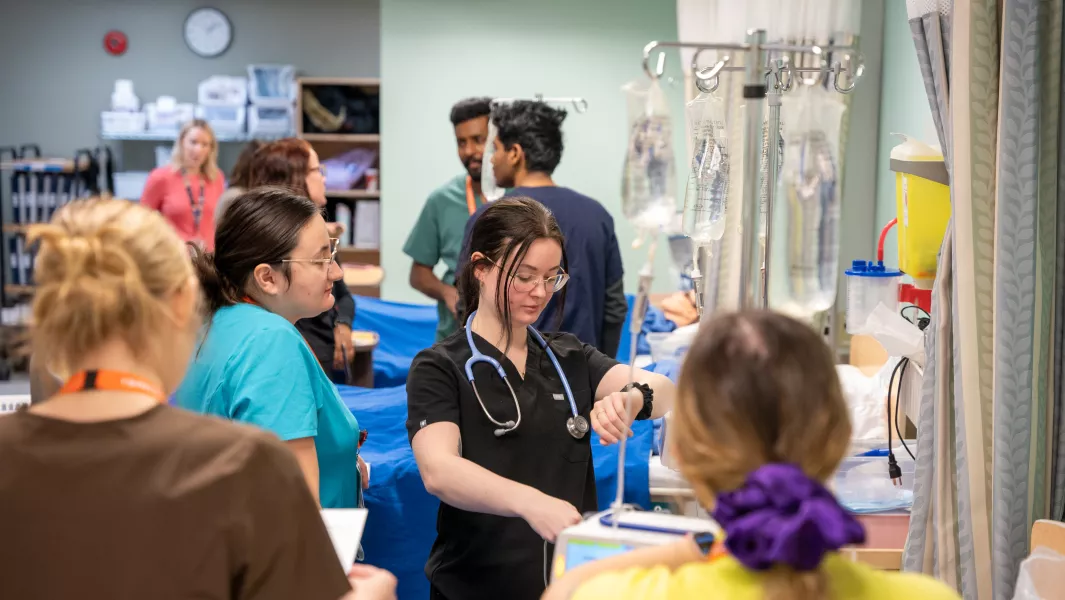
This course will provide the learner with opportunities to apply concepts and knowledge in a laboratory practice and simulation (scenario) environment. The emphasis of this course will be on the advanced nursing and critical thinking skills required for the care of patients with complex health challenges. Topics include the nursing care of patients with a Peripherally Inserted Central Catheter (PICC); nursing care of patients with a Patient Controlled Analgesia (PCA) system; initiating peripheral intravenous access and a hypodermoclysis line; tracheostomy care; and emergency airway management. Learners will participate in practical activities and critical thinking opportunities specific to mental health; end of life care; care of the newborn, child, and post-partum mother with acute health challenges. This course will support the knowledge, skills, judgment, and nursing attitudes required during all simulation (scenarios) experiences that occur throughout the Practical Nursing program. |
|
| PN 427 |
Pharmacology II |
36 |
Expand
This course builds upon the concepts presented in PN 328 (Pharmacology I) and introduces select medication classifications as they relate to patients experiencing chronic illness and complex disease across the lifespan. The learner will study the mechanism of action, therapeutic indications, and nursing responsibilities (including drug monitoring and the management of adverse drug effects) of select medication classifications, and continue the discussion of ethnopharmacological theory and health teaching. Furthermore, this course will detail the professional implications of medication administration as learners prepare for their pre-graduate preceptorship experience. This course will support the knowledge, skills, judgment, and nursing attitudes required during all simulation (scenarios) experiences that occur throughout the Practical Nursing program. |
|
| PN 428 |
Pathophysiology II |
36 |
Expand
This course builds upon the concepts presented in PN 330 (Pathophysiology I) and introduces the learner to the pathophysiology of chronic disease across the lifespan. The learner will continue to apply a case study approach to common chronic pathogenesis, relevant to chronic illness and while considering the College of Nurses of Ontario (CNO) "Three Factor Framework" (2018). Furthermore, this course will underscore the concept that some chronic health challenges may predispose the individual secondary acute illness, apply relevant medical terminology, and highlight common diagnostic testing. This course will support the knowledge, skills, judgment, and nursing attitudes required during all simulation (scenarios) experiences that occur throughout the Practical Nursing program. |
|
| PN 429 |
Medical-Surgical Nursing II |
36 |
Expand
This course builds upon the concepts presented in PN 329 (Medical-Surgical Nursing I) and introduces the learner to the nursing care of diverse patients experiencing complex chronic illnesses (including mental health challenges) across the lifespan. Learners will continue to apply the nursing process, and develop supportive, preventative, therapeutic, palliative, and rehabilitative nursing care; continue to propose evidence informed nursing interventions (dependent, independent, and collaborative), and discuss expected outcomes while considering the College of Nurses of Ontario (CNO, 2023) Practice Standard "Scope of Practice", and the Registered Nurses' Association of Ontario (RNAO) Best Practice Guidelines, Transitions in Care and Services (2023) and Diabetic Foot Ulcers: Prevention, Assessment and Management (2024). Furthermore, this course will underscore the concept that some chronic illnesses are secondary to existing acute health challenges, apply relevant medical terminology, and highlight common health promoting behaviours. This course will support the knowledge, skills, judgment, and nursing attitudes required during all simulation (scenarios) experiences that occur throughout the Practical Nursing program. |
|
| PN 527 |
Clinical Practice IV: Preceptorship |
240 |
Expand
This course will provide the learner with opportunities to consolidate the roles and responsibilities of the entry level Practical Nurse, and when promoting health, and in a supportive, preventative, therapeutic, palliative, and rehabilitative clinical environment. The learner will continue to apply the five competency frameworks from the Entry to Practice Competencies for Registered Practical Nurses (College of Nurses of Ontario, 2019): professional practice, ethical practice, legal practice, foundations of practice, and collaborative practice. The learner will continue to integrate the Registered Nurses' Association of Ontario (RNAO) Best Practice Guidelines, Transitions in Care and Services (2023) and Diabetic Foot Ulcers: Prevention, Assessment and Management (2024); assess, plan, implement, and evaluate nursing care for their preceptor's clinical assignment; practice previously acquired theoretical and practical nursing knowledge (all nursing skills and nursing assessments to date); and safely apply current theoretical and practical nursing knowledge (including medical-surgical theory, pharmacology, pathophysiology). By the end of this clinical experience, learners are expected to care for the assigned preceptor's clinical assignment (autonomously and safely). Learners continue to refine their critical thinking skills by contributing to self-reflection exercises and participating in simulation experiences. |
|