Image for Dental Hygiene

Ontario College Advanced Diploma

Dental Hygiene

In the Dental Hygiene program, you will learn how to assess and manage oral health through supervised clinical placements that prepare you to support overall wellness.

CIP Code: 51.0602
PGWP Eligible
This program meets the criteria to be Post-Graduation Work Permit (PGWP) eligible as defined by Immigration, Refugees and Citizenship Canada (IRCC).

Note: PGWP eligibility does not guarantee approval. IRCC assesses all applications individually.

Program Start Options

IntakeDurationFormatCampusDomesticInternational
0641
Fall
3 years
6 semesters
Full-Time
In-Person
Thunder Bay
Domestic students accepted
International students accepted

Promote Oral Health, Transform Lives with Our Dental Hygiene Advanced Diploma

Embark on a rewarding healthcare career with Confederation College's accredited three-year Dental Hygiene diploma program. Through a blend of theoretical knowledge and extensive hands-on experience, you will learn to skillfully manage oral healthcare, understanding its critical role in overall wellness. Be the healthcare professional who improves clients lives, one smile at a time.

Key Responsibilities of Dental Hygienists

Professional dental hygienists play a crucial role in healthcare, focusing on:

  • Clinical Therapy: Including teeth cleaning and oral care treatments.
  • Health Promotion & Disease Prevention: Emphasizing oral health's impact on overall health.
  • Education: Providing valuable oral health education to clients.
  • Administration & Research: Contributing to the administrative and research aspects of dental hygiene.

Learning Environment and Curriculum

Students benefit from learning in modern classrooms and labs, with a curriculum that covers:

  • Microbiology specific to dental hygiene.
  • Principles and practices of dental hygiene.
  • Preventive strategies for oral health promotion.
  • Research methods in dental hygiene.
  • Health policy, advocacy, and evidence-based practice.

Top Highlights

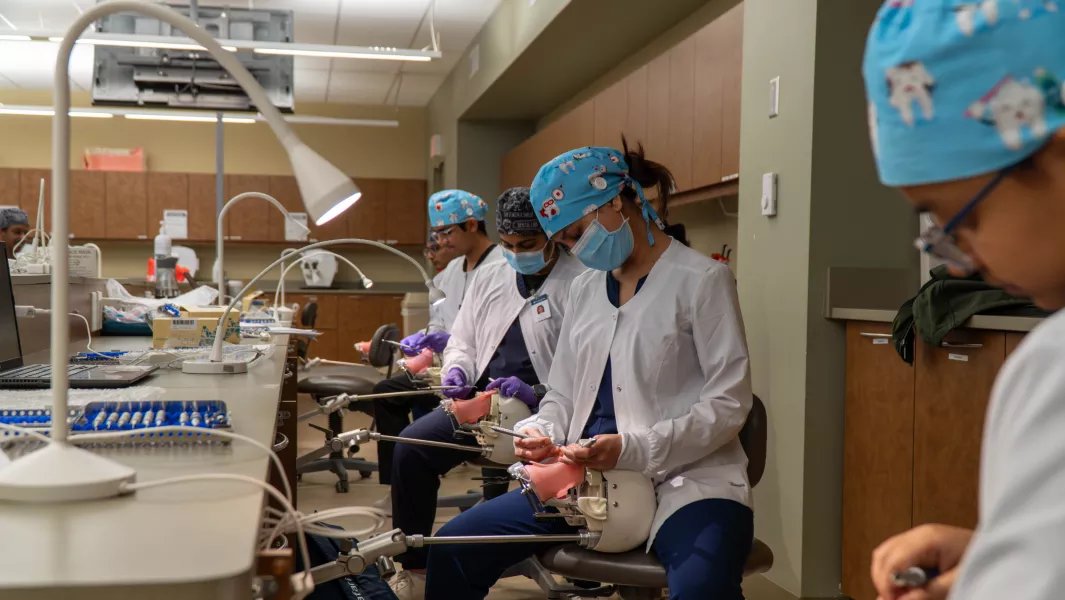
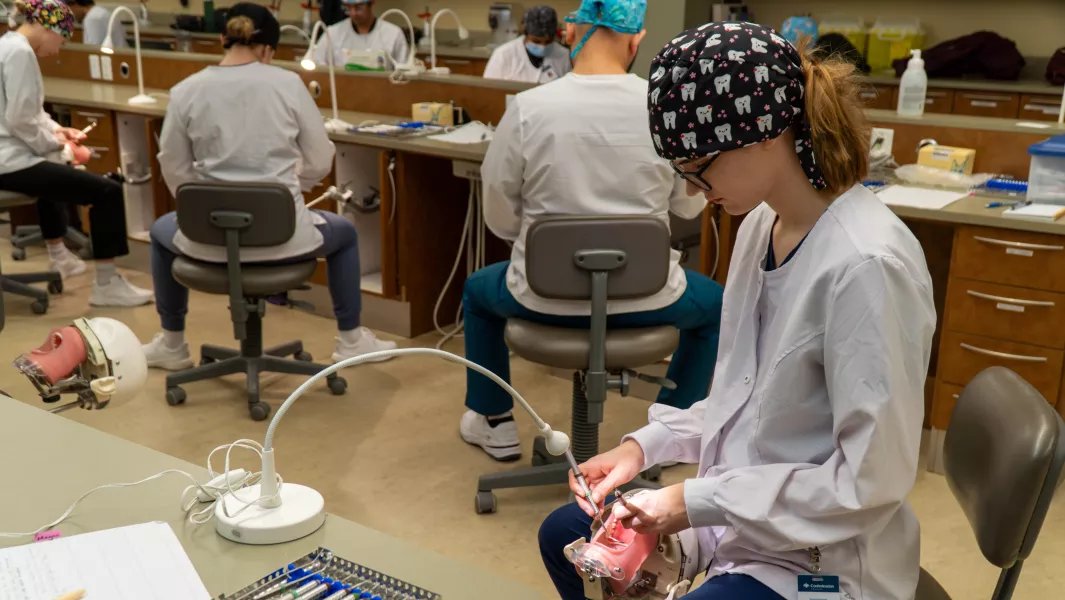
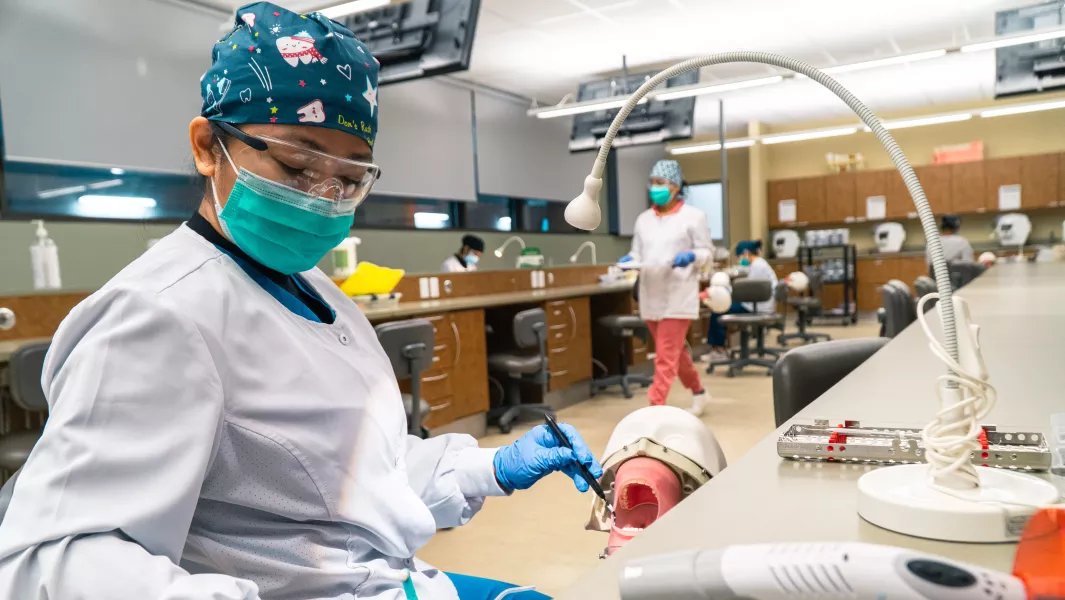
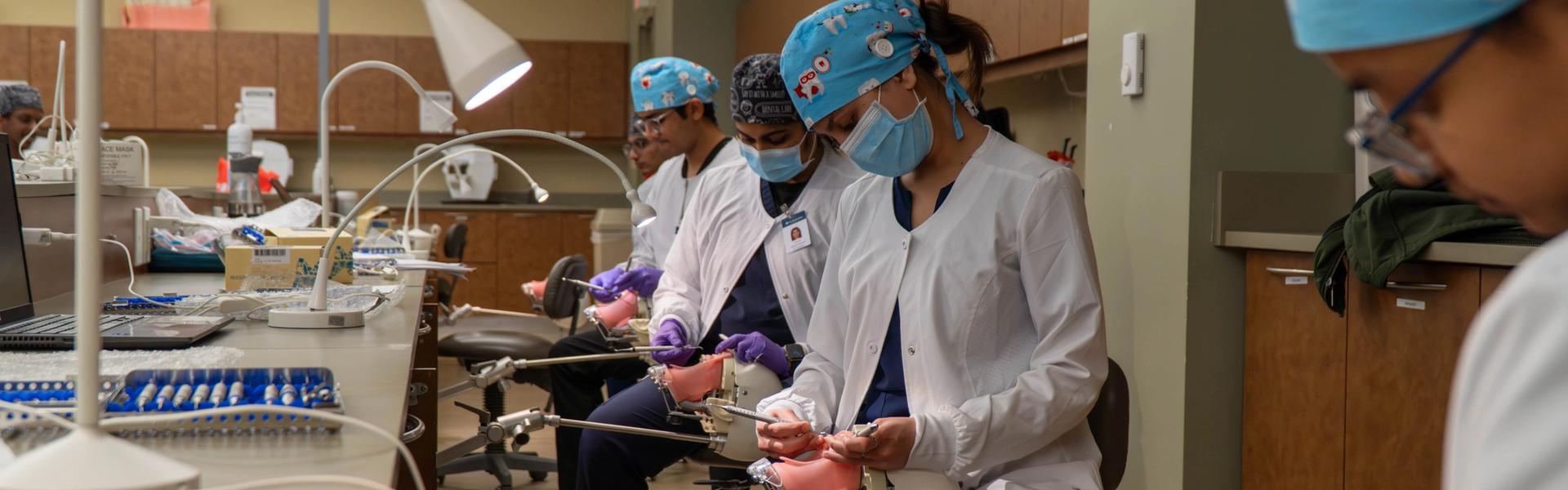
  • State-of-the-Art Facilities: Train in contemporary settings equipped with the latest dental technology.
  • Experiential Learning: Develop hands-on expertise through placements across various healthcare spaces, and our on-site clinic.
  • Accreditation: Our program meets the rigorous standards set by the Commission on Dental Accreditation of Canada (CDAC).
  • National Board Exam Preparation: Graduate fully prepared to take the National Dental Hygiene Certification Examination (NDHCB).
  • Diverse Career Opportunities: Open doors to a wealth of positions in different dental healthcare environments.

Ideal Candidate Profile

  • Compassionate: Genuinely care about improving people's health and well-being.
  • Detail-Oriented: Meticulous in performing dental procedures and maintaining records.
  • Empathetic Communicator: Highly effective at listening to and educating clients about oral health.
  • Team Player: Work well with dentists, dental assistants, and other healthcare professionals.
  • Dexterous: Possess good hand-eye coordination for precise dental hygiene work.

Contact Information

Program Files

Get detailed information about program requirements, courses, and student resources.

The Dental Hygiene program at Confederation College has equipped me with the clinical skills and knowledge necessary to excel in client care, this program is supported by knowledgeable instructors who are genuinely committed to student success.

HS
Himanshu Sharma
Graduate of 2026

Attending the Dental Hygiene program at Confederation College allowed me to build strong foundational knowledge and clinical skills, learn directly from experienced professionals, and feel prepared to begin my career in the profession.

MS
Melina Smiciklas
Graduate of 2025

Admission Requirements

Fall

Fall (0641)

Admission Requirements for Domestic Students

  1. Ontario Secondary School Diploma (or equivalent) with courses from the College (C), University (U), University/College (U/C), or Open (O) preparation levels with Grade 12 English (C/U) Level.
  2. or successful completion of the Mature Student Assessment.
  3. or successful completion of the Canadian Adult Education Credential (CAEC) or General Education Development Test (GED), prior to May 2024.
  4. or appropriate credits from the Academic and Career Entrance program (ACE).

Other Courses Required

  1. Grade 11 or 12 Biology (College or University Preparation) and
  2. Grade 11 or 12 Chemistry (College or University Preparation)

Minimum final grade of 70% in each required course
If you are currently enrolled in a required course, you must have a midterm and final mark of 70% or higher to qualify for selection/admission.

Admission Requirements for International Students

  1. A high school/senior secondary diploma with a grade 12 biology credit and grade 12 chemistry credit with a minimum passing mark of 70, or equivalent
    a) Original transcripts as well as a notarized, translated copy must be provided where applicable
  2. English Proficiency
    a) Academic IELTS: 6.5, no band lower than 6.0 with the speaking band at 6.5

Prerequisites

  1. Students are required to obtain a Cardiopulmonary Resuscitation CPR certificate – Basic Life Support/Healthcare provider (BLS/HCP) and a certificate in First Aid prior to the commencement of studies. The courses must include a hands-on component.
  2. An Immunization and Communicable Disease’s Form with documentation of current immunization at registration (including a two-step TB Skin Test.) is required. Hepatitis B vaccination is mandatory as well as a serology test of all existing immunizations. All immunization information is to be submitted to the health center prior to the commencement of studies.
  3. Blood serology testing must be completed for all students. Requisition will be made available at the Health Centre on campus.
  4. Each student is required to purchase Dental Hygiene instrument kits at the start of the program. These kits must be purchased new and cannot be obtained second-hand. All instrument kits will be purchased and delivered directly through the College.
  5. Year 2 and Year 3 students will be required to obtain a Criminal Background Check.
  6. To be eligible for participation in field placement a student must not have been convicted of any criminal offense for which the student has not yet been pardoned. An unpardoned criminal record will result in the student not being able to participate in the field placement courses and therefore prevent the student from graduating. A recent and valid Criminal Reference Check (CRC) Level 2: Criminal Record and Judicial Matters Check (CRJMC) is therefore required to enable the student to progress through this program.
Note

Procedures and regulations for obtaining criminal record search documents are controlled by the RCMP and the Government of Canada. These procedures and regulations may change at any time without notification. Confederation College will endeavour to notify students of any changes when they come to our attention. Note: Any costs associated with acquiring a Criminal Reference Check (CRC) will be the responsibility of the student applicant.

Alternative Pathways

Applicants who do not possess the above admission requirements might consider our Pre-Health Sciences-Pathways to Certificates and Diplomas program which will provide the necessary preparation for application to the Dental Hygiene program. Completion of the Pre-Health Sciences-Pathways to Certificates and Diplomas program does not guarantee admission to the Dental Hygiene program in a subsequent year. A minimum 70% mark must be maintained in each semester in the Pre-Health Sciences-programs to meet the admission requirements to the Dental Hygiene program.

Student Accessibility and Essential Program Requirements

Confederation College is committed to providing an accessible and inclusive learning environment and will provide reasonable accommodations to students with disabilities in accordance with the Ontario Human Rights Code, the Accessibility for Ontarians with Disabilities Act (AODA), and College policy.

Students who require accommodations are encouraged to engage with Student Accessibility Services and are responsible for initiating and participating in the accommodation process. Accommodation is a collaborative process involving the student, Student Accessibility Services, faculty, and the Academic School. Requests for accommodation are considered on an individual basis, and the College will work with students to identify reasonable accommodations that provide equitable access to learning while maintaining the integrity of the program.

Students are expected to demonstrate the essential knowledge, skills, professional behaviours, learning outcomes, and competencies required to successfully complete their program. While the manner in which these requirements are demonstrated may be accommodated where appropriate, the essential requirements themselves must still be achieved.

For programs involving laboratories, field work, clinical placements, aviation environments, trades training, equipment operation, simulations, community placements, or other environments where health and safety are critical, accommodations must also be consistent with applicable legislation, professional standards, licensing requirements, accreditation standards, and workplace safety obligations.

In some circumstances, a requested accommodation may not be reasonable or possible where it would:

  • Fundamentally alter an essential program requirement, competency, or learning outcome.
  • Compromise the health or safety of the student or others.
  • Conflict with provincial or federal legislation.
  • Conflict with the requirements of an external regulatory, licensing, accreditation, or professional body.
  • Prevent the student from demonstrating competencies required for safe and effective professional practice.
Note

Where a particular accommodation cannot be provided, the College will work collaboratively with the student to identify whether an alternative accommodation can appropriately address the student’s disability-related needs while maintaining essential program requirements.

Tuition & Fees

Fees for Domestic StudentsProgram Code: 0641

Year 1
Total: $16,593.00
Fee Breakdown
Academic Fees
Total Tuition Fees:$7,968.00
College Service Fee:$863.00
Health Fee:$305.00
Health Record Fee:$40.00
Bus Fee:$332.00
$9,508.00
Program Fees
College Supplies:$100.00
Tools:$3,719.00
Boots / Uniform:$300.00
Record Check, Seminars, Courses, First Aid, Medicals:$200.00
Books & Supplies:$2,766.00
$7,085.00
Year 2
Total: $12,168.00
Fee Breakdown
Academic Fees
Total Tuition Fees:$7,968.00
College Service Fee:$853.00
Health Fee:$305.00
Health Record Fee:$40.00
Bus Fee:$332.00
$9,498.00
Program Fees
College Supplies:$100.00
Tools:$188.00
Record Check, Seminars, Courses, First Aid, Medicals:$200.00
Exam Fees, Certifications, Licenses, Apprentice or Business Registration:$750.00
Books & Supplies:$1,432.00
$2,670.00
Year 3
Total: $11,498.00
Fee Breakdown
Academic Fees
Total Tuition Fees:$7,968.00
College Service Fee:$853.00
Health Fee:$305.00
Health Record Fee:$40.00
Bus Fee:$332.00
$9,498.00
Program Fees
Tools:$1,000.00
Books & Supplies:$1,000.00
$2,000.00

Fees for International StudentsProgram Code: 0641

Year 1
Total: $31,099.25
Fee Breakdown
Academic Fees
Total Tuition Fees:$21,002.00
College Service Fee:$863.00
Health Fee:$652.25
Health Record Fee:$40.00
Bus Fee:$332.00
$22,889.25
Program Fees
College Supplies:$100.00
Tools:$3,719.00
Boots / Uniform:$300.00
Record Check, Seminars, Courses, First Aid, Medicals:$200.00
Books & Supplies:$2,766.00
$7,085.00
Ancillary Fees
Municipal Levy:$75.00
Student Fees:$300.00
Recovery Fee:$750.00
$1,125.00
Year 2
Total: $26,674.25
Fee Breakdown
Academic Fees
Total Tuition Fees:$21,002.00
College Service Fee:$853.00
Health Fee:$652.25
Health Record Fee:$40.00
Bus Fee:$332.00
$22,879.25
Program Fees
College Supplies:$100.00
Tools:$188.00
Record Check, Seminars, Courses, First Aid, Medicals:$200.00
Exam Fees, Certifications, Licenses, Apprentice or Business Registration:$750.00
Books & Supplies:$1,432.00
$2,670.00
Ancillary Fees
Municipal Levy:$75.00
Student Fees:$300.00
Recovery Fee:$750.00
$1,125.00
Year 3
Total: $26,004.25
Fee Breakdown
Academic Fees
Total Tuition Fees:$21,002.00
College Service Fee:$853.00
Health Fee:$652.25
Health Record Fee:$40.00
Bus Fee:$332.00
$22,879.25
Program Fees
Tools:$1,000.00
Books & Supplies:$1,000.00
$2,000.00
Ancillary Fees
Municipal Levy:$75.00
Student Fees:$300.00
Recovery Fee:$750.00
$1,125.00
Note

Please note that fees are estimated and are subject to change.

Fees shown on this page are for full-time students attending the main Thunder Bay campus for Fall 2026.

Costing for Regional Campuses & Distance Education Students:

If this program is available at Regional Campuses, or to Distance Education students, see the following links for costing information.

Courses

1 intake

Fall0641

Semester 1

CS 050

College Writing

42 hours

In this course, students will be introduced to academic writing styles with a thematic focus on current issues. This course will help students to express themselves clearly and correctly in written form. Students will critically analyse assigned readings and express their thoughts. The course will also focus on the development of an academic paper utilizing the APA style of documentation.

DH 108

Principles of Dental Hygiene I

84 hours

This course introduces the roles and responsibilities of the dental team, and consists of an overview of theory, which prepares the student for practical clinical experience. Preclinical theory will include introductory knowledge for obtaining accurate health history records and the fundamentals of effectively and efficiently performing basic clinical procedures. The student will be introduced to the history of dental hygiene, its regulations, governance, Standards of Practice, Quality Assurance Program, and its relationship to dentistry. The student will accurately collect, investigate and record health history information; study the importance of ergonomics; basic instrumentation, and response to basic medical emergencies.

DH 109

Histology and Embryology

42 hours

This course will focus on the introductory study of oral histology and embryology which prepares the student with an understanding of development of the oral cavity and face. This allows for a fundamental understanding of developmental disturbances of oral and dental tissue, principles of regeneration, oral wound healing and eruption patterns.

DH 110

Microbiology for the Hygienist

42 hours

This course introduces the student to the study of microorganisms and their impact on the human body, including how they are transmitted and how the body defends against disease. Students will explore the characteristics of microorganisms—particularly bacteria and viruses—beginning with their structure, growth, and modes of transmission. Emphasis is placed on the relationship between pathogenic microorganisms and disease, especially those relevant to dental hygiene.

DH 111

Dental and Orofacial Anatomy

42 hours

This course serves as a foundation for understanding the oral anatomical landmarks and the relationship between structure and function. The student will learn detailed anatomy of the teeth and the surrounding structures in and around the mouth, including the skeletal structures, muscular, vascular, and nervous systems of the head and neck region.

DH 134

Radiography Theory for the DH

42 hours

This course introduces students to the theory and practice of radiation protection and safety, ensuring compliance with the Healing Arts Radiation Protection Act (1990). Students will learn to recognize and interpret normal and pathological structures on radiographs to apply this knowledge in clinical settings.

HS 125

Anatomy & Physiology I

42 hours

This course is a general introduction to the structures and physiology that make up the human body. It provides the basis for the subsequent study of pathophysiology and patient care procedures.

Semester 2

DH 240

Intro to Dental Materials

42 hours

This area relates to the science and clinical aspects of dental materials in restorative dentistry and the various dental specialties. Most of the information will be handled from a theoretical base and some content will include practical demonstration with skill development in the manipulation of these materials. Physical and mechanical properties of dental materials and classification of dental materials are reviewed with particular attention to the dental hygienists understanding of dental materials from a clinical perspective. Emphasis will be placed on those materials associated with dental hygiene assessments, specific clinical procedures and interpretation of materials on radiographs.

DH 221

Introduction to the Dental Hygiene Profession

28 hours

This area relates to the profession of dental hygiene and the regulatory context for dental hygiene practice. An overview of the history of the profession, its evolution as a self-regulated profession in Ontario will provide the background for further discussion regarding the Regulated Health Profession Act, 1991, role of the College of Dental Hygienists of Ontario, scope of practice and recognition of dental hygienists as a clinician, oral health educator, health promoter, advocate and coordinator. The significance of standards of practice, quality assurance, ethics and professional associations are explored.

DH 222

Principle of Dental Hygiene II

126 hours

This area relates to the theory and practice of specific dental hygiene skills. Theory relates to the study of the fundamentals of the dental hygiene process of care with particular emphasis on assessment skills, record keeping (charting), positioning, ergonomics, instrumentation, personal safety, and infection control procedures. Practical experiences relate to the concept and principles of instrumentation, debridement and preparation for implementation of additional dental hygiene skills. Additional clinical skills will consist of radiography, client education, coronal polish, application of anticariogenic agents, pit and fissure sealant and application of desensitization agents.

DH 231

Preventative Oral Health Promotion I

42 hours

This course is an introduction to oral health promotion for the individual client. Topics include study of approaches to oral health education and interventions for the three levels of prevention. Theories of behavioral change are considered as is an introduction to health determinants as essential to health. The dental hygiene process of care is introduced with emphasis on clinical application. Importance is also placed on oral biofilm and self-care methods for oral disease control. Preventive agents and their use are also explored.

HS 225

Anatomy & Physiology II

42 hours

This course is the second part of a two part anatomy and physiology course designed for students enrolled in the Practical Nursing Program and the Dental Hygiene Program. It is a continuation of the structures and physiology that make up the human body. It will complete the study of the body in preparation for the study of pathophysiology and patient care procedures.

42 hours

Semester 3

CS 217

Communication for Health Professionals

42 hours

In this course, students will use the business writing process to produce routine workplace correspondence required in the medical field. Students will apply principles of plain language to communicate effectively to diverse audiences using a variety of communication channels. They will also combine collaborative methods with advanced research, written and oral skills to produce and present an infographic.

DH 320

Periodontology for the Dental Hygienist

42 hours

This area relates to the anatomy, histology, and microbiology/pathology of those tissues that surround and support the teeth. Disease processes affecting the periodontal tissues and the fields of preventive and therapeutic periodontics will also be studied with emphasis on the clinical role of the dental hygienist. Integration of knowledge from other courses will support further study in phases of periodontal therapy and periodontal surgery. This area builds on information introduced in earlier semesters.

DH 321

Nutritional Studies for the Dental Hygienist

28 hours

This course relates to nutrition in the etiology and management of general health. The relationship between nutritional status and health through the lifespan will be explored including the major biological functions of all basic nutrients-water, carbohydrates, lipids, protein, vitamins, and minerals. Canada's food guide will be utilized as the basis for analysis of qualitative study of diets. Signs and symptoms of nutritional deficiencies will be reviewed along with nutritional fads. The role of each nutrient in the development and maintenance of the oral cavity will be discussed as well as an introduction to nutritional counseling which will prepare the student for dietary planning and analysis for oral/dental problems. As well, consideration will be given to the role of a nutritionist and dietician.

DH 236

Pharmacology for the DH

42 hours

This course relates to the use of pharmaceuticals to treat general and oral health problems. The study of drugs used in dental treatment will include consideration for their origin, physical and chemical properties, modes of administration and effects on the body system. The subject area also includes a study of the impact of client medication (prescribed or over-the-counter) on oral structures and treatment, pain management and the management of clients with various medical conditions. Attention will also be directed to using and prescribing drugs and pain management within the dental hygiene scope of practice.

DH 323

Clinical Novice

120 hours

This course relates to the transition from pre-clinical to the clinical environment and the application of dental hygiene process concepts, knowledge, skills and judgment in client care. Theory relates to principles of instrumentation, radiographic interpretation with an emphasis on the assessment and planning phases of care. Practical relates to the application and feedback for dental hygiene skills necessary to provide oral healthcare that meets the client's unique needs. Students will apply the dental hygiene process focusing on the assessment phase in a variety of client experiences based on age and difficulty.

DH 334

Preventative Oral Health Promotion II

42 hours

This course reinforces the dental hygiene process of care with a specific focus on implementation and evaluation. The student identifies and utilizes advanced diagnosis, care planning, communication skills, and oral self-care education. The student studies all aspects of non-surgical periodontal therapy including its clinical application while demonstrating an interprofessional approach when interacting with others in the work environment. The student will apply different ways to communicate oral health information and oral self-care practices to underserved populations.

DH 335

Human Pathophysiology

42 hours

This course will be an introduction to human disease and will focus on the fundamental principles of homeostatic mechanisms. The student will explore how alterations in homeostatic mechanisms will disrupt the human body. Mechanisms of disease will be studied by systems and will be examined for the effect that they produce on the structure and function of the body. Common diseases will be used to illustrate concepts.

Semester 4

DH 326

Oral Pathology

42 hours

The student will recognize and record the normal and abnormal conditions which occur both intra and extra orally. Students will be able to apply their knowledge of the classifications and oral manifestations of disease during clinical sessions.

DH 400

Clinical Intermediate

120 hours

This area relates to the transition from pre-clinical to the clinical environment and the application of dental hygiene process concepts, knowledge, skills and judgment in client care. Theory relates to principles of instrumentation, ultrasonics, radiographic interpretation, subgingival irrigation and pain control with an emphasis on the assessment, planning and implementation phases of care. Practical relates to the application and feedback for dental hygiene skills necessary to provide oral healthcare that meets the client's unique needs. Students will apply the dental hygiene process in a variety of client experiences based on age and difficulty.

DH 401

Diverse Populations and Health Beliefs

42 hours

This course fosters cultural awareness and competence, health promotion in the context of culture, cross-cultural concepts in health and disease, health literacy, principles of health promotion within multicultural populations and the various theories and models of relevance in culturally sensitive practice. There will also be a focus on gerontology, pediatrics and persons with disabilities.

DH 402

Community Health Care and Promotions I

42 hours

This course will provide knowledge of universal health care in Canada, its structure and governmental agency relationships. Comparisons of the Canadian health care with other health care systems will be investigated. The role of the World Health Organization (WHO) and Canada's Chief Dental Officer will be described. Issues involving healthcare costs, access, equity, multiculturalism, Indigenous health, healthcare reform, interprofessional healthcare and e-health are discussed. The application of the dental hygiene process of care in community public health, health promotion and health related education activities and strategies for its promotion; including marketing, health education collaboration, mass media use in the community organization will be developed. Epidemiological data assessment, current trends, program planning, principles of teaching and learning as key factors for program evaluation will set the foundation for more advanced courses and service-learning practice in community settings.

CS 224

Introduction to Research Methods

42 hours

This course introduces basic qualitative and quantitative research methods for evidence-based practice in the health fields. Students will be able to explain the fundamental principles of research methodology and apply these principles to develop a research proposal. The students will discuss the ethical issues involved with research and demonstrate knowledge of relevant ethical foundations.

42 hours

Semester 5

DH 503

Clinical Advanced

120 hours

This course relates to the clinical environment with a particular focus on the evaluation phase of knowledge, skills and judgment to support the Dental Hygiene Process of Care. Practical experiences will occur in traditional, non-traditional dental hygiene and interprofessional/intraprofessional settings. Students will apply advanced instrumentation techniques when treating the periodontal client and present their findings in a case study.

DH 504

Evidence Informed Practice

42 hours

This course will build upon a basic knowledge of statistics as it relates to the principles and methods used in health research. Students will examine the use of scientific research in professional practice and learn to critically appraise scientific articles and make sound clinical decisions using an evidence based process.

DH 505

Community Health Care & Promotions II

42 hours

This course relates to learning through community experiences and oral health programs aimed at a target population. Experiencing interactions with clients and populations that do not access traditional dental/dental hygiene services will allow students to gain more insight into unique community needs. Students will gain experience with needs assessments, program planning, service delivery and evaluation, as well as interprofessional collaboration in a community setting.

DH 506

Role of Dental Hygiene in Orthodontics

42 hours

This course will focus on the role of the dental hygienist in the recognition of malocclusion, client preparation for orthodontic therapy and the maintenance of the client's oral and periodontal health during and after orthodontic treatment. Fixed and removable orthodontic appliances will be studied along with periodontal aspects of adult orthodontics. Regulatory responsibilities and the orthodontic practice environment will also be studied; students will gain practical lab experience with associated clinical skills such as: placement and removal of brackets, bands and placement of arch wires.

DH 507

Business Principals for Health Professionals

28 hours

This course has been designed to provide the student with a thorough comprehension of the entrepreneurial process as it relates to business start-up. Students will examine various entry paths to an entrepreneurial career and the rewards and challenges associated with those options. Students will learn how to identify and assess business opportunities and ideas as well the components of a business plan.

42 hours

Semester 6

DH 600

Cases and Concepts

42 hours

The student will integrate didactic and clinical knowledge gained throughout the Dental Hygiene program to assess and present case studies. Consolidation of knowledge will be brought forward through clinical cases, peer evaluation and mentoring in an effort to encourage collaboration, develop supportive relationships and to ensure competence in effective evaluation, decision making, critical thinking and problem solving skills.

DH 601

Clinical Consolidation

120 hours

This course relates to the clinical environment and the consolidation of knowledge, skills and judgment to support the dental hygiene process of care. Practical experiences will occur in traditional dental hygiene, non-traditional dental hygiene and interprofessional settings. Students will display more independence in making clinical decisions and managing client care.

DH 602

Dental Hygiene Practice Administration

28 hours

This area will focus on the aspects of a dental or dental hygiene practice related to dental reception, dental insurance and billing as well as practice management standards as outlined by the CDHO. Students will be exposed to the responsibilities and realities of operating an independent dental hygiene practice. The relevance of operating polices, documentation management and health and safety will be considered as it relates to the dental hygienist as an employer.

DH 603

Health Policy and Advocacy

28 hours

In this area of study the student will examine the impact of health policy on self and society. An overview of how policies are determined, developed and evaluated will be studied. The role of advocacy by individuals in society, as well as stakeholder groups will be considered as they relate to the influencing of policy directions. Particular attentions will be focused on oral issues in need of policy decisions and oral health care policies in Canada.

DH 604

Professional Practice and Jurisprudence

28 hours

This course will focus on the legal and regulatory aspects of dental hygiene that will prepare the student for registration with the College of Dental Hygienists of Ontario (CDHO). A detailed review of the Regulated Health Professions Act (RHPA), Dental Hygiene Act (DHA) and regulations affecting dental hygiene practice in Ontario. Particular emphasis will be placed on recognizing the mandatory reporting obligations, the complaints and discipline process and quality improvement initiatives in accordance with the CDHO quality assurance program guidelines. Cases for study and discussion will also provide the student an opportunity to further understand the types of ethical and legal dilemmas that may be encountered in the practice of dental hygiene.

DH 605

Pain Management for the Dental Hygienist

28 hours

This course is intended to provide a foundational knowledge for administering local anesthetics. The theory portion of the course is a self-study to prepare for preclinical practice on a model for injections and on each other for injection sites. Once theory is successfully completed, students will be scheduled for clinical sessions to participate in exercises with a partner and on a model.

Learning Outcomes

The graduate has reliably demonstrated the ability to:

  1. Professional and competent practice within the current regulatory and practice standards.
  2. The ability to evaluate clients' oral health, design comprehensive care plans, and provide appropriate referrals.
  3. Skills in designing, implementing, and evaluating oral health care services tailored to client needs.
  4. Advocacy for oral health issues and promotion of access to care.
  5. Implementation and evaluation of quality assurance standards for a safe and effective work environment.
  6. Establishment of professional relationships conducive to client safety and positive healthcare outcomes.
  7. The ability to educate clients on oral health utilizing effective teaching and learning principles.
  8. Development of a viable dental hygiene practice model incorporating business principles, legislation, and standards of practice.

Meet the Program Staff

4 staff members

Careers

Graduates of the Confederation College Dental Hygiene Program have a wide array of employment opportunities awaiting them. The field of dental hygiene offers a diverse career landscape, enabling professionals to work in various settings and specialize in multiple areas of dental care. Key employment sectors include:

  • Private Dental Practices: Offering routine dental hygiene services to a broad patient base.
  • Community Dental Clinics: Serving community members, often focusing on underrepresented or underserved populations.
  • Public Health Units: Working on oral health promotion and disease prevention programs at the community or regional level.
  • Specialty Dental Practices: Specializing in areas such as orthodontics (braces and other teeth straightening methods), paedodontics (children's dentistry), and periodontics (gum disease treatment).

Independent Practice

With the evolving landscape of dental health care, some dental hygienists are also embracing entrepreneurial roles by starting their independent practices. This career path allows for greater autonomy in providing oral health services directly to the public.

Career Development Resources

Confederation College supports its graduates in exploring various career pathways and staying informed about the latest trends and opportunities in dental hygiene. Our dedicated career services offer:

  • Career Coaching: Personalized guidance to help you navigate your career options and make informed decisions about your professional journey.
  • Job Market Insights: Access to current wage data, employment statistics, and job postings, along with information on associated education and training requirements.
See Career Opportunities

Clicking the button will take you to a detailed dashboard with up-to-date job data tailored to your program, including salary ranges, job titles, and projected demand.

Pathways

Confederation College offers a variety of articulation agreements designed to help you advance your education and career. Whether you're coming to us from another institution or planning your next steps after completing your program, our pathways make your transition seamless and effective.

Students at Confederation College

We're here to help

Have questions before you apply?

Not sure if this is the right fit? Our recruitment team can help you navigate admission requirements, program details, and campus life.