Pre-Health Sciences - Pathway to Certificates and Diplomas
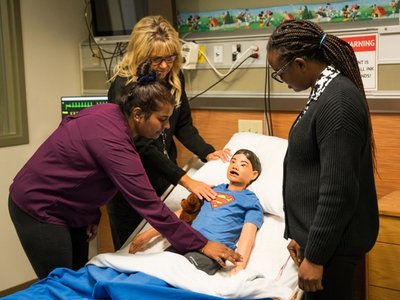
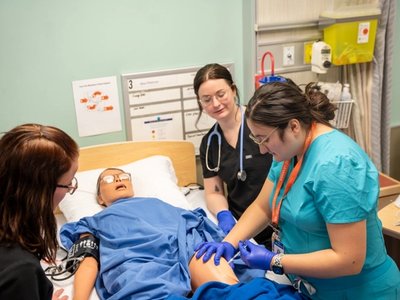
In the Pre-Health Sciences – Pathway to Certificates & Diplomas program, you will strengthen your science and communication skills through hands-on labs and coursework that support your next step in health education.
CIP Code:51.1199
PGWP Eligible
This program meets the criteria to be Post-Graduation Work Permit (PGWP) eligible as defined by Immigration, Refugees and Citizenship Canada (IRCC).
Note: PGWP eligibility does not guarantee approval. IRCC assesses all applications individually.
Need a boost before entering a postsecondary health program? Missing prerequisites? Returning to education? Confederation College's Pre-Health Sciences program is your gateway to success in health sciences education.
Our program offers two specialized streams:
Pathways to Certificates and Diplomas (formerly "College Stream"): Prepares you for college health programs like Practical Nursing, Paramedic, and Dental Hygiene.
Pathways to Advanced Diplomas and Degrees (formerly "University Stream"): Equips you for advanced diploma health programs like Medical Radiation Technology and degree programs like a Bachelor of Science in Nursing.
Both streams provide a solid foundation in health sciences, covering topics such as biology, chemistry, mathematics, and healthcare communications tailored to your educational goals.
Top Highlights
Customized Preparation: Choose between the two streams based on your career goals.
Comprehensive Foundation: Gain a solid understanding of key health science concepts and topics.
Skill Enhancement: Upgrade your academic abilities in math, science, and communication.
Career Exploration: Discover various health career options to inform your future choices.
Smooth Transition: Ease into college life with supportive faculty and resources.
Ideal Candidate Profile
Curious: Eager to explore various aspects of health sciences.
Motivated: Committed to building a strong foundation for future health studies.
Analytical: Enjoy problem-solving and scientific reasoning.
Goal-oriented: Focused on preparing for specific health career pathways.
Adaptable: Open to learning new concepts and study techniques.
Reliable: Attendance is important for this program.
The following 4 intakes share the same admission requirements:
Fall, Winter (0135)Fall, Winter (0135)Fall, Winter, Spring (0135)Spring (0135)
Admission Requirements for Domestic Students
Ontario Secondary School Diploma (or equivalent) with courses from the College (C), University (U), University/College (U/C), or Open (O) preparation levels with Grade 12 English (C/U) Level.
or successful completion of the Mature Student Assessment.
or successful completion of the Canadian Adult Education Credential (CAEC) or General Education Development Test (GED), prior to May 2024.
or appropriate credits from the Academic and Career Entrance program (ACE).
Note
Some Health programs require a minimum grade in each required course. Please refer to the individual program page for specific program requirements.
Please purchase a white, long sleeved lab coat for work in the Thunder Bay campus laboratory. Lab coats can be purchased at the bookstore on campus, online, or at any store that sells uniforms and medical scrubs for between $20 and $25. This requirement is for the Thunder Bay on campus students only.
Alternative Pathways
If you are interested in pursuing the following programs, you must apply to the Pre-Health Sciences-Pathway to Advanced Diplomas and Degrees program:
BScN Collaborative Nursing program
Kinesiology program at Lakehead University
Medical Radiation Technology (MRT) program
If you are interested in pursing any of the other Health programs offered at Confederation College, it is recommended that you apply for the Pre-Health Sciences-Pathway to Certificates and Diplomas program.
The pathways listed here are common examples. Please contact any future institutions and programs directly to determine their admission requirements.
Tuition & Fees
Fees for Domestic StudentsProgram Code: 0135
Year 1
Total: $5,290.00
Fee Breakdown
Academic Fees
Total Tuition Fees:$2,740.00
College Service Fee:$863.00
Health Fee:$305.00
Bus Fee:$332.00
$4,240.00
Program Fees
College Supplies:$50.00
Books & Supplies:$1,000.00
$1,050.00
Fees for International StudentsProgram Code: 0135
Year 1
Total: $19,154.25
Fee Breakdown
Academic Fees
Total Tuition Fees:$15,132.00
College Service Fee:$863.00
Health Fee:$652.25
Bus Fee:$332.00
$16,979.25
Program Fees
College Supplies:$50.00
Books & Supplies:$1,000.00
$1,050.00
Ancillary Fees
Municipal Levy:$75.00
Student Fees:$300.00
Recovery Fee:$750.00
$1,125.00
Note
Please note that fees are estimated and are subject to change.
Fees shown on this page are for full-time students attending the main Thunder Bay campus for Fall 2026.
Costing for Regional Campuses & Distance Education Students:
If this program is available at Regional Campuses, or to Distance Education students, see the following links for costing information.
Starts in Fall, Winter, Fall, Winter, Spring, and Spring. Program code 0135.
Semester 1
CS 050
College Writing
42 hours
In this course, students will be introduced to academic writing styles with a thematic focus on current issues. This course will help students to express themselves clearly and correctly in written form. Students will critically analyse assigned readings and express their thoughts. The course will also focus on the development of an academic paper utilizing the APA style of documentation.
This course, combined with MA 216, Pre-Health Math II College, is designed to assist students to understand mathematics and use it effectively. MA 021 focuses on the math skills required in many college-based health care studies. Students will construct their own mathematical ideas and make connections to previously learned material. Students will also explore mathematical ideas through application to the real world, with emphasis on the health sciences. Concepts studied include numeracy fundamentals, systems of measurement and dimensional analysis. Students will develop essential critical thinking and problem-solving skills through exposure to application problems, including dosage calculations, solution, dilutions, concentrations, and pH.
This introductory biology course focuses on cellular processes involved in biological systems. Students will complete a thorough examination of the characteristics of life, cell structure and function, cellular respiration, energy systems, DNA structure and gene function. Through these investigations, students are introduced to the basic processes of cellular biology, including membrane transport, aerobic and anaerobic physiology, enzyme-catalyzed reactions and protein synthesis. The goal of this course is for students to develop an understanding and appreciation of the four key theories that unite biology as a science: cell theory, gene theory, the theory of heredity and the theory of evolution. Students acquire basic laboratory skills through the investigation of factors that influence cellular activity.
This course is intended to provide a broad overview of Canadian health care policy and delivery and will provide students with an opportunity to identify current issues and trends affecting health care in Ontario, and more specifically Northwestern Ontario. Students will examine the changing role of the health care professional, as well as the expanding contribution of allied and alternative health care professionals as part of a patient’s care team. The course accommodates both synchronous and asynchronous deliveries, with both formats offering students the opportunity to engage in activities and presentations exploring the health care professions and supporting the development of personal and academic goals.
In this course, students will learn the fundamentals of chemistry with real life examples and apply them in processes and applications that relate to health care fields. The concepts studied will include the study of matter and chemical bonding, quantities in chemical reactions and solutions and solubility. These topics will have a strong health science emphasis and will provide students with a chemistry perspective of health and the human body. The chemistry concepts will continually highlight the connections of chemistry with health, medicine and research areas. For students to acquire a comprehensive knowledge of chemistry, both Chemistry I (PH 148) and Chemistry II (PH 248) courses are required.
Pre-Health Math II, combined with MA 021, is designed to acquaint students with a basic understanding of mathematics and how to use it effectively. MA 216 focuses on the math skills required in many college-based health care studies. Students will construct their own mathematical ideas and make connections to previously learned material. Students will also explore mathematical ideas through application to the real world, with emphasis on the health sciences. In Pre-Health Math II, students will study introductory algebra, graphing and solving equations, as well probability and introductory statistical methods.
Through the study of anatomy and physiology students will understand the human body. The course is intended to introduce the student to common terms and principles used in the study of the human body. It is designed to better prepare students who intend to further their studies in a health sciences field. Major topic areas of the course include: general plan of the human body; human body chemistry; structure and function of cells, tissues, and organs systems. The major organ systems are studied from an anatomical and physiological perspective.
In Biology II, students will study how cells reproduce, including the cell cycle and cell division mechanisms. Topics covered include the mechanisms involved in the formation of gametes, patterns in inherited traits, Mendels Laws of Inheritance, non-Mendelian inheritance, DNA structure and replication, gene expression, mutation and repair, and genetic technologies and applications. Evolutionary theory, particularly its role in explaining the unity and diversity of life on Earth, is covered in the second half of the course. Like all biological systems, both disease-causing organisms and their hosts evolve. From this perspective, understanding the life cycles of human pathogens and how they evolved plays an important role in research and treatment of disease. Topics include the principles of taxonomy and phylogeny, the beneficial and harmful effects of microorganisms in the environment, particularly bacteria, viruses and fungi as human pathogens. The importance of biodiversity in maintaining viable ecosystems is underlying theme throughout the course.
In this course, students will learn the fundamentals of chemistry with real life examples and apply them in processes and applications that relate to health care fields. The concepts studied will include the study of acids and bases, gases, and organic chemistry. Students will develop an understanding of organic compounds their nomenclature, structure, properties based on intermolecular forces and reactions. These topics will have a strong health science emphasis and will provide students with a chemistry perspective of health and the human body. The chemistry concepts will continually highlight the connections of chemistry with health, medicine and research areas. For students to acquire a comprehensive knowledge of chemistry, both Chemistry I (PH 148) and Chemistry II (PH 248) courses are required.
In this course, students will develop professional writing and communication skills for the health-care workplace. Students will use the writing process to produce clear, concise, and audience-appropriate correspondence, reports, and professional documents. They will apply plain-language principles, conduct and evaluate research, and use appropriate documentation practices. Students will also develop and deliver visual presentations and use digital technologies responsibly to support research, writing, and professional communication.
The graduate has reliably demonstrated the ability to:
Examine fundamental biological concepts, processes and systems of the human body, including the structure, function and properties of the molecules of life, cells, tissues and organ systems in relation to homeostasis and health.
Examine fundamental concepts, processes and systems of chemistry, including matter and chemical bonding; quantities in chemical reactions; solutions and solubility; acids and bases; as well as nomenclature, structure and properties of organic compounds in relation to health and the human body.
Solve basic numeric problems and interpret data related to health sciences and other science-related fields using mathematical concepts, including algebra, basic probability and descriptive statistics.
Use health sciences and other science-related language and terminology appropriately to communicate clearly, concisely, and correctly in written, spoken, and visual forms.
Prepare a personal strategy and plan for academic, career and professional development in the health sciences or other science-related fields.
Investigate health sciences and science-related questions, problems and evidence using the scientific method.
Meet the Program Staff
5 staff members
Prof.Anita Warpula
BSc, BEd, MEd
Program Coordinator/Faculty Pre-Health Science Certificates and Diplomas Program
Clicking the button will take you to a detailed dashboard with up-to-date job data tailored to your program, including salary ranges, job titles, and projected demand.
Pathways
Confederation College offers a variety of articulation agreements designed to help you advance your education and career. Whether you're coming to us from another institution or planning your next steps after completing your program, our pathways make your transition seamless and effective.
Student Accessibility and Essential Program Requirements
Confederation College is committed to providing an accessible and inclusive learning environment and will provide reasonable accommodations to students with disabilities in accordance with the Ontario Human Rights Code, the Accessibility for Ontarians with Disabilities Act (AODA), and College policy.
Students who require accommodations are encouraged to engage with Student Accessibility Services and are responsible for initiating and participating in the accommodation process. Accommodation is a collaborative process involving the student, Student Accessibility Services, faculty, and the Academic School. Requests for accommodation are considered on an individual basis, and the College will work with students to identify reasonable accommodations that provide equitable access to learning while maintaining the integrity of the program.
Students are expected to demonstrate the essential knowledge, skills, professional behaviours, learning outcomes, and competencies required to successfully complete their program. While the manner in which these requirements are demonstrated may be accommodated where appropriate, the essential requirements themselves must still be achieved.
For programs involving laboratories, field work, clinical placements, aviation environments, trades training, equipment operation, simulations, community placements, or other environments where health and safety are critical, accommodations must also be consistent with applicable legislation, professional standards, licensing requirements, accreditation standards, and workplace safety obligations.
In some circumstances, a requested accommodation may not be reasonable or possible where it would:
Fundamentally alter an essential program requirement, competency, or learning outcome.
Compromise the health or safety of the student or others.
Conflict with provincial or federal legislation.
Conflict with the requirements of an external regulatory, licensing, accreditation, or professional body.
Prevent the student from demonstrating competencies required for safe and effective professional practice.
Note
Where a particular accommodation cannot be provided, the College will work collaboratively with the student to identify whether an alternative accommodation can appropriately address the student’s disability-related needs while maintaining essential program requirements.
We use cookies to analyze site traffic and measure how our advertising performs. By accepting, you consent to the use of analytics and advertising cookies. See our privacy policy.