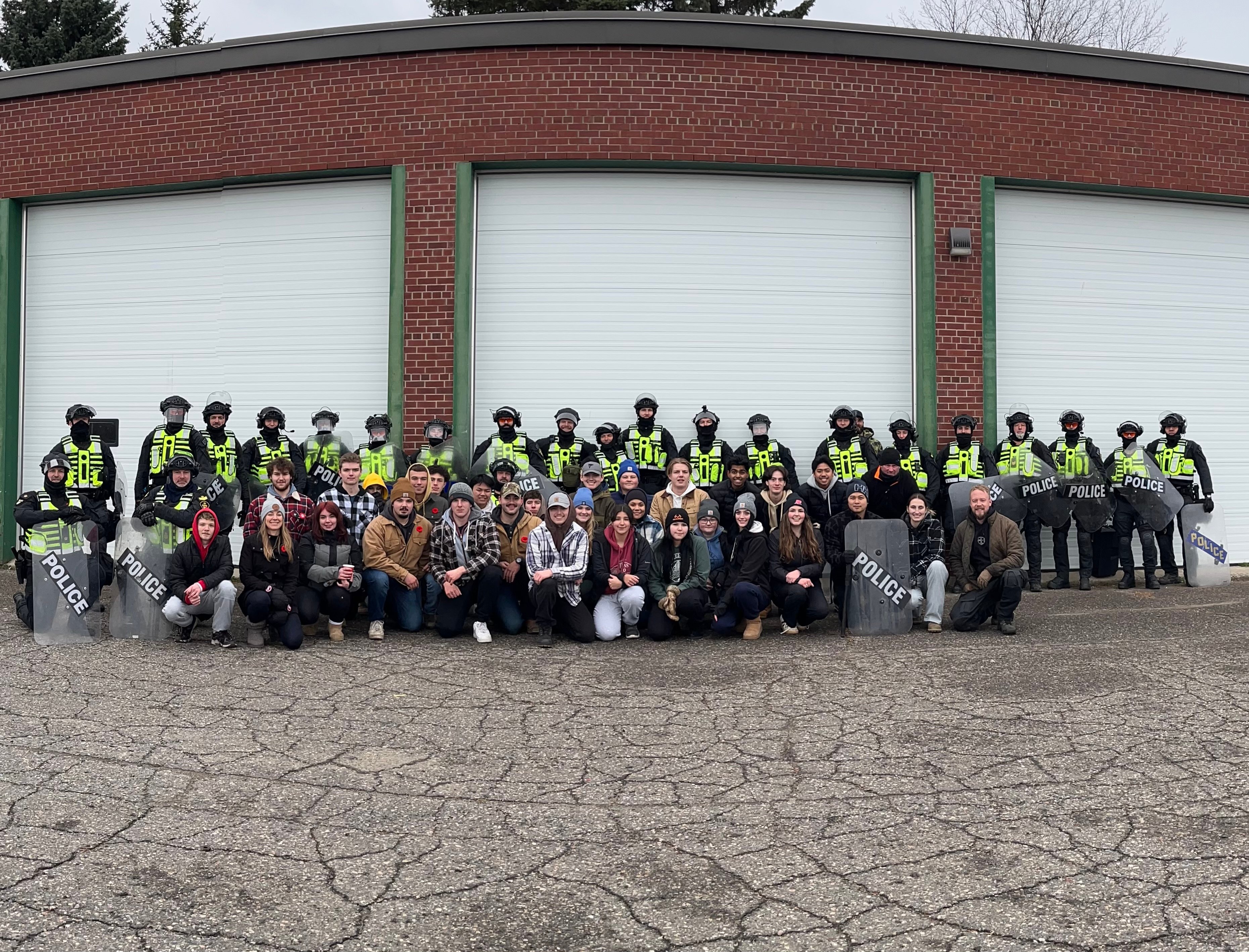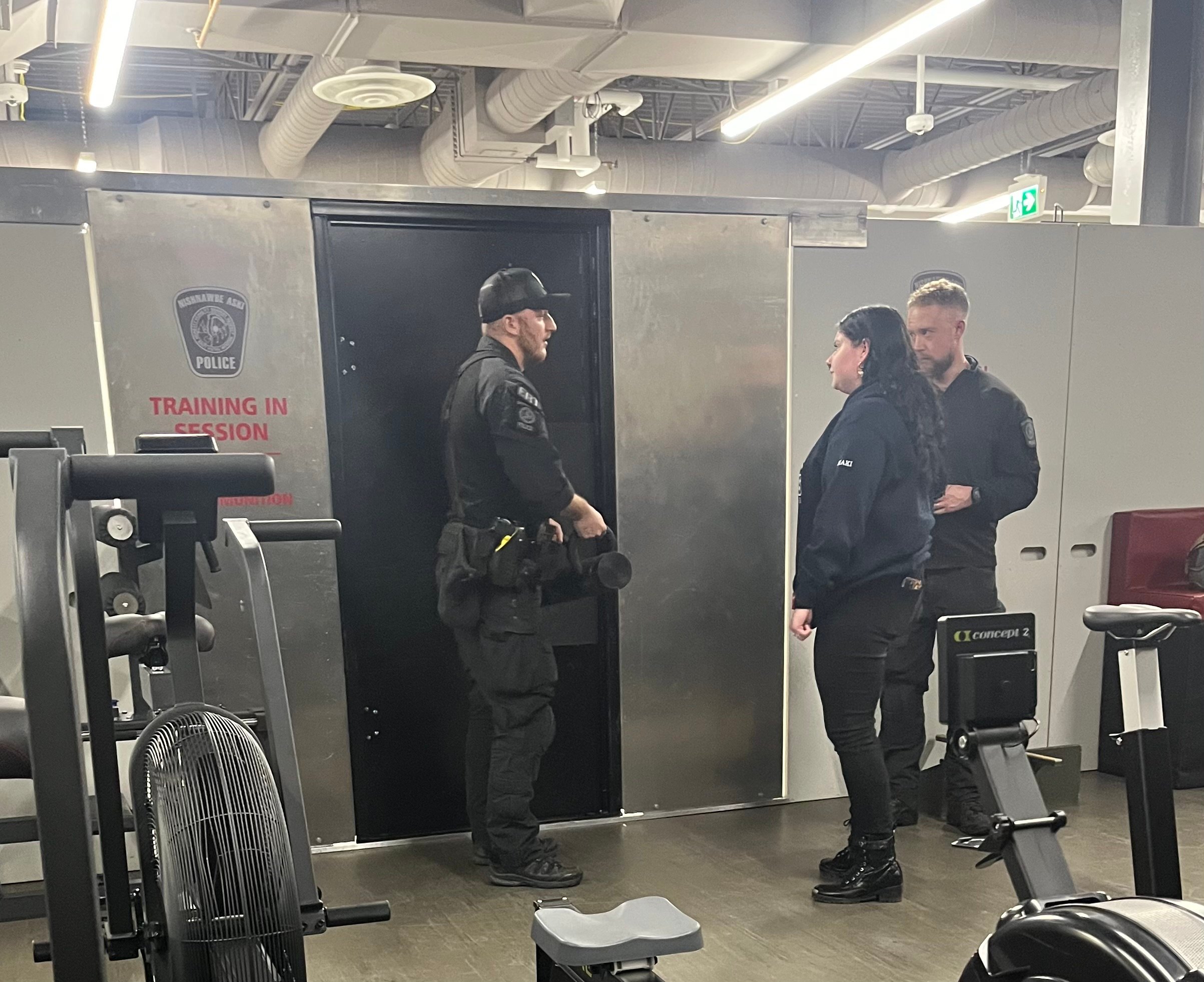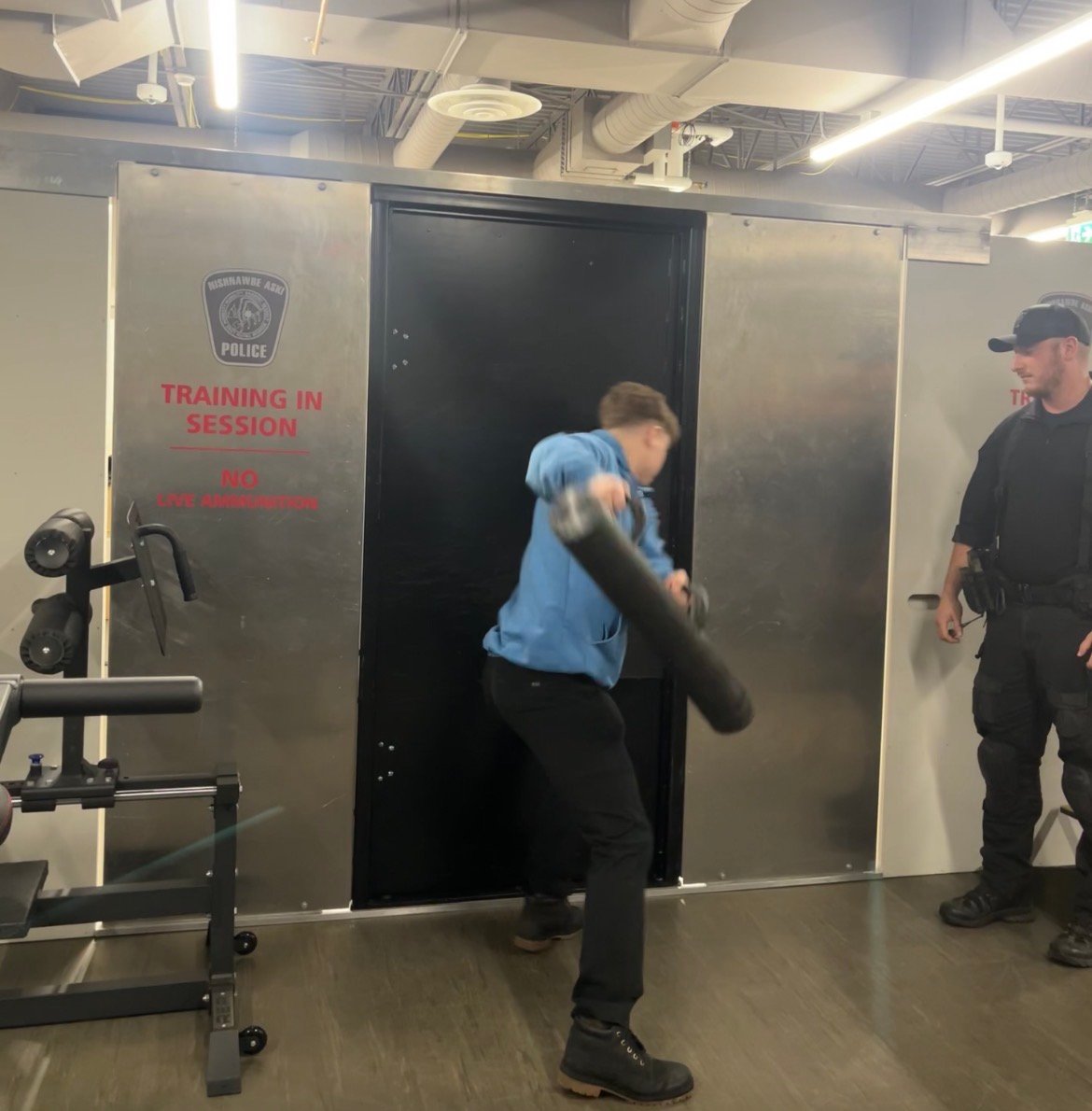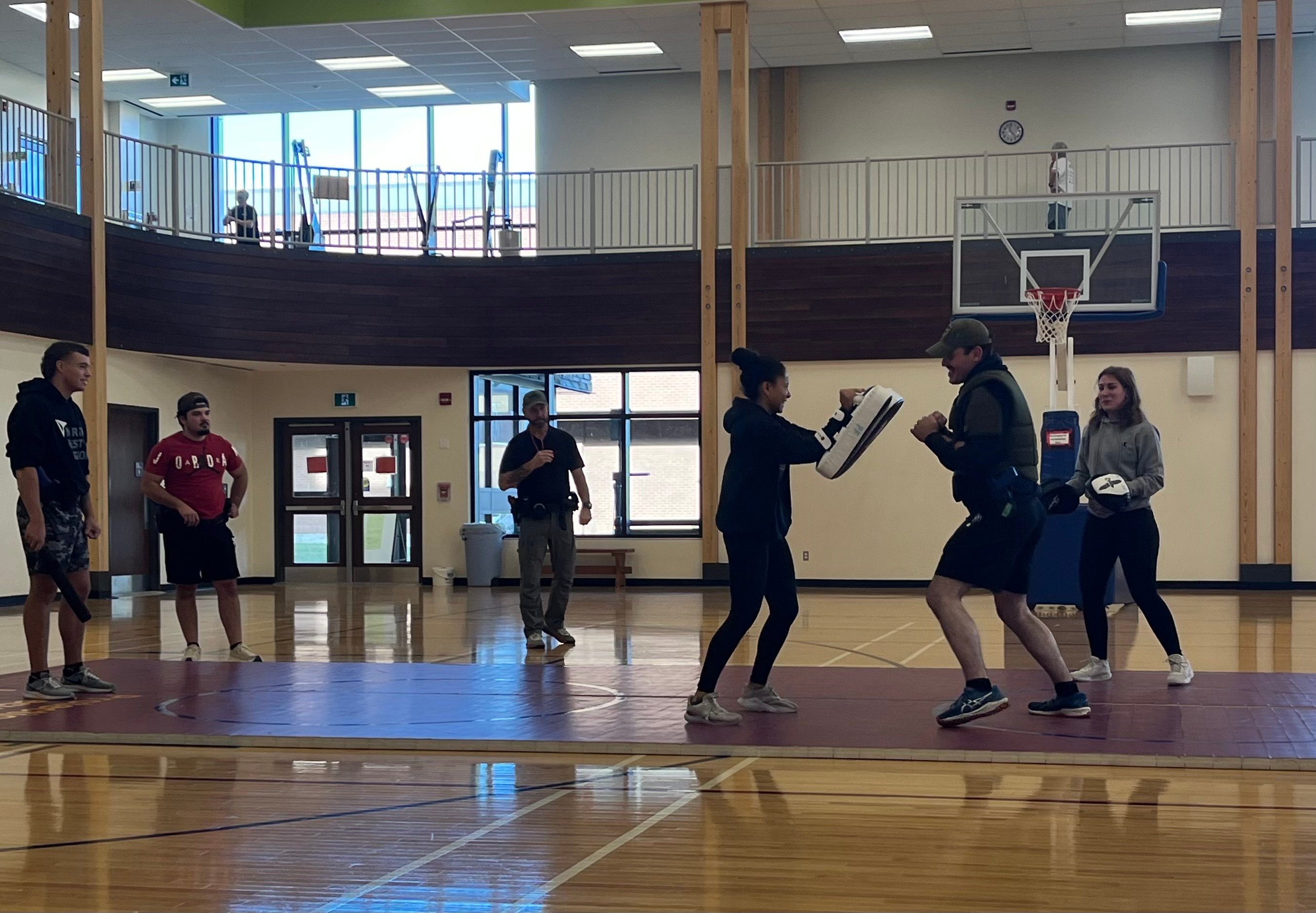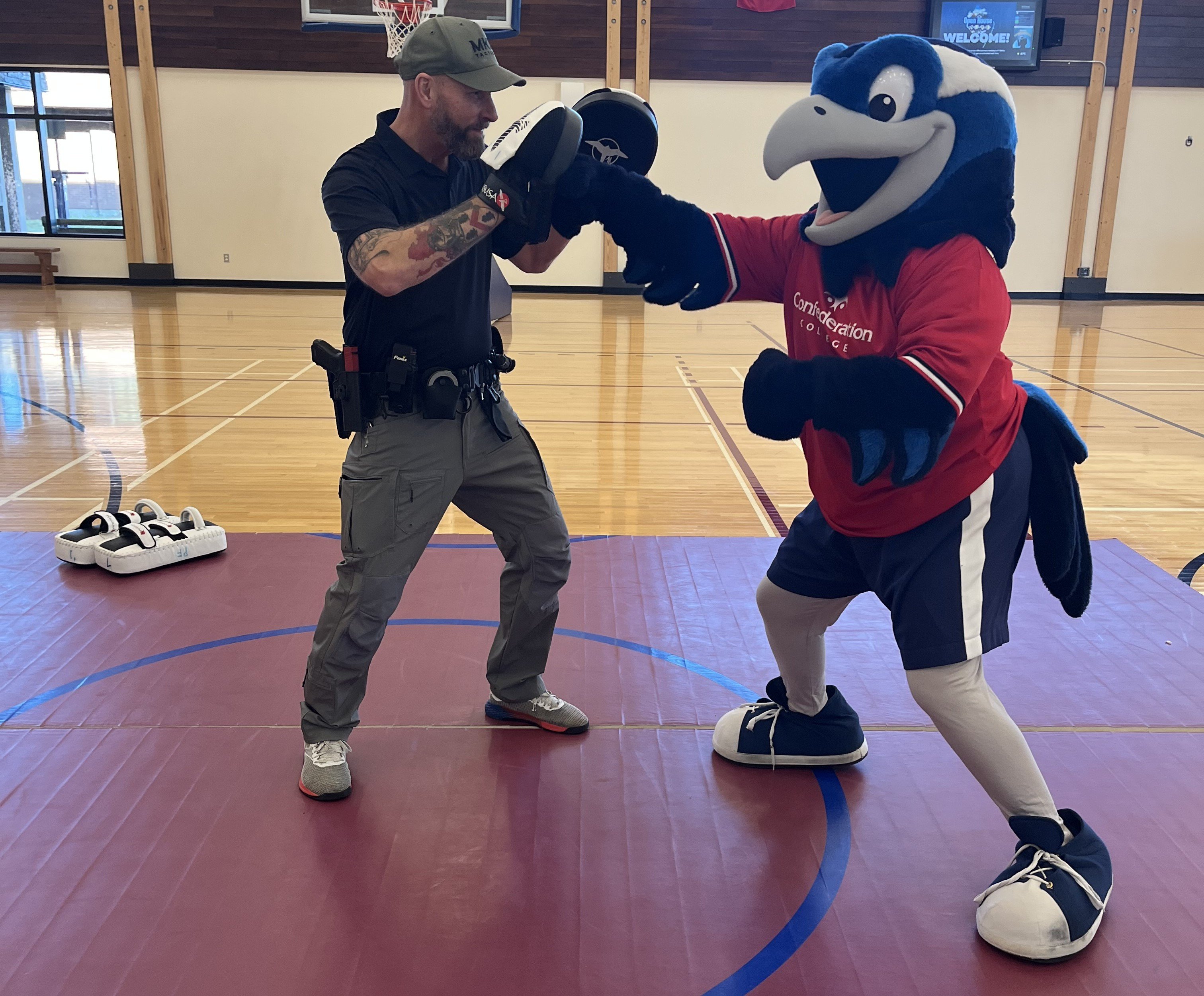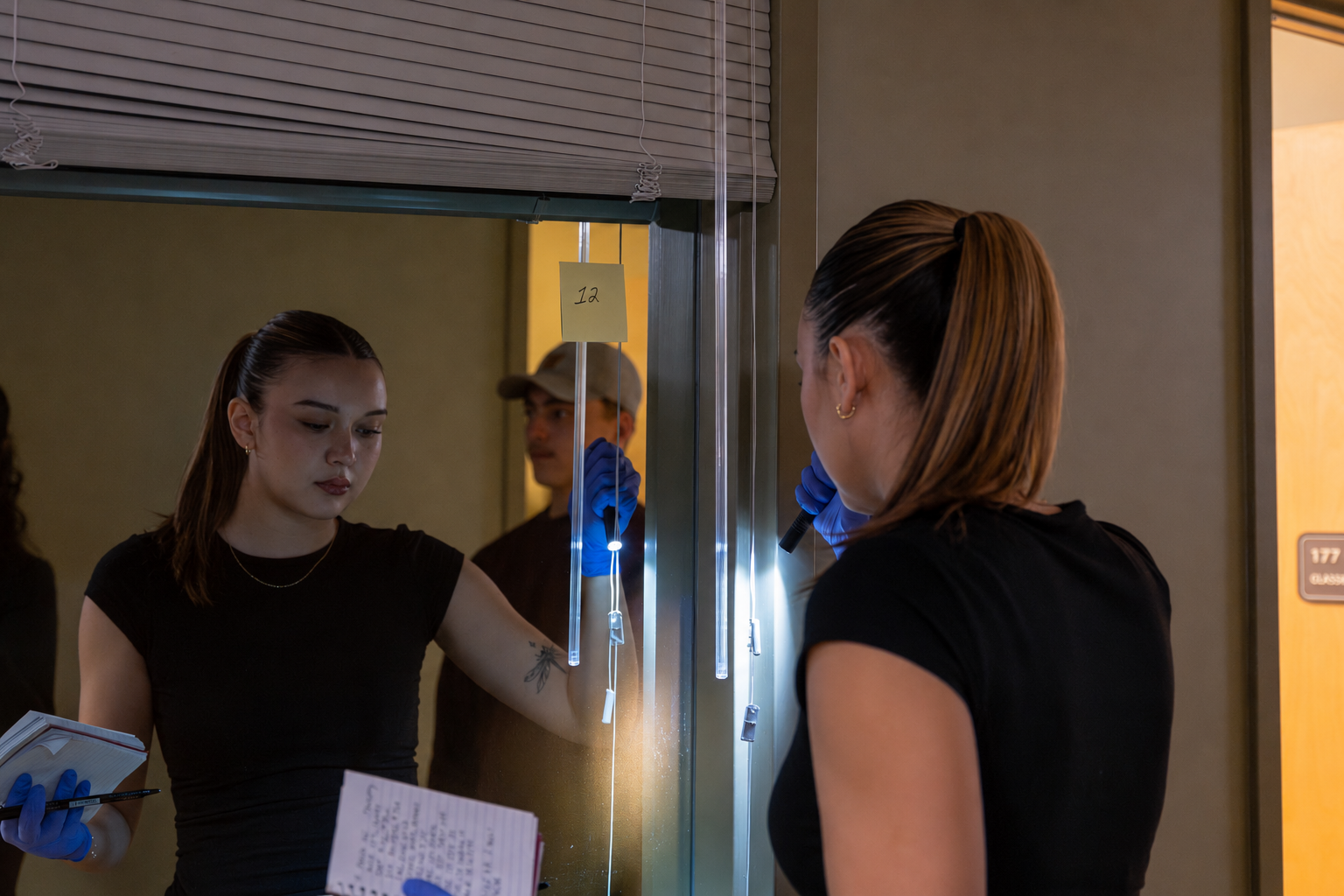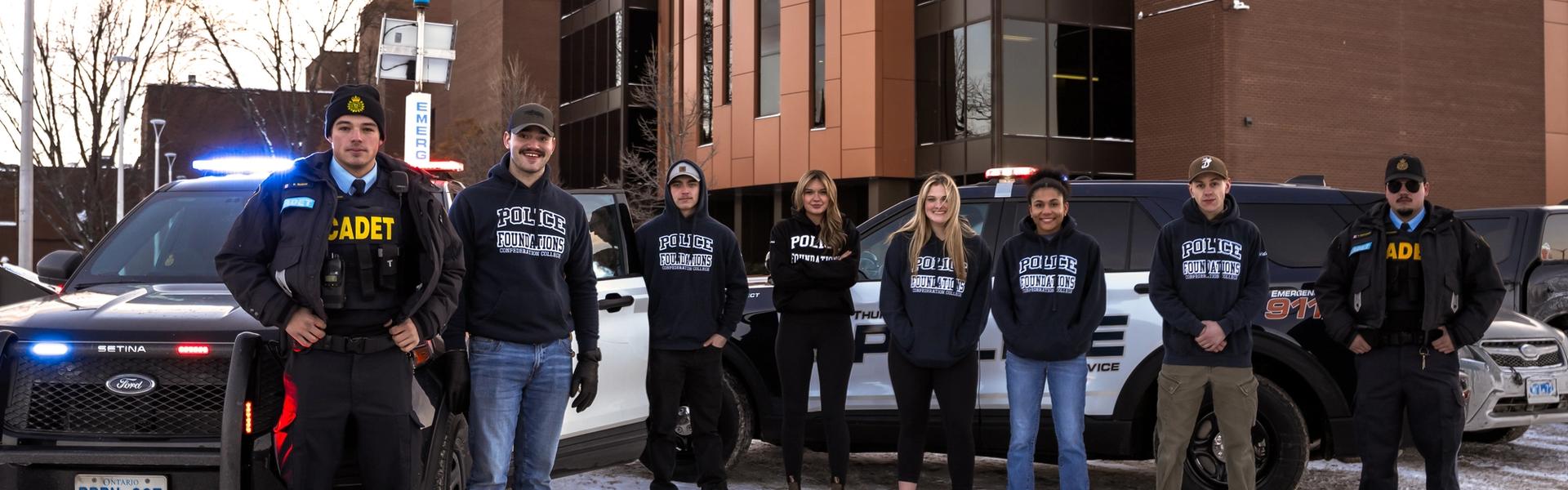
Police foundations students and cadets standing with patrol vehicles outside a campus building in winter.

Ontario College Diploma

Police Foundations: Investigations and Community Security

In the Police Foundations (Investigations & Community Security) program, you will learn how to conduct investigations and promote safety through hands‑on scenario training and field placements so you’re ready to support public security in your community.

CIP Code: 43.0107

Program Start Options

IntakeDurationFormatCampusDomesticInternational
0113
Fall
2 years
4 semesters
Full-Time
In-Person
Thunder Bay
Domestic students accepted
International students not accepted

Are you ready to Challenge Yourself, Build Your Skills, and Make an Impact?

Confederation College’s Police Foundations program provides comprehensive pre-employment training for careers in policing and community safety while helping you discover what it truly means to work in the profession.

This two-year diploma program combines classroom learning with practical, hands-on experiences designed to develop the knowledge, professionalism, resilience, and competencies valued by employers. Students gain a strong foundation in Canadian law, police powers, investigations, community policing, human relations, Indigenous knowledge and reconciliation, criminology, sociology, mental health and substance use issues, security services, and career preparation.

Throughout the program, you will strengthen your communication, problem-solving, and decision-making abilities through realistic scenarios, fitness training, and experiential learning opportunities. A strong emphasis is placed on health, wellness, fitness, and resiliency to help prepare students for the demands of a healthy, sustainable, and successful career.

Graduates leave the program with a competitive advantage, equipped with the practical experience, professional foundation, and discipline needed to pursue careers in policing, corrections, border services, and other community safety professions. The program also provides a strong foundation for continued education and career advancement.


Top Highlights

  • Pre-employment training is designed to give potential police candidates a broad education
  • Geared towards preparing students for the Ontario Constable Selection System, but graduates can pursue opportunities at all levels of policing
  • Learn from current and past law enforcement, probation and parole and correctional officers
  • Seamless Transition to University: Begin your academic journey at Confederation College and transfer directly into a related undergraduate degree at Lakehead University through a joint admission pathway
  • Students can qualify to write the Ontario ministry regulated security exam after first semester

Contact Information

Program Files

Get detailed information about program requirements, courses, and student resources.

Admission Requirements

Fall

Fall (0113)

Admission Requirements for Domestic Students

  1. Ontario Secondary School Diploma (or equivalent) with courses from the College (C), University (U), University/College (U/C), or Open (O) preparation levels with Grade 12 English (C/U) Level.
  2. or successful completion of the Mature Student Assessment.
  3. or successful completion of the Canadian Adult Education Credential (CAEC) or General Education Development Test (GED), prior to May 2024.
  4. or appropriate credits from the Academic and Career Entrance program (ACE).

Admission Requirements for International Students

This intake is not available for international students.

Alternative Pathways

If you do not meet these admission requirements, we encourage you to consider the College Access or General Arts and Science Certificate or General Arts and Science Diploma programs, or Academic and Career Entrance program (ACE); if you successfully complete one of these programs, you will be eligible to apply to programs in the Community Services and Protective Services areas.

Student Accessibility and Essential Program Requirements

Confederation College is committed to providing an accessible and inclusive learning environment and will provide reasonable accommodations to students with disabilities in accordance with the Ontario Human Rights Code, the Accessibility for Ontarians with Disabilities Act (AODA), and College policy.

Students who require accommodations are encouraged to engage with Student Accessibility Services and are responsible for initiating and participating in the accommodation process. Accommodation is a collaborative process involving the student, Student Accessibility Services, faculty, and the Academic School. Requests for accommodation are considered on an individual basis, and the College will work with students to identify reasonable accommodations that provide equitable access to learning while maintaining the integrity of the program.

Students are expected to demonstrate the essential knowledge, skills, professional behaviours, learning outcomes, and competencies required to successfully complete their program. While the manner in which these requirements are demonstrated may be accommodated where appropriate, the essential requirements themselves must still be achieved.

For programs involving laboratories, field work, clinical placements, aviation environments, trades training, equipment operation, simulations, community placements, or other environments where health and safety are critical, accommodations must also be consistent with applicable legislation, professional standards, licensing requirements, accreditation standards, and workplace safety obligations.

In some circumstances, a requested accommodation may not be reasonable or possible where it would:

  • Fundamentally alter an essential program requirement, competency, or learning outcome.
  • Compromise the health or safety of the student or others.
  • Conflict with provincial or federal legislation.
  • Conflict with the requirements of an external regulatory, licensing, accreditation, or professional body.
  • Prevent the student from demonstrating competencies required for safe and effective professional practice.
Note

Where a particular accommodation cannot be provided, the College will work collaboratively with the student to identify whether an alternative accommodation can appropriately address the student’s disability-related needs while maintaining essential program requirements.

Tuition & Fees

Fees for Domestic StudentsProgram Code: 0113

Year 1
Total: $5,413.00
Fee Breakdown
Academic Fees
Total Tuition Fees:$2,740.00
College Service Fee:$863.00
Health Fee:$305.00
Bus Fee:$332.00
$4,240.00
Program Fees
Record Check, Seminars, Courses, First Aid, Medicals:$143.00
Books & Supplies:$1,030.00
$1,173.00
Year 2
Total: $4,930.00
Fee Breakdown
Academic Fees
Total Tuition Fees:$2,740.00
College Service Fee:$853.00
Health Fee:$305.00
Bus Fee:$332.00
$4,230.00
Program Fees
Books & Supplies:$700.00
$700.00

Fees for International StudentsProgram Code: 0113

Year 1
Total: $19,425.25
Fee Breakdown
Academic Fees
Total Tuition Fees:$15,280.00
College Service Fee:$863.00
Health Fee:$652.25
Bus Fee:$332.00
$17,127.25
Program Fees
Record Check, Seminars, Courses, First Aid, Medicals:$143.00
Books & Supplies:$1,030.00
$1,173.00
Ancillary Fees
Municipal Levy:$75.00
Student Fees:$300.00
Recovery Fee:$750.00
$1,125.00
Year 2
Total: $18,942.25
Fee Breakdown
Academic Fees
Total Tuition Fees:$15,280.00
College Service Fee:$853.00
Health Fee:$652.25
Bus Fee:$332.00
$17,117.25
Program Fees
Books & Supplies:$700.00
$700.00
Ancillary Fees
Municipal Levy:$75.00
Student Fees:$300.00
Recovery Fee:$750.00
$1,125.00
Note

Please note that fees are estimated and are subject to change.

Fees shown on this page are for full-time students attending the main Thunder Bay campus for Fall 2026.

Costing for Regional Campuses & Distance Education Students:

If this program is available at Regional Campuses, or to Distance Education students, see the following links for costing information.

Courses

1 intake

Fall0113

Semester 1

PF 111

Canadian Justice System

42 hours

This introductory course provides the student with an overview of Canadian Justice Systems with particular emphasis on the history, function, role, and organization of Canadian law enforcement services. The operation of the criminal justice system will be examined along with areas of civil law. Students will analyze contemporary issues affecting the system. Each of the major components from enforcement through the courts and correctional services will be explored.

PF 112

Interpersonal and Strategic Communication

42 hours

This is an introductory course in group behaviour and interpersonal relations theory. Emphasis will be placed on utilizing effective communication skills with individuals and groups. Group cohesiveness and group decision-making will be discussed. Interprofessional Education will be explored.

PF 118

Fitness and Lifestyles Management I

42 hours

This course introduces the student to the concepts of wellness and provides practical strategies for developing a healthy lifestyle. Students, through lectures, practical experience, and self-evaluation, will address physical fitness, nutrition, self-responsibility, and social interaction. The student will develop strategies to implement an effective personal fitness program which will assist them to succeed in industry entry-level physical fitness tests.

CS 050

College Writing

42 hours

In this course, students will be introduced to academic writing styles with a thematic focus on current issues. This course will help students to express themselves clearly and correctly in written form. Students will critically analyse assigned readings and express their thoughts. The course will also focus on the development of an academic paper utilizing the APA style of documentation.

LS 126

Intro to Security Practices

42 hours

In this course, students will explore the roles and responsibilities of security guards and other protection services professionals. Students will discuss relevant legislation and investigative authorities, and the importance of respecting the application of authority. This course will prepare students for writing the security guard licensing examination for the province of Ontario.

PF 113

Introduction to Modern Policing

42 hours

In this course, the students will be introduced to the roles and responsibilities of the modern-day police officers. The students will broaden their knowledge of the career by examining current issues and industry trends facing the professional police officers. Special attention will be focused on the rules and regulations that governs police officers in Ontario as well as the challenges facing policing in Indigenous communities.

42 hours

Semester 2

LS 211

Career Preparation

42 hours

This course is designed to help students identify the knowledge, skills and attitudes needed to succeed in their chosen field of interest. Students will increase their self-awareness, and discuss their career goals and strategies to help achieve them. Career opportunities and entrance requirements for a variety of law enforcement and security agencies will be examined. Students will learn interview skills for behavioural based interviews common to most agencies, and participate in mock in-class interviews.

PF 221

Provincial Statutes

42 hours

In this course, the student will learn to locate, interpret, and apply sections of selected provincial statutes, including the Highway Traffic Act of Ontario and its regulations. Students will examine the purpose of each of the statutes, arrest, search, seizure and other special authorities contained in the statutes. Civil law will also be examined as it relates to the workplace. Students will develop and employ strategies and procedures for dealing with a variety of occurrences.

PF 222

Criminal Code and Federal Statutes

42 hours

In this course, students will analyze specific elements of selected criminal code offences including criminal traffic related matters. Students will also examine offences against the person, against property, and against public order. Students will research case law and assess its impact on criminal offences and use case law to argue or defend decisions.

PF 228

Fitness and Lifestyles Management II

42 hours

In this course, students will examine the concepts of wellness and provide practical strategies for developing a healthy lifestyle. This course will address physical fitness, stress management, coronary heart disease, substance abuse, and athletic injuries. The student will develop strategies to implement an effective personal fitness program and to successfully achieve occupational fitness standards.

SY 125

Introduction to Sociology

42 hours

This course will introduce students to the field of Sociology. Students will develop a general understanding of sociological perspectives by focusing on the basic concepts of sociology. Topics examined include, culture, socialization, sexuality, inequality, crime, deviance, education, religion, gender, media, globalization and the environment. Furthermore, students will be able to use basic sociological terminology and apply the major sociological perspectives to current social systems in Canada.

PF 227

Border Services and Corrections

42 hours

This course introduces students to the roles and responsibilities of the Border Service and Correctional Service Officers. Students will examine the similarities and differences between border services and corrections. They will analyze the legislative authorities of each profession as well as the powers and authorities associated. Students through a combination of theoretical lessons and practical exercises will assess various border security and corrections situations to determine appropriate actions and resolutions. Students will also get familiarized with the recruitment process for both organizations.

PF 320

Mental Health for 1st Responders

42 hours

Through dynamic simulations and self-assessment, students will examine the stigma associated with mental health and how mental health is addressed in the criminal justice system. It is imperative that individuals entering law enforcement are equipped with best practices when interacting with individuals who may be going through a mental health crisis as well as understand the unique challenges that a career in law enforcement may present to one's own mental health.

Semester 3

PF 321

Public Safety and Emergency Management

42 hours

Students review the political, social, and front-line applications of public safety and emergency management in Canada. Students broaden their knowledge of managing risk, logistics, deployment, and contingency emergency planning. Students examine procedures adopted by various agencies in response to major incidents, including natural disasters, major national and international security events, fires, pandemics, hostage situations, bomb threats and Amber Alerts.

PF 322

Arrest, Search and Use of Force

42 hours

Few subjects are as integral to the police and security roles as those of arrest, the use of force, and search. In these vital areas, the circumstances under which arrest is justified are discussed, together with the related topics of the use of force in arresting, the immediate search of the person arrested, and the rights of the person arrested. The protections available to the person arresting, and the various situations under which the accused person must be released or may be detained are studied. The broad function of the search of a person, place or vehicle with or without warrant is examined and the law as it pertains to the lawful use of force, and the limits placed on that use. In no other subject is the impact of the Charter of Rights and Freedoms so strongly felt, and such impacts are discussed as the topic arises.

PF 323

Introduction to Forensics GIT I

42 hours

This introductory course will provide students with an overview of the role that Forensic Science applications provide in the field of policing. Students will focus on topics that will provide a broad sense of the importance of Forensic Science. Topics will include history of forensic science, types of physical evidence, continuity and contamination issues, laboratory analysis, note taking and crime scene sketching. There will be a faculty guided lab component associated to this course.

PF 324

Law Enforcement Ethics and Leadership

42 hours

In this course, students will examine issues surrounding ethical decision-making in policing and law enforcement through scenario-based learning and the review of cases involving police and correctional/security misconduct. Students will be exposed to critical judgment exercises and sound ethical decision-making protocols. Students will also learn principles of leadership and followership and will explore the implications of law enforcement personnel being held to a higher standard as public role model.

PF 325

Fitness and Resiliency for Policing

42 hours

This course starts students on the road to mental resilience by providing an overview of common mental illnesses, such as depression, post-traumatic stress disorder and anxiety, and the factors that may influence these illnesses. This course also focuses on the role that stress plays in daily life and provides strategies to deal with stress. In addition, students will learn alternative ways to exercise and continue to focus on planning and documenting their journey to increase their physical well-being. The proper procedure to achieve the standard required for successful completion of various professional tests will also be explored.

PF 335

YCJA - Diversionary and Alternative Measures

42 hours

This course will enable the student to explain and analyze the historical, philosophical, and contemporary application of statutes affecting youth in conflict with the law. This course will also enable the student to examine and analyze, in the context of the Youth Criminal Justice Act and other relevant legislation, the detention, interviewing, and processing through the court structure of young offenders. The student will learn to summarize and appraise disposition alternatives that may be employed with a view to aiding and rehabilitating a young offender while facilitating public safety and victim response, if applicable.

PF 445

Conflict Management and Crisis Intervention

42 hours

This course is designed to prepare the participant to intervene in conflict and crisis situations. The conflict situation will be examined from its inception through intervention by law enforcement. Various problem-solving skills and non-violent intervention techniques will be discussed along with intervention strategies directed toward specific incidents. The student will be taught to recognize behaviour patterns that may lead to violent encounters and the appropriate legal responses. Emphasis will be placed on officer safety through awareness and preparation.

Semester 4

PF 430

Introduction to Cyber-Security

42 hours

This course will introduce students to the field of cyber security including the prevention of cybercrime. Students will learn how the basic elements of computer systems, networks and related devices can be exploited for illegal and illicit purposes or strengthened to protect assets and systems. Students will also learn about cyber incident response and how cybercrimes are investigated.

PF 431

Interpersonal and Tactical Responses

42 hours

In this course, students will acquire knowledge about interpersonal communication skills and strategic planning through a compliment of theory and simulation role plays. Students will have the opportunity to apply these skills in the development of their own personal communication style in order to respond appropriately to a variety of situations that may occur in their workplace. Emphasis will be placed on strategic communication and planning, which include active listening, rapport building, conflict resolution and threat mitigation. Specialized topics will include death and dying, crisis, trauma and suicide alertness.

PF 432

Community Mobilization and Engagement

42 hours

In this course, students are introduced to the history of community policing and the theory and application of Ontario's Community Mobilization and Engagement Model. Problem-solving methods and alternative dispute resolution strategies will be examined. Students will explore issues relating to community safety and well-being planning; engaging the public; upstream intervention strategies, such as situation tables and crime prevention; and the role of the community in policing. In addition, students will become familiar with strategies and elements of volunteerism.

PF 433

Crime Scene Analysis and Reconstruction GIT I

42 hours

In this course, students will examine the requirements of a continuing investigation. They will learn the rules of evidence and develop the ability to apply said rules in the collection and presentation of evidence in a court of law. Forensic requirements, statute law and other related issues will be emphasized.

PF 434

Career Fitness Testing

28 hours

As a continuation for lifelong commitment to fitness and success in meeting the requirements for the bonified physical and occupational requirements, the student participates in a practical setting to develop skills necessary to meet the physical demands of careers in policing or correctional services.

PF 435

Use of Force - Basics

28 hours

Develop a code of behaviour based on the principles of the Police/Public Interaction Training Model. Related basic control tactics are explored and refined.

42 hours

Learning Outcomes

The graduate has reliably demonstrated the ability to:

  1. Complete all tasks in compliance with pertinent legislation, as well as policing standards, regulations and guidelines.
  2. Analyze all relevant information and make effective and legally defensible decisions in accordance with ethical and professional standards.
  3. Be accountable for one’s actions when carrying out all tasks.
  4. Develop and implement ongoing effective strategies for personal and professional development.
  5. Ensure the respect of human rights and freedoms in all interactions.
  6. Work co-operatively in multidisciplinary teams to achieve mutual goals.
  7. Collaborate in the development and implementation of community policing strategies.
  8. Monitor, evaluate and document behaviours, situations and events accurately and discreetly in compliance with legal, professional, ethical and organizational requirements.
  9. Mitigate risks and maintain order by applying effective strategies in crisis, conflict and emergency situations.
  10. Take positive actions to help crime victims.
  11. Conduct investigations by collecting, documenting, preserving and presenting admissible evidence.

Meet the Program Staff

5 staff members

Confederation College

Ret. Sargent Sean Mulligan

Thunder Bay Police (Retired), Part-Time Faculty - Confederation College

View Profile
Photo of Ret. Inspector Lorne Clifford

Ret. Inspector Lorne Clifford

Thunder Bay Police (Retired), Lakehead University

View Profile

Careers

Graduates of the Police Foundations program will be prepared to apply for various policing positions across Canada at the municipal, provincial and federal levels. Note that completion of this course does not guarantee a position. Each police force has its own rigorous entrance standards including physical and other tests.

Other potential employment opportunities include Canadian Border Services, corrections, private security and policing, private investigations and other fields.

See Career Opportunities

Clicking the button will take you to a detailed dashboard with up-to-date job data tailored to your program, including salary ranges, job titles, and projected demand.

Pathways

Confederation College offers a variety of articulation agreements designed to help you advance your education and career. Whether you're coming to us from another institution or planning your next steps after completing your program, our pathways make your transition seamless and effective.

Pathway Out — Credits recognized by another institution

Lakehead University — Undergraduate Degree Programs at Lakehead University

This pathway allows students to begin a diploma at Confederation College and then apply to Lakehead University to continue into a degree program, combining hands-on learning with academic study.

Confederation College and Lakehead University offer a joint admission pathway that supports a smooth transition from diploma to degree studies.

Pathway Structure:

  • Students begin with a diploma program at Confederation College, focusing on applied, hands-on learning over two years
  • After completing their diploma, students transition to Lakehead University to pursue undergraduate degree studies

Key Features:

  • Combines practical, career-focused training with academic and theoretical education
  • Provides experience in two distinct learning environments
  • Prepares students with both applied skills and advanced knowledge

Admission Process:

  • Students who complete their diploma at Confederation College can apply directly to Lakehead University

Contacts

University of New Brunswick — Bachelor of Applied Management (BAM)

Graduates from eligible 2-year or 3-year diploma programs at Confederation College can apply to enter the third year of the Bachelor of Applied Management at the University of New Brunswick, with a minimum 70% program average. Additional courses may be required.

Minimum Admission Average
70% overall program average
Entry Point
Year 3 of a 4-year degree

Institution: University of New Brunswick, Saint John, NB

Agreement Type: Memorandum of Understanding

Graduates of eligible diploma programs at Confederation College may be considered for advanced standing in the Bachelor of Applied Management (BAM).

Eligibility Requirements:

  • Completion of a 2-year (four-semester) or 3-year (six-semester) diploma program
  • Minimum overall program average of 70%

Transfer Details:

  • Eligible students may enter Year 3 of the 4-year BAM program
  • Additional courses may be required depending on the applicant’s academic background

Program Notes:

  • Eligible Confederation College programs are outlined in Appendix A of the Memorandum of Understanding
  • Students should consult the contact person for full details and program-specific requirements

Contacts

Students at Confederation College

We're here to help

Have questions before you apply?

Not sure if this is the right fit? Our recruitment team can help you navigate admission requirements, program details, and campus life.