Indigenous Community Advocacy Program

Ontario College Diploma

Indigenous Community Advocacy: Naadaamaagewin

In the Indigenous Community Advocacy: Naadaamaagewin program, you will learn how to lead community-driven change through land-based learning and hands-on advocacy projects rooted in Indigenous knowledge.

CIP Code: 44.0201

Program Start Options

IntakeDurationFormatCampusDomesticInternational
0510
Fall
2 years
4 semesters
Full-Time
Hybrid
+7 more
Domestic students accepted
International students not accepted
Distance Education Program
0511
Fall
Accelerated
1 year
2 semesters
Full-Time
Hybrid
+7 more
Domestic students accepted
International students not accepted
Distance Education Program

Naadaamaagewin: Lending a helping hand

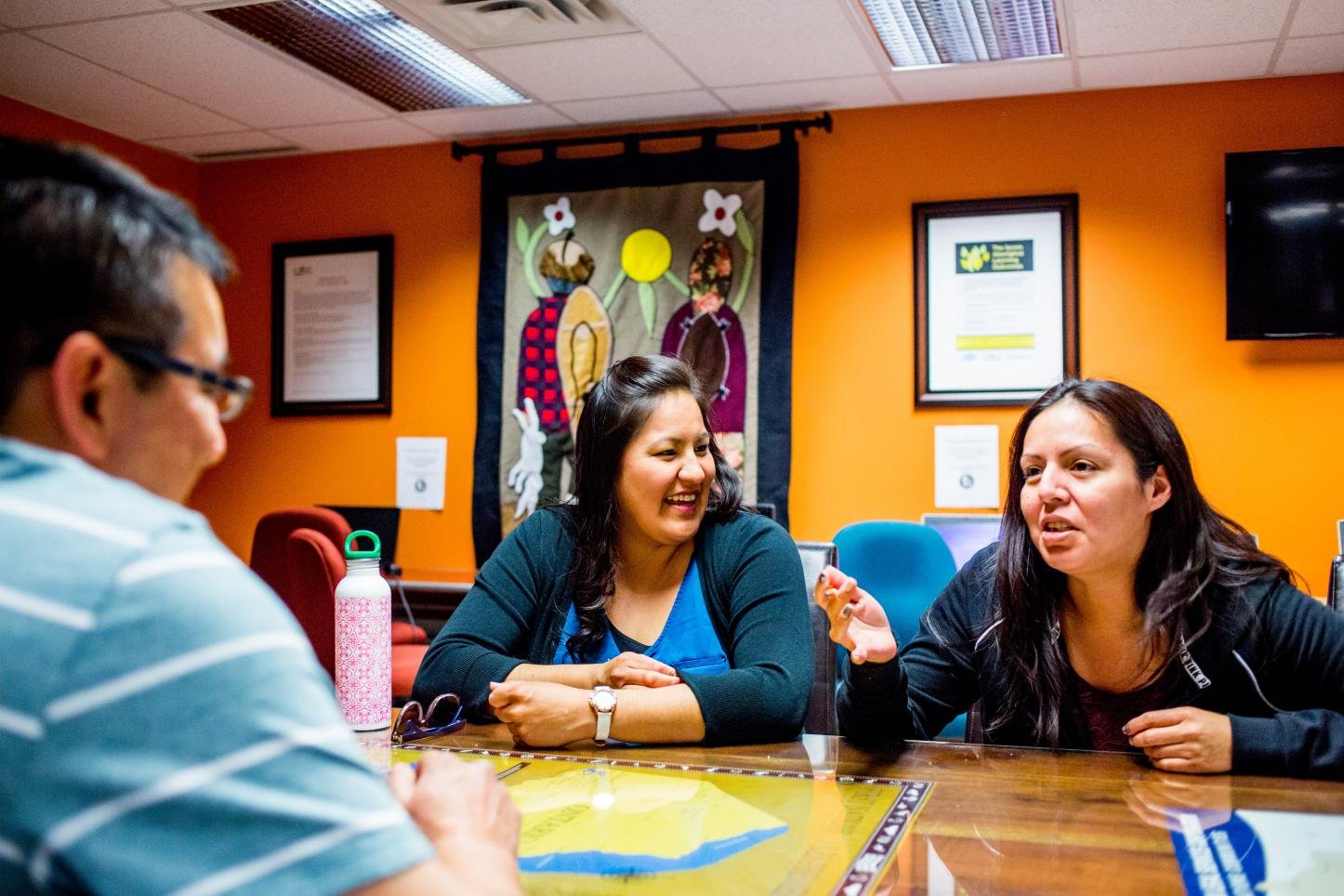
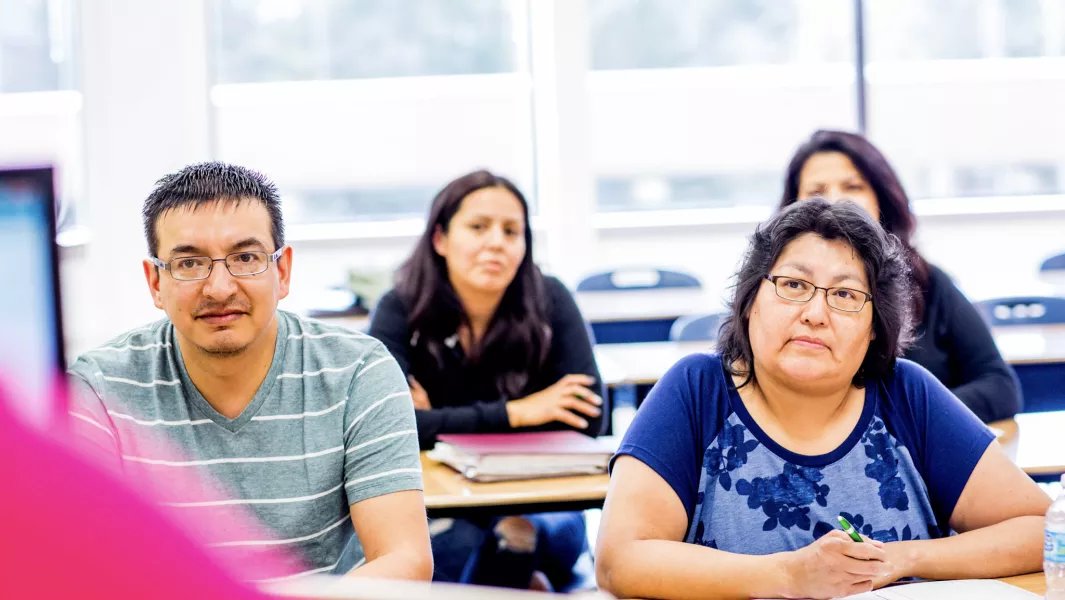
Confederation College’s Indigenous Community Advocacy: Naadaamaagewin program is a two-year transformative journey aimed at empowering individuals committed to championing Indigenous justice and self-determination. This program profoundly emphasizes Indigenous law and advocacy, fostering a deep understanding of Indigenous knowledge systems and ethical frameworks. Through an immersive curriculum, students amplify voices within Indigenous communities to raise awareness and enhance their capacity for self-governance.

By centering Indigenous well-being and nationhood, graduates emerge equipped with the tools to craft innovative solutions for community challenges. This program equips students with the skills to navigate complex political, social, and cultural landscapes, fostering meaningful dialogue on Indigenous and Canadian relations. Graduates are poised to initiate advocacy campaigns and lead community-based projects that contribute to the ongoing journey of truth and reconciliation. Join us in shaping a future where Indigenous communities thrive with autonomy and dignity.

The Accelerated Indigenous Community Advocacy Program offers an Ontario College Diploma in just one year.

Each year, a limited number of seats are available for individuals holding a university degree in Social Sciences or Humanities—such as Sociology, Indigenous Studies, Political Science, Women's Studies, or Social Work—or for community college graduates with a diploma in community or social services. In addition, students with other degrees and diplomas with relevant experience related to the Indigenous Community Advocacy Program may be considered.

  • The accelerated program will be comprised of courses from 1st and 2nd year.
  • The program duration of the accelerated program is two (2) semesters from September to May.
  • Students must apply through ontariocolleges.ca(opens in new window)
  • Students must have a minimum 2.0 or C average.
  • A recent transcript is required.
Top Highlights

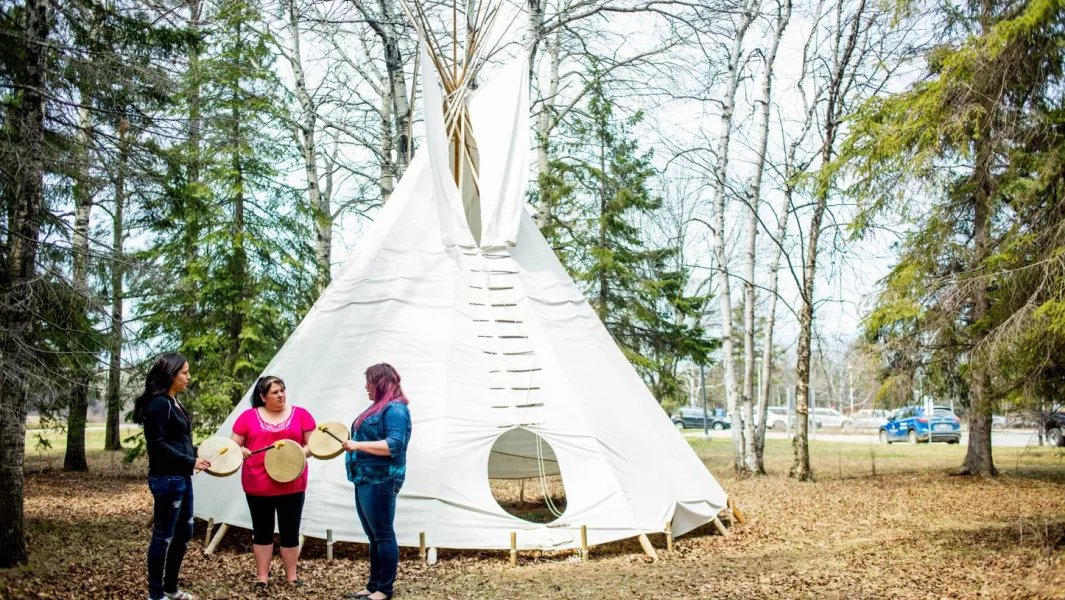
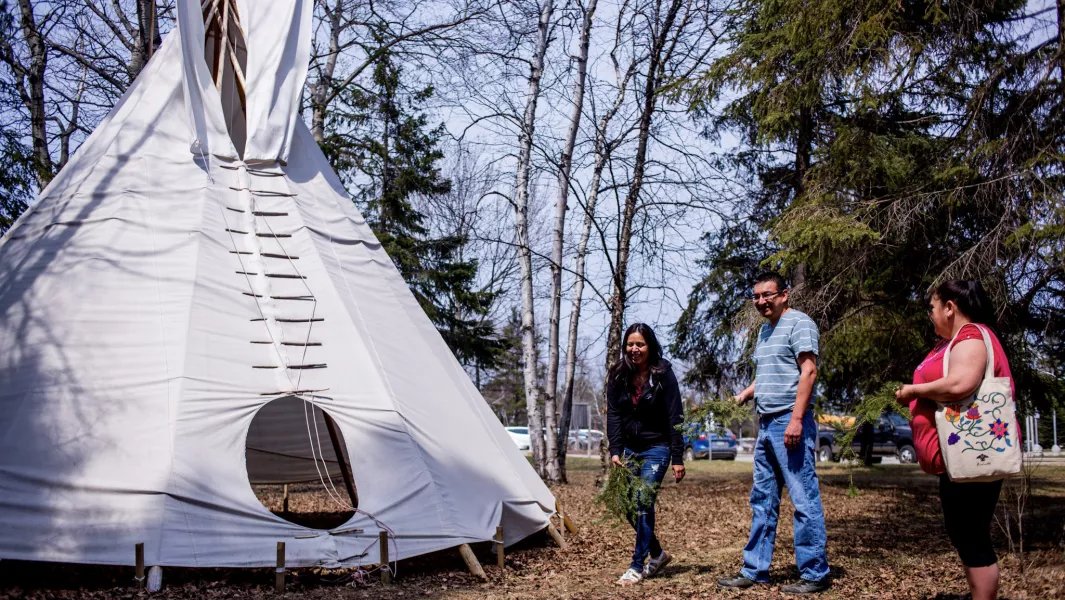
  • Land-Based Learning and Hands-On Experience: Engage in practical learning with Indigenous advocates, enhancing your understanding through real-world applications.
  • Legal and Political Insights: Gain a deep understanding of the legal and political relationships between Indigenous nations and the Canadian state.
  • Community-Based Projects: Develop and deliver impactful community advocacy projects that foster social change.
  • Pathways to Further Education: Opportunities to pursue undergraduate degrees in Political Science, Indigenous Studies, Sociology, and Community Economic and Social Development.
  • Seamless Transition to University: Begin your academic journey at Confederation College and transfer directly into a related undergraduate degree at Lakehead University through a joint admission pathway.

Ideal Candidate Profile

  • Succeed in the Indigenous Community Advocacy: Naadaamaagewin program if you are:
  • Empathetic and Compassionate: Understanding and sensitivity to Indigenous issues.
  • Resilient and Determined: Able to navigate complex social and political landscapes.
  • Ethical and Honest: Committed to ethical advocacy and research.
  • Culturally Humble: Respectful of Indigenous traditions and worldviews.
  • A Critical Thinker: Able to analyze legal and political relationships.
  • An Effective Communicator: Strong in both verbal and written advocacy.
  • Collaborative: Skilled in building respectful, professional relationships.
  • Passionate for Social Justice: Dedicated to promoting Indigenous self-determination and well-being.

Experiential Learning

  • Land-Based Learning: Participate in immersive land-based learning experiences that connect you deeply with Indigenous traditions and environmental stewardship.
  • Practical Projects: Develop and implement community-based advocacy projects, gaining hands-on experience in creating meaningful change.

Join Us

Become a part of Confederation College’s Indigenous Community Advocacy: Naadaamaagewin program and lend a helping hand ("Naadaamaagewin") in shaping a just and equitable future for Indigenous communities. Through this program, you will gain the knowledge, skills, and experience to advocate effectively and drive positive change.

Note

Students must achieve a C grade or better in all courses in order to continue in the program and graduate.

Contact Information

Program Files

Get detailed information about program requirements, courses, and student resources.

The Aboriginal Community Advocacy program changed my life—through hands-on placement, I found my dream job and reconnected with my Indigenous identity.

RW
Rilee Willianen
Graduate of 2020 – Research Assistant, Ontario Native Women's Association

The Indigenous Community Advocacy program challenged me to reflect deeply and engage respectfully with Indigenous communities—skills I now use daily in Canadian politics.

RSA
Robert St Aubin
Graduate of 2017 – Legislative Assistant, Federal MP Don Rusnak

The Aboriginal Community Advocacy program gave me essential, real-world skills and opened my mind to personal and professional growth—with the support of amazing instructors and peers.

NS
Natasha Salatino-Mach
Graduate of 2019

The Indigenous Community Advocacy program gave me the skills and confidence to turn my passion into a career. I was hired straight out of placement and now work with an agency that makes a real difference in Indigenous communities.

PH
Patricia Howells-Degagne
Graduate of 2017 – Community Development Administrator, Ontario Native Women's Association

"I left Confederation College feeling confident in my abilities, proud of my Indigenous identity, and prepared to contribute positively to society."

EA
Etanda Arden
Graduate of 2018 – Student, Lakehead University

The Indigenous Community Advocacy program opened my eyes to Canada's history and helped me build the skills I now use daily in my role. My time at Confederation College changed my life and gave me a clear path forward.

RM
Robert Mamakeesic
Graduate of 2019 – Health Transformation Assistant, Nishnawbe Aski Nation

The Indigenous Community Advocacy program gave me the strength, skills, and knowledge to return to college and make a meaningful impact in my community. The support I received helped me grow both personally and professionally.

NM
Nicole McKay
Graduate of 2010 – Remember Me Project, Beedaubin Art

The Aboriginal Law and Advocacy program opened my eyes to issues I hadn’t fully understood, even after previous post-secondary education. Its teachings have been invaluable in my work across diverse communities.

CC
Chris Cosby
Graduate of 2001 – Community Legal Worker/Paralegal, Scarborough Community Legal Services

Confederation College helped build my confidence and set me on a professional path focused on Indigenous issues, culture, and education. The support from staff and faculty was exceptional.

RM
Rachel Mishenene
Graduate of 1999 – Indigenous Liaison, Lakehead Board of Education

Admission Requirements

Fall

Fall (0510)

Admission Requirements for Domestic Students

  1. Ontario Secondary School Diploma with courses from the College (C), University (U), University/College (M), or Open (O) preparation levels plus...Grade 12 English (C/U) Level
  2. or successful completion of the Mature Student Assessment.
  3. or successful completion of the Canadian Adult Education Credential (CAEC) or General Education Development Test (GED), prior to May 2024.
  4. or appropriate credits from the Academic and Career Entrance program (ACE).

Admission Requirements for International Students

This intake is not available for international students.

Alternative Pathways

Applicants not meeting these admission requirements are encouraged to consider the College Access or General Arts and Science Certificate or Diploma programs. Applicants may also want to consider our Academic and Career Entrance program . Students who successfully complete one of these programs would be eligible to apply to programs in the Indigenous Studies and Community Services areas.

Fall (0511)

Admission Requirements for Domestic Students

Each year, a limited number of seats in the "Accelerated" Ontario College Diploma program will be available to qualified applicants.

  1. Degree or diploma from an accredited university or college in a related discipline.

Admission Requirements for International Students

This intake is not available for international students.

Prerequisites

  • A current Criminal Reference check is required for entry into this program.

Alternative Pathways

If you are interested in taking this program and do not meet the above requirements, please consider our 2 year Aboriginal Community Advocacy diploma program.

Student Accessibility and Essential Program Requirements

Confederation College is committed to providing an accessible and inclusive learning environment and will provide reasonable accommodations to students with disabilities in accordance with the Ontario Human Rights Code, the Accessibility for Ontarians with Disabilities Act (AODA), and College policy.

Students who require accommodations are encouraged to engage with Student Accessibility Services and are responsible for initiating and participating in the accommodation process. Accommodation is a collaborative process involving the student, Student Accessibility Services, faculty, and the Academic School. Requests for accommodation are considered on an individual basis, and the College will work with students to identify reasonable accommodations that provide equitable access to learning while maintaining the integrity of the program.

Students are expected to demonstrate the essential knowledge, skills, professional behaviours, learning outcomes, and competencies required to successfully complete their program. While the manner in which these requirements are demonstrated may be accommodated where appropriate, the essential requirements themselves must still be achieved.

For programs involving laboratories, field work, clinical placements, aviation environments, trades training, equipment operation, simulations, community placements, or other environments where health and safety are critical, accommodations must also be consistent with applicable legislation, professional standards, licensing requirements, accreditation standards, and workplace safety obligations.

In some circumstances, a requested accommodation may not be reasonable or possible where it would:

  • Fundamentally alter an essential program requirement, competency, or learning outcome.
  • Compromise the health or safety of the student or others.
  • Conflict with provincial or federal legislation.
  • Conflict with the requirements of an external regulatory, licensing, accreditation, or professional body.
  • Prevent the student from demonstrating competencies required for safe and effective professional practice.
Note

Where a particular accommodation cannot be provided, the College will work collaboratively with the student to identify whether an alternative accommodation can appropriately address the student’s disability-related needs while maintaining essential program requirements.

Tuition & Fees

Fees for Domestic StudentsProgram Code: 0510

Year 1
Total: $5,358.00
Fee Breakdown
Academic Fees
Total Tuition Fees:$2,740.00
College Service Fee:$863.00
Health Fee:$305.00
Bus Fee:$332.00
$4,240.00
Program Fees
Field Trip Fee:$75.00
Record Check, Seminars, Courses, First Aid, Medicals:$43.00
Books & Supplies:$1,000.00
$1,118.00
Year 2
Total: $5,365.00
Fee Breakdown
Academic Fees
Total Tuition Fees:$2,740.00
College Service Fee:$853.00
Health Fee:$305.00
Bus Fee:$332.00
$4,230.00
Program Fees
Field Trip Fee:$75.00
Record Check, Seminars, Courses, First Aid, Medicals:$60.00
Books & Supplies:$1,000.00
$1,135.00
Note

Please note that fees are estimated and are subject to change.

Fees shown on this page are for full-time students attending the main Thunder Bay campus for Fall 2026.

Costing for Regional Campuses & Distance Education Students:

If this program is available at Regional Campuses, or to Distance Education students, see the following links for costing information.

Courses

2 intakes

Fall0510

Semester 1

CS 050

College Writing

42 hours

In this course, students will be introduced to academic writing styles with a thematic focus on current issues. This course will help students to express themselves clearly and correctly in written form. Students will critically analyse assigned readings and express their thoughts. The course will also focus on the development of an academic paper utilizing the APA style of documentation.

LV 113

Indigenous Identity and Worldview

42 hours

This course examines the connections between Indigenous cultures, languages, and worldviews as they relate to the land. The influence of land on Indigenous worldviews will provide a way of understanding contemporary perspectives of identity and self-determination. In addition, students will be encouraged to examine and locate their own identity and worldview in relation to these concepts.

LV 114

Aboriginal Law I

42 hours

This course provides students with a comprehensive overview of the legal framework governing Indigenous rights and relationships in Canada. This foundational course is designed to lay the groundwork for a deeper understanding of Indigenous legal issues. It covers historical, constitutional, and contemporary aspects of Canadian Aboriginal law, enabling students to appreciate the complexity and significance of Indigenous rights within the Canadian legal system.

LV 213

Community Development Processes

42 hours

This course explores community development issues and the related impact of development on Indigenous communities throughout Canada. Students will gain practical skills in community consultation, community-based research and strategic planning, proposal writing and analysis of best practices in community development and applied research. This course will also prepare students to understand the ethical issues and dilemmas regarding research and Indigenous communities. With this knowledge, students will be well-positioned to carry out a community project in LV390.

LV 204

Introduction to Advocacy

42 hours

This course will prepare students for the responsibilities of community-based advocacy work. It will examine the history and use of a variety of approaches to advocacy. It will focus on Indigenous perspectives, community-based action, and examples of Indigenous-led action to address social change, rights and environmental concerns of their communities. By analyzing the techniques and impact of various movements, students will begin to identify and apply the various skills of advocacy to workshop settings. Emphasis will be placed on learning ethical, professional responsibilities of advocacy and representation. Self-evaluation, team building, and personal development will be examined as well as techniques and strategies of advocating for positive change on behalf of individuals and communities.

Choose one course from this group:

S01

LV 100

History of Indigenous Canadian Relations

42 hours

This course provides a comprehensive overview of the complex and evolving relationship between Indigenous peoples and the Canadian state from contact to present day. It will explore the different worldviews at contact, the years of cooperation and negotiation through the fur trade and treaty making era, and the impact of government colonial policy on Indigenous nations. The course will also explore the constitutional recognition of Aboriginal rights, which provides an important context for understanding contemporary issues between Indigenous and Canadian societies including land claims, treaties, and self-government.

OL 843

Decolonizing History: Indigenous-Canadian Relations

42 hours

This course takes a decolonized approach to examining Canadian history and the relationship between Indigenous peoples, settlers, and the Canadian government from first contact to the present. Focusing on Indigenous perspectives, worldviews, and experiences, it highlights early cooperation and partnerships during the fur trade, the significance of the treaty-making era, and the profound impact of British and early Canadian colonial policies on Indigenous rights, communities, and identity. The course also analyzes the lasting effects of colonization and the ongoing efforts of Indigenous peoples to heal from harm, reclaim their rights, and restore their culture in contemporary Canada. Finally, the course highlights Indigenous resilience, resistance, and resurgence in shaping modern society, deepening understanding of the historical and current dynamics between Indigenous peoples and Canada. This insight is crucial for engaging with the ongoing process of truth and reconciliation in Canada today.

Semester 2

LV 210

Indigenous Knowledge and Ethics

42 hours

This course will encourage students to fully explore the worldviews advanced by various Indigenous Peoples around the world with particular emphasis on traditional ecological knowledge. It will examine how traditional ecological knowledge is being used by communities to document and inform historic, cultural and land use traditions. By examining research protocols for working with traditional knowledge, students will gain an understanding of the complexities of Indigenous world view and how it informs decision making in communities. Students will use this ethical framework as a foundation for working with Aboriginal peoples and communities.

LV 214

Aboriginal Law II

42 hours

Aboriginal and Treaty rights, including Aboriginal title, is a specialized area of law in Canada. This course will look at how Aboriginal and Treaty rights are addressed in Canadian common law. Students will gain a general understanding of the laws in Canada as they apply to Aboriginal and Treaty rights, as well as various legal processes. Students will engage in a critical evaluation of the jurisprudence pertaining to Aboriginal and Treaty rights and its underlying tenets, such as the assumption of Crown sovereignty. This course also considers international law pertaining to Indigenous issues, including the United Nations Declaration on the Rights of Indigenous Peoples.

LV 390

Community Project

42 hours

Practical application of advocacy and public education skills form the basis for this course. Students will work together as a team to envision, plan and carryout a development project based on research conducted in LV213. The project should involve community organizing, participation, outreach and evaluation. The project will have a connection to social justice or raising public awareness of issues discussed in the program. The project will be community based and will require partnership with organizations and allies both within the College and in the Thunder Bay community. Students will have the opportunity to apply their classroom learning in an experiential manner.

LV 112

Comparative Governance Systems

42 hours

This course offers a comprehensive exploration and critical analysis of the government systems in Canada and among Indigenous peoples within its borders. Canada is home to a rich tapestry of Indigenous nations, each with its own unique governance structures, legal systems, and political traditions. This course delves into the historical, political, and socio-cultural factors that shape these diverse systems, aiming to foster a nuanced understanding of governance in a pluralistic society.

42 hours
42 hours

Semester 3

LV 310

Indigenous Women: Issues & Advocacy

42 hours

This course will survey the history of Indigenous women in Canada, including an examination of issues which impact the lives of Indigenous peoples. Traditional and contemporary roles of women will be discussed, with specific reference to the contributions of Indigenous women to social movements and changes to Canadian law(s), including the Canada Act 1982. The perspectives of Indigenous women will be provided to highlight contemporary issues facing women and communities.

LV 315

Indigenous People: Land & Environment

42 hours

This course examines Indigenous peoples relationship to land as it relates to environmental issues and resource use, with particular emphasis to Northwestern Ontario. An understanding of past, present and future roles of Indigenous people in land management presents an opportunity to explore options and alternatives for sustainable development in the North consistent with Indigenous principles of stewardship and land use. In addition, the course will examine how communities are using Indigenous knowledge(s) to develop sustainable options for land use in keeping with community values. Case studies, best practices, issues and legislation will be examined to provide students with the ability to inform decision making regarding community, land, resource use options and alternatives.

LV 300

Advanced Advocacy Seminar

42 hours

This seminar course is designed to reinforce skills-based learning with respect to advocacy on behalf of Indigenous Peoples in urban, rural and remote communities. Students will be introduced to a full range of alternative advocacy strategies, including the use of art, music, film and other media, and technologies including internet and other digital technologies. This seminar course is linked to the placement component of the program and therefore, along with developing effective advocacy skills, students will also be engaged in a critical analysis of community development principles and issues involved in the representation of communities and individuals.

LV 408

Indigenous Justice and Alternatives

42 hours

This introductory course examines the re-claiming of traditional and restorative justice by Indigenous communities. It will critique the history and impact of the mainstream adversarial system on Indigenous peoples and will use case studies to highlight the ways that Indigenous communities and Canadian society are implementing justice alternatives which are based on traditional and restorative models. Emphasis will be on the development of skills which can be used to implement restorative justice in a variety of settings.

LV 340

Mediation & Negotiation in Indigenous Communities

42 hours

This is an introductory course providing students to explore options in interest based conflict resolution, including mediation and negotiation. It will focus on developing a practical skill base for students in alternative dispute resolution related to Aboriginal communities. Delivered through experiential learning, students will practice important interpersonal and communication skills which can be applied to a variety of settings. The various applications of mediation and negotiation in Aboriginal communities will be highlighted throughout this course.

42 hours

Semester 4

LV 407

Placement

252 hours

The internship experience will allow the student to begin understand the role and responsibility of a community workers. The student will apply theories they have been exposed to in the classroom. Students will adhere to professional and ethical standards of the organization with which they are placed. The hours spent in the agency will allow the student to gain an understanding of their future profession. Students are expected to be skilled in developing effective interpersonal relationships with individuals, groups and communities. Students are expected to have an understanding of the structural roots of social problems and be effective advocates of positive social change in diverse settings.

LV 401

Advocacy and Capacity

42 hours

This course provides a comprehensive understanding of advocacy for various populations, focusing on Indigenous peoples. It explores the intersectionality of issues faced by young people, individuals with addictions, mental health challenges, and those with diminished mental capacity. Contemporary topics related to advocacy within Indigenous communities are also examined to provide a well-rounded perspective on the challenges and strategies for effective support.

Fall0511

Semester 1

LV 100

History of Indigenous Canadian Relations

42 hours

This course provides a comprehensive overview of the complex and evolving relationship between Indigenous peoples and the Canadian state from contact to present day. It will explore the different worldviews at contact, the years of cooperation and negotiation through the fur trade and treaty making era, and the impact of government colonial policy on Indigenous nations. The course will also explore the constitutional recognition of Aboriginal rights, which provides an important context for understanding contemporary issues between Indigenous and Canadian societies including land claims, treaties, and self-government.

LV 340

Mediation & Negotiation in Indigenous Communities

42 hours

This is an introductory course providing students to explore options in interest based conflict resolution, including mediation and negotiation. It will focus on developing a practical skill base for students in alternative dispute resolution related to Aboriginal communities. Delivered through experiential learning, students will practice important interpersonal and communication skills which can be applied to a variety of settings. The various applications of mediation and negotiation in Aboriginal communities will be highlighted throughout this course.

LV 114

Aboriginal Law I

42 hours

This course provides students with a comprehensive overview of the legal framework governing Indigenous rights and relationships in Canada. This foundational course is designed to lay the groundwork for a deeper understanding of Indigenous legal issues. It covers historical, constitutional, and contemporary aspects of Canadian Aboriginal law, enabling students to appreciate the complexity and significance of Indigenous rights within the Canadian legal system.

LV 213

Community Development Processes

42 hours

This course explores community development issues and the related impact of development on Indigenous communities throughout Canada. Students will gain practical skills in community consultation, community-based research and strategic planning, proposal writing and analysis of best practices in community development and applied research. This course will also prepare students to understand the ethical issues and dilemmas regarding research and Indigenous communities. With this knowledge, students will be well-positioned to carry out a community project in LV390.

LV 204

Introduction to Advocacy

42 hours

This course will prepare students for the responsibilities of community-based advocacy work. It will examine the history and use of a variety of approaches to advocacy. It will focus on Indigenous perspectives, community-based action, and examples of Indigenous-led action to address social change, rights and environmental concerns of their communities. By analyzing the techniques and impact of various movements, students will begin to identify and apply the various skills of advocacy to workshop settings. Emphasis will be placed on learning ethical, professional responsibilities of advocacy and representation. Self-evaluation, team building, and personal development will be examined as well as techniques and strategies of advocating for positive change on behalf of individuals and communities.

Choose one course from this group:

S01

LV 315

Indigenous People: Land & Environment

42 hours

This course examines Indigenous peoples relationship to land as it relates to environmental issues and resource use, with particular emphasis to Northwestern Ontario. An understanding of past, present and future roles of Indigenous people in land management presents an opportunity to explore options and alternatives for sustainable development in the North consistent with Indigenous principles of stewardship and land use. In addition, the course will examine how communities are using Indigenous knowledge(s) to develop sustainable options for land use in keeping with community values. Case studies, best practices, issues and legislation will be examined to provide students with the ability to inform decision making regarding community, land, resource use options and alternatives.

LV 310

Indigenous Women: Issues & Advocacy

42 hours

This course will survey the history of Indigenous women in Canada, including an examination of issues which impact the lives of Indigenous peoples. Traditional and contemporary roles of women will be discussed, with specific reference to the contributions of Indigenous women to social movements and changes to Canadian law(s), including the Canada Act 1982. The perspectives of Indigenous women will be provided to highlight contemporary issues facing women and communities.

LV 408

Indigenous Justice and Alternatives

42 hours

This introductory course examines the re-claiming of traditional and restorative justice by Indigenous communities. It will critique the history and impact of the mainstream adversarial system on Indigenous peoples and will use case studies to highlight the ways that Indigenous communities and Canadian society are implementing justice alternatives which are based on traditional and restorative models. Emphasis will be on the development of skills which can be used to implement restorative justice in a variety of settings.

Semester 2

LV 210

Indigenous Knowledge and Ethics

42 hours

This course will encourage students to fully explore the worldviews advanced by various Indigenous Peoples around the world with particular emphasis on traditional ecological knowledge. It will examine how traditional ecological knowledge is being used by communities to document and inform historic, cultural and land use traditions. By examining research protocols for working with traditional knowledge, students will gain an understanding of the complexities of Indigenous world view and how it informs decision making in communities. Students will use this ethical framework as a foundation for working with Aboriginal peoples and communities.

LV 214

Aboriginal Law II

42 hours

Aboriginal and Treaty rights, including Aboriginal title, is a specialized area of law in Canada. This course will look at how Aboriginal and Treaty rights are addressed in Canadian common law. Students will gain a general understanding of the laws in Canada as they apply to Aboriginal and Treaty rights, as well as various legal processes. Students will engage in a critical evaluation of the jurisprudence pertaining to Aboriginal and Treaty rights and its underlying tenets, such as the assumption of Crown sovereignty. This course also considers international law pertaining to Indigenous issues, including the United Nations Declaration on the Rights of Indigenous Peoples.

LV 390

Community Project

42 hours

Practical application of advocacy and public education skills form the basis for this course. Students will work together as a team to envision, plan and carryout a development project based on research conducted in LV213. The project should involve community organizing, participation, outreach and evaluation. The project will have a connection to social justice or raising public awareness of issues discussed in the program. The project will be community based and will require partnership with organizations and allies both within the College and in the Thunder Bay community. Students will have the opportunity to apply their classroom learning in an experiential manner.

LV 401

Advocacy and Capacity

42 hours

This course provides a comprehensive understanding of advocacy for various populations, focusing on Indigenous peoples. It explores the intersectionality of issues faced by young people, individuals with addictions, mental health challenges, and those with diminished mental capacity. Contemporary topics related to advocacy within Indigenous communities are also examined to provide a well-rounded perspective on the challenges and strategies for effective support.

LV 112

Comparative Governance Systems

42 hours

This course offers a comprehensive exploration and critical analysis of the government systems in Canada and among Indigenous peoples within its borders. Canada is home to a rich tapestry of Indigenous nations, each with its own unique governance structures, legal systems, and political traditions. This course delves into the historical, political, and socio-cultural factors that shape these diverse systems, aiming to foster a nuanced understanding of governance in a pluralistic society.

Learning Outcomes

The graduate has reliably demonstrated the ability to:

  1. Advocate for the advancement of Indigenous self-determination and self-government through the lens of Indigenous traditions and worldviews.
  2. Critique the legal and political principles that underlie the Indigenous/Canadian relationship.
  3. Apply research in an ethical and consultative manner to lead social change initiatives for Indigenous communities in a global landscape.
  4. Demonstrate methods of advocacy on behalf of Indigenous peoples to advance individual and community goals in the pursuit of justice.
  5. Develop a deep understanding of colonialism to better understand its impact on the current realities of Indigenous peoples.
  6. Develop respectful and collaborative professional and interpersonal relationships that facilitate open communication and promote competence as an Advocate.
  7. Describe ways that Indigenous communities and the Canadian Government might address issues of self determination based on best practices in governance, land and social policy.
  8. Explore the impact of colonialism on Indigenous culture and communities, and identify positive ways that Indigenous people are recovering and working towards self determination and self government.

Meet the Program Staff

2 staff members

Careers

Graduates of the Indigenous Community Advocacy: Naadaamaagewin program are sought after for their unique set of skills and knowledge by a wide range of organizations. Possible career paths include:

Justice Sector:

  • Court Workers
  • Gladue Writers and Coordinators
  • Restorative Justice Workers
  • Bail Workers
  • Community Release and Reintegration Workers

Policy and Advisory Roles:

  • Policy Analysts and Advisors
  • Intergovernmental Advisors
  • Anti-Racism Coordinators
  • Community Legal Workers

Community and Social Services:

  • Family Support Workers
  • Indigenous Peer Advocates
  • Housing Coordinators
  • Indigenous Engagement Coordinators
  • Indigenous Patient Navigators
  • Indigenous Resource Workers
  • Indigenous Victim Family Liaisons
  • Mental Health and Addictions Systems Navigators

Graduates can expect to find employment in sectors such as justice, criminal and family law, policy analysis, government relations, community work (both on-reserve and in urban centres), anti-racism and DEI work, housing policy, victim advocacy, child welfare and protection, healthcare, and addictions and mental health.

Pathways

Confederation College offers a variety of articulation agreements designed to help you advance your education and career. Whether you're coming to us from another institution or planning your next steps after completing your program, our pathways make your transition seamless and effective.

Pathway Out — Credits recognized by another institution

Lakehead University — Undergraduate Degree Programs at Lakehead University

This pathway allows students to begin a diploma at Confederation College and then apply to Lakehead University to continue into a degree program, combining hands-on learning with academic study.

Confederation College and Lakehead University offer a joint admission pathway that supports a smooth transition from diploma to degree studies.

Pathway Structure:

  • Students begin with a diploma program at Confederation College, focusing on applied, hands-on learning over two years
  • After completing their diploma, students transition to Lakehead University to pursue undergraduate degree studies

Key Features:

  • Combines practical, career-focused training with academic and theoretical education
  • Provides experience in two distinct learning environments
  • Prepares students with both applied skills and advanced knowledge

Admission Process:

  • Students who complete their diploma at Confederation College can apply directly to Lakehead University

Contacts

University of New Brunswick — Bachelor of Applied Management (BAM)

Graduates from eligible 2-year or 3-year diploma programs at Confederation College can apply to enter the third year of the Bachelor of Applied Management at the University of New Brunswick, with a minimum 70% program average. Additional courses may be required.

Minimum Admission Average
70% overall program average
Entry Point
Year 3 of a 4-year degree

Institution: University of New Brunswick, Saint John, NB

Agreement Type: Memorandum of Understanding

Graduates of eligible diploma programs at Confederation College may be considered for advanced standing in the Bachelor of Applied Management (BAM).

Eligibility Requirements:

  • Completion of a 2-year (four-semester) or 3-year (six-semester) diploma program
  • Minimum overall program average of 70%

Transfer Details:

  • Eligible students may enter Year 3 of the 4-year BAM program
  • Additional courses may be required depending on the applicant’s academic background

Program Notes:

  • Eligible Confederation College programs are outlined in Appendix A of the Memorandum of Understanding
  • Students should consult the contact person for full details and program-specific requirements

Contacts

Students at Confederation College

We're here to help

Have questions before you apply?

Not sure if this is the right fit? Our recruitment team can help you navigate admission requirements, program details, and campus life.