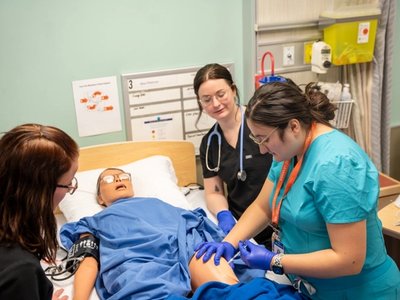
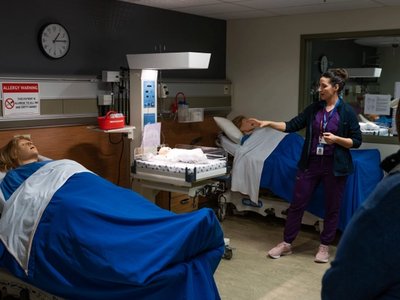
In the Honours Bachelor of Science in Nursing program, you will learn how to provide safe, holistic care through clinical placements and immersive simulation labs
CIP Code:51.3801
PGWP Eligible
This program meets the criteria to be Post-Graduation Work Permit (PGWP) eligible as defined by Immigration, Refugees and Citizenship Canada (IRCC).
Note: PGWP eligibility does not guarantee approval. IRCC assesses all applications individually.
Honours Bachelor of Science in Nursing (BScN) is a priority program eligible for the Ontario Learn and Stay Grant(opens in new window). Domestic students enrolled can apply for funding that will cover their tuition, compulsory fees, books, and other direct educational costs (ex: supplies and equipment). Students must commit to working in the region where they study, helping communities get the workers they need for in-demand professions.
If your ambition is to find rewarding employment with an emphasis on caring for people, this four-year degree is for you. The Bachelor of Science in Nursing (Honours) program stresses health promotion, illness prevention, and wellness, focusing on caring and compassion. You will engage in nursing care simulation and scenarios that will prepare you for a rewarding career as a Registered Nurse. Small class sizes, state-of-the-art simulation labs, and clinical placements that begin in year one provide opportunities to explore a variety of nursing roles. You will have access to large general nursing core labs, simulated nursing-specific care scenarios, and a simulated home environment.
Canadian Association of Schools of Nursing (CASN) Accreditation
Confederation College is proud to offer CASN-accredited nursing degree programs that meet the national standards established by the Canadian Association of Schools of Nursing (CASN) Accreditation Bureau.
The College has been awarded Path A Accreditation for both its:
Honours Bachelor of Science in Nursing (Honours BScN) – Four-Year Degree
Registered Practical Nurse (RPN) to Bachelor of Science in Nursing (BScN) Bridge
Path A Accreditation recognizes that a new nursing education program has successfully met CASN's rigorous national standards for quality in nursing education. Accreditation involves a comprehensive external review of program governance, curriculum, faculty qualifications, student supports, clinical learning experiences, resources, and continuous quality improvement processes.
Students enrolled in either pathway can be confident they are completing a program that has undergone an independent national review and has demonstrated compliance with CASN's accreditation standards.
Top Highlights
National Licensure: Graduates are eligible to write the National Council Licensure Examination - Registered Nurses (NCLEX-RN) required for licensing.
Bridge Program: Students who have completed the 2-year Practical Nursing (PN) diploma program can bridge into the third year of the BScN program (beginning in 2025).
State-of-the-Art Facilities: Access to simulation labs and equipment that mirror real-world healthcare settings.
Hands-On Practice: Practice with the same resources you will use in the field.
High Demand: With an increasing shortage of nurses, provincially, nationally, and internationally, graduates will have the opportunity to work in a variety of healthcare settings that may include family, community, institution, and individual healthcare environments.
Specialization Opportunities: Graduates can choose to specialize in an area of nursing practice.
Preliminary Approval: The new Confederation College Honours Bachelor of Science in Nursing and Registered Practical Nurse (RPN) to Honours Bachelor of Science in Nursing programs have received preliminary approval from the College of Nurses of Ontario (www.cno.org(opens in new window)). Graduates from these programs are eligible to apply for registration as a Registered Nurse in Ontario.
Ideal Candidate Profile
Compassionate and Caring: Dedicated to promoting health and wellness.
Detail-Oriented: Able to focus on precision in care practices.
Effective Communicator: Strong in both verbal and written communication.
Team Player: Able to work well both independently and as part of a healthcare team.
Adaptable and Resilient: Ready to face the demanding and dynamic nature of nursing.
Ethical and Professional: Committed to maintaining high ethical standards and professionalism.
Experiential Learning
Simulation Labs: Engage in state-of-the-art simulation labs that replicate real-world nursing scenarios, preparing you for the complexities of patient care.
Clinical Placements: Gain hands-on experience starting in your first year, exploring various roles within the nursing profession.
Ontario Secondary School Diploma (OSSD) with courses from the University (U), University/College(U/C), or University/College (U/C) levels with Grade 12 English (U) level;
A minimum of 6 Grade 12U or M courses, or equivalent, including program specific prerequisite courses;
Grade 12 University level Biology, SBI4U or equivalent,
Grade 12 University level Chemistry, SCH4U or equivalent,
Grade 12 University level Math, MHF4U or MCV4U or MDM4U, or equivalent.
Minimum final grade of 60% in each required course.
If you are currently enrolled in the course, you must have a midterm and final mark of 60% or higher to qualify for selection/admission.
A high school/senior secondary diploma with a grade 12 biology, grade 12 chemistry, and grade 12 math credit with a minimum passing mark of 60, or equivalent
Original transcripts as well as a notarized, translated copy must be provided where applicable
English Proficiency
Academic IELTS: 6.5, no band lower than 6.0 with the speaking band at 6.5
Prerequisites
For First Year Students:
Mandatory Clinical Placement Requirements (submitted during program orientation in September)
First-year BScN students at Confederation College require the following clinical requirements:
Basic Life Support (annual certification is required for the BScN Program)
Mask Fit Testing (recertification is required every two years)
An annual Workplace Hazardous Material Information System (WHMIS) Certification
Level 3: Police Vulnerable Sector Check (PVSC)(opens in new window)(obtain after April 1, 2026). A PVSC needs to be completed at the beginning of each academic year (this process could take up to 12 weeks) and remain current for the entire academic year. The check is used by our placement organizations (not the College) as a screening requirement of field placement. A criminal record may prevent you from participating in field placement experiences, thus preventing you from completing program requirements and registering with the College of Nurses of Ontario. Some placement organizations will allow positive criminal record checked students in their environments, but only after meeting with and talking to the student. It is up to the placement agency who they allow and do not allow in their organizations. The key here is to communicate soon and be efficient with your requirements. The only way to ensure that clinical placements will not be in jeopardy based on your PVSC is to have a clear PVSC. For additional information, please visit the Thunder Bay Police Service website(opens in new window). The Thunder Bay Police Service has now gone to an online application process and has streamlined the process of obtaining your PVSC. Please make sure you fill in your name and the name of program on the PVSC request letter that we have provided to you PRIOR to submitting your application.
Students may submit a Mask Fit or WHMIS Certification from a current employer or academic setting, if that certification was obtained after April of the year that you first enter the BScN Program (e.g. for those students starting the BScN Program in September 2026, please have your certificates dated no earlier than April 2026).
There are several options available to Confederation College students for obtaining these required certifications – see below. Begin the process of obtaining these required certifications as soon as possible. Students must submit these required certifications no later than September 15, 2026, electronically to the Placement Pass Portal.
First-year BScN students at Confederation College are also required to contact the Health Centre and make arrangements to obtain the following required injections:
Please note, our clinical partners are requesting that every student obtain a blood serology for MMR, Varicella, and Hepatitis B as a clinical requirement. You will be required to submit laboratory documentation proving immunity to MMR, Varicella, and Hepatitis B. If you are found not to have immunity, you must obtain booster vaccines, and complete the series of these boosters (if necessary).
Students are encouraged to make appointments quickly to avoid delays – for example, two-step Tuberculosis tests occur over the course of two weeks and blood serology may take several days/weeks to be reported and made available to the student. Health information is private and students must only submit their private health information to the Health Centre.
Prior to entering any clinical setting in any Semester you MUST complete all field requirements. Our clinical partners are requesting that every student obtain a blood serology. The Thunder Bay District Health Unit does not provide ‘blood serology’ testing or tuberculosis skin testing. Please obtain a laboratory requisition for blood serology from your Family Doctor, the Confederation College Health Centre, or any Walk in Clinic and go to any Life Labs for this blood testing (appointments with a Life Lab can be done online; please check their website). You will be required to submit laboratory documentation proving immunity to Measles, Mumps, Rubella, Varicella, and Hepatitis B. If you are found not to have immunity, you must get and complete any booster vaccine series. The Confederation College Health Centre will review documentation of immunization. We DO NOT accept original documents and ask that you copy your documents prior to visiting the Health Centre.
Students, who do not meet any of the above requirements, may not participate in clinical practice courses.
Students are encouraged to obtain an annual flu shot and the COVID-19 vaccination. Students must submit these items electronically to the Placement Pass Portal.
Students incur all fees associated with the above certifications or recertifications, and are not included in program fees. These included, but not limited to Basic Life Support, Mask Fit, WHMIS, Level 3 PVSC, one or two-step Tuberculosis skin tests, and any boosters required for immunization requirements.
For further questions please contact Abbey Mirabelli, Academic Manager - Healthcare Programs, School of Health, Negahneewin and Community Services, Abbey.Nedgial@confederationcollege.ca
Mandatory Clinical Placement Requirements:
Prior to entering any clinical setting, you must have all of your pre-clinical requirements completed.
If your field requirements are not completed prior to starting your placement, you will not be allowed to begin placement. To avoid disappointment, the process of completing your pre-clinical requirements should be done at the beginning of the summer prior to the start of the first semester.
More information coming soon.
Alternative Pathways
If you do not possess the necessary admission requirements (or equivalency), we encourage you to consider our Pre-Health Sciences — Pathway to Advanced Diplomas and Degrees program which will provide you with the necessary preparation to apply to this program. Completion of the Pre-Health Sciences-programs does not guarantee admission to the Bachelor of Science in Nursing (BScN) Program in a subsequent year. Candidates must successfully complete the Pre-Health Sciences pathway to Advanced Diplomas and Degrees program with a minimum 60% in each required course in both semesters. They must also have a minimum overall 3.00 GPA to be eligible for the Bachelor of Science in Nursing (BScN) Program.
Students who have completed a Diploma in Practical Nursing can also enroll in the Honours Bachelor of Science in Nursing Program from Semester 1. A minimum GPA may be required.
Beginning in 2025, students will be able to “bridge” from Practical Nursing into year three of the Honours Bachelor of Science in Nursing program. The bridge will be offered over the spring/summer and will have limited seats.
Students can also complete the alternative pathways through upgrading. Please contact Admissions admissions@confederationcollege.ca or (807) 475-6213.
Tuition & Fees
Placement Pass
Confederation College has partnered with Placement Pass to provide a dedicated portal to upload your medical and non-medical requirements to achieve placement clearance. This fee includes full support from the Placement Pass team to review your required documents, unlimited questions and support from a nurse-led team, access to orientation drop-in support sessions, secure document storage for 7 years. More information on Placement Pass will be provided through email for those students who are confirmed in the program.
Year 1 Cost: $65 + tax
Year 2 Cost: $32.50 + tax
Year 3 Cost: $32.50 + tax
Year 4 Cost: $32.50 + tax
Note
Please note that fees are estimated and are subject to change.
Fees shown on this page are for full-time students attending the main Thunder Bay campus for Fall 2026.
Costing for Regional Campuses & Distance Education Students:
If this program is available at Regional Campuses, or to Distance Education students, see the following links for costing information.
This course describes human anatomy and physiology at the cellular, tissue, organ, and system levels of organization. Aspects of this course will concentrate on the clinical application of anatomy and physiology. The course is delivered each week as three (3) hours of lecture, three (3) hours of laboratory activity.
This course introduces the student to fundamental theoretical concepts and practice skills that maintain and promote health and healing. Students will learn and safely demonstrate health promotion and maintenance skills in the lab and are required to apply their knowledge and skills in the clinical setting.
This course is an introduction to professional relationships in nursing with a focus on reflection through self-awareness, relational communication, and professional writing skills.
This course is an introduction to the foundations of nursing as a profession. It includes the history of nursing, nursing education, teaching and learning foundations and the Canadian health care system. The regulation of the nursing profession, the nursing process, and the role of nursing within the interprofessional team are discussed.
This clinical course will provide the student with opportunities to demonstrate basic nursing skills, with a focus on the older adult population. The student will assess, plan, implement, and evaluate nursing care for one adult client. The student will practice, and safely apply, newly acquired theoretical and practical nursing knowledge from other nursing courses (including BN 105 The Fundamentals of Nursing). By the end of this clinical experience, students are expected to assist one adult client with all activities of daily living (autonomously); begin to develop their critical thinking skills by contributing to self-reflection exercises; and effectively integrate new and prior learning.
The course examines through a culturally safe, anti-racist, and anti-discriminatory lens concepts and theories required of the Registered Nurse to provide culturally appropriate care to Indigenous people. Through self-reflection on the positionality of the Registered Nurse in the Code of Ethics and professional responsibilities to respond to the Truth and Reconciliation Commission of Canada's Calls to Action, the learner will foster an understanding of colonization and cultural genocide and its impact on Indigenous people in Canada. The learner will obtain and apply knowledge of core concepts in Indigenous culture, worldviews, and ways of knowing in meeting the wholistic needs of Indigenous people. Through analyzing historical and contemporary issues impacting Indigenous people, the learner will foster and devise leadership skills in advocating for Indigenous people in their future role as Registered Nurses.
This course continues the description of the anatomy and physiology of a healthy adult human body that was begun in SN100. The cellular, tissue and organ levels will be studied as they apply to the following organ systems: nervous, endocrine, cardiovascular, respiratory, lymphatic, immune, digestive, urinary and reproductive. In addition, an examination of fluid, acid/base and electrolyte balance will be undertaken. Aspects of clinical relevance will be included for several systems. The course includes, weekly, three hours of theory in lecture format and three hours of lab activity.
This course will provide students with the basic principles and components of a holistic nursing assessment, with focus on the well adult. Students will gain knowledge and skills in communication, interviewing and assessment of the physical and mental status of individuals. Students will learn normal and select abnormal assessment findings. Students will learn and safely demonstrate their skills in the labs setting and are required to integrate their knowledge and skills into their clinical practice. Learners are required to integrate new and prior learning.
The learner will explore and understand the foundational concepts of therapeutic nurse-client relationships to foster person-centered care. Through analyzing group processes and functions, the learner will explore communication strategies, reporting methods, role clarification, delegation, and interprofessional collaboration to aid in the development and sustainment of professional relationships required for nursing practice. Strategies to mitigate confrontation and conflict resolution are explored through a de-escalation approach. The learner will be able to understand alternative methods of communication, communication for palliative care, and technology support for communication.
This clinical course will provide students with the opportunity to demonstrate the basic principles and components of the nursing assessment, with a focus on the older adult population. Students will demonstrate knowledge and skills in communication, interviewing and assessment of the physical and mental status of individuals; normal and select abnormal assessment findings; and integrate their new and prior learning knowledge and skills into clinical practice.
This course explores the systematic changes and continuities that occur in people from birth to death. The interrelationship of psychological, cognitive and psychosocial development will help inform understanding of the human experience. Nature-Nurture, one of the central issues in the study of development, will be highlighted throughout the course to understand the interaction between cultural, social and historical impacts and biological maturation. In addition, to studying human development in a systematic way, students will gain a personal understanding of their own lives in the context of lifespan development.
Biochemistry is the study of the chemical processes that drive biological systems. This course explores the basic principles of biochemistry and develops the student's appreciation and understanding of biological networks. Because the field of biochemistry is continually evolving and touches many areas of cell biology, this course also includes an elementary introduction to the study of molecular biology. Students will be introduced to general biochemical concepts that will provide a basis for understanding the biological and chemical principles underlying human physiology and disease.
This course introduces the learner to the study of pathophysiology. The learner will recall knowledge from anatomy and physiology as foundational knowledge required for the study of pathophysiology. The learner will examine pathophysiological concepts of acute and secondary illnesses impacting patients across the lifespan through an integrated, system-based, and case-study approach. Medical terminology, diagnostic, and laboratory testing will be explored as they relate to select acute and acute illnesses. This course will support the knowledge, skills, clinical reasoning, and clinical judgment required for courses, clinical, laboratory, and simulation components of the Bachelor of Science in Nursing program.
This course focuses on experiences with complex health challenges from a foundational perspective. Opportunities are provided to apply the nursing process, demonstrate pattern recognition, increase self-directedness, and participate in delivery of comprehensive care of patients. Learners are required to integrate their knowledge and skills safely into their clinical practice to provide holistic, evidence-based care to clients with acute and chronic conditions. The learner will recall knowledge and skills of fundamental nursing practice, health assessment, relational practice, professional practice, anatomy and physiology, and biochemistry. The learner will integrate knowledge from pathophysiology, microbiology, and pharmacology into the nursing process to develop a care plan to care for clients with urinary alterations, fluid and electrolyte imbalances, endocrine disorders, hematological and immunological disorders, respiratory and cardiac disorders, and clients who require nonpharmacological and pharmacological interventions.
This course focuses on applying integrated pharmacological knowledge and interventions within the nursing process. The learner will explore pharmacology's basic principles, concepts, and processes. The learner will apply the principles of pharmacology, professional practice standards, legislation, and patient education to the role of the registered nurse in safe medication administration practices. The learner will discuss anticipating, monitoring, and evaluating actual or potential health risks and possible associated outcomes related to medication administration. The learner will examine the action, therapeutic indications, and nursing responsibilities of medications related to analgesics, adrenal agents, allergic reactions, intravenous solutions, and medications used to treat cardiovascular, respiratory, endocrine, and hematological disorders.
This course addresses the integration of nursing practice with health information, knowledge, data management and communication technologies to promote best practice strategies for the quality health of individuals, families and other groups, and communities worldwide (Canadian Nursing Informatics Association [CNIA], 2017). Through this introductory course, students will learn about the influence of information technology on clinical practice and explore methods of incorporating informatics into practice.
This course will provide the learner with opportunities to examine and apply the role of the Registered Nurse in caring for patients with acute and chronic conditions in a medical-surgical environment. The learner will demonstrate providing safe, competent, compassionate, ethical, and evidence-informed care across the lifespan in response to client needs. The learner will demonstrate the application of nursing knowledge, ethics, critical thinking, self-reflection, and the integration of evidenced-informed practices into the nursing process to care for clients with acute and chronic conditions in the clinical setting. The learner will foster their development of critical thinking, clinical reasoning, and clinical judgment in the clinical setting. At the end of the clinical experience, the learner will demonstrate competency in the nursing skills of sterile and non-sterile dressing changes, spirometry, chest physio, deep-breathing, coughing, splinting, medication administration (oral, eye, nose, inhalation, topical, rectal, vaginal, and parental), intravenous therapy, administering oxygen devices, and initiating, monitoring, and discontinuing Foleys or intermittent catheters.
The introduction to microbiology provides the learner with foundational knowledge that has applications in the health sciences including foundational nursing knowledge. The learner will explore theoretical and laboratory applications of course learning outcomes. The learner will explore the basics of microbial cell structure and function, antimicrobial therapy, drug resistance, antibodies, and laboratory/diagnostic microbiology. The learner will explore common infections and inflammatory responses in the immune system and lymphatic system, integumentary system, musculoskeletal system, and reproductive system. The learner will understand the involvement of microbes in emerging and re-emerging infectious diseases, nosocomial infections, and sexually transmitted infections.
This fundamental course focuses on caring for medical surgical clients with acute and chronic diseases. The learner will integrate the knowledge and skills to provide holistic, evidence-based care to clients with acute and chronic conditions in the theoretical, laboratory, and simulation setting. The learner will recall and apply knowledge and skills learned in previous semesters and alongside the current semester into the nursing process to develop and execute a care plan to care for clients with urinary alterations, fluid and electrolyte imbalances, endocrine disorders, hematological and immunological disorders, respiratory and cardiac disorders, and clients who require nonpharmacological and pharmacological interventions.
This course is a continuation of Medical-Surgical I. It continues to focus on experiences with complex health challenges from a foundational perspective. Opportunities are provided to apply the nursing process, demonstrate pattern recognition, increase evidence-informed and self-directedness. The course focuses on the knowledge and skills to provide holistic, evidence-based care to clients with acute and chronic conditions. The learner will recall knowledge and skills of fundamental nursing practice, health assessment, relational practice, professional practice, anatomy and physiology, biochemistry, microbiology, pathophysiology I, pharmacology I, and medical-surgical I. The learner will integrate knowledge from pathophysiology II and pharmacology II into the nursing process to develop a care plan for medical-surgical clients with acute and chronic conditions impacting the musculoskeletal, integumentary, respiratory, cardiac, neurological, male reproductive, gastrointestinal, genitourinary, endocrine, ear, and eyes systems.
This course focuses on applying integrated pharmacological knowledge and interventions within the nursing process. The learner will recall the basic principles, concepts, processes of pharmacology, principles of pharmacology, professional practice standards, legislation, and patient education in the role of the registered nurse in safe medication administration practices. The learner will discuss anticipating, monitoring, and evaluating actual or potential health risks and possible associated outcomes related to medication administration. The learner will examine the action, therapeutic indications, and nursing responsibilities of medications related to cultural and sensitivity testing, serum drug monitoring, medication reversal agents, general and local anesthetics, antibacterial, antiviral, antiretroviral, antifungal, vaccines, and medications that are used to treat disorders of the cardiovascular, gastrointestinal, genitourinary, neurovascular, musculoskeletal, endocrine, reproductive, eye and ear disorders, and cancer.
This course focuses on multifaceted ethical issues inherent in the delivery of holistic nursing care of diverse needs of patients, families and communities, from a Canadian perspective. Learners will integrate personal and professional values and beliefs to examine moral, professional, ethical, and legal nursing knowledge in relation to current practice.
This course will provide the learner with opportunities to examine and apply the role of the Registered Nurse in caring for patients with acute and chronic conditions in a medical-surgical environment. The learner will demonstrate providing safe, competent, compassionate, ethical and evidence-informed care across the lifespan in response to client needs. The learner will demonstrate the application of nursing knowledge, ethics, critical thinking, self-reflection, and the integration of evidenced-informed practices into the nursing process to care for clients with acute and chronic conditions in the clinical setting. The learner will foster their development of critical thinking, clinical reasoning, and clinical judgment in the clinical setting by applying fundamental nursing knowledge and skills. At the end of the clinical experience, the learner will demonstrate competency in the nursing skills used in Clinical III: Medical Surgical I and new nursing skills of pre-, intra, and post-surgical care, monitoring epidural, patient controlled analgesics, and anaesthetics, fractures, sutures, staples, and drain care, chest tubes, nasogastric insertion, enteral feeding and medications, intravenous insertion, intravenous medications, tracheostomy care, and caring for patient with central venous access devices.
This course builds on the concepts and study of pathophysiology presented in SN 300 Pathophysiology I. The learner will explore additional pathophysiological concepts of acute and secondary illnesses impacting patients across the lifespan through an integrated, system-based, and case-study approach. Medical terminology, diagnostic, and laboratory testing will be explored as they relate to select acute and acute illnesses. This course will support the knowledge, skills, clinical reasoning, and clinical judgment required for courses, clinical, laboratory, and simulation components of the Bachelor of Science in Nursing program.
This course will explore the science and fundamentals of human nutrition and the roles that various nutrients play in both health and illness across the lifespan. Students will learn how nutrition influences an individual’s health. The course will also investigate metabolic processes, nutritional conditions, and nutrition related diseases which impact body functioning.
This fundamental course focuses on caring for medical surgical clients with acute and chronic diseases. The learner will integrate the knowledge and skills to provide holistic, evidence-based care to clients with acute and chronic conditions in the theoretical, laboratory, and simulation setting. The learner will recall and apply knowledge and skills learned in previous semesters and alongside the current semester into the nursing process to develop and execute a care plan to care for clients with acute and chronic conditions impacting the musculoskeletal, integumentary, respiratory, cardiac, neurological, male reproductive, gastrointestinal, genitourinary, endocrine, ear, and eyes systems.
This course is designed to facilitate the development of knowledge related to the care of individuals, families, and groups experiencing acute and chronic alterations in mental health. Issues experienced from mental health and illness throughout the lifespan will be explored as well as mental status assessment, pharmacotherapeutics and the use of therapeutic communication skills as interventions.
This course focuses on the care of individuals and their support systems who receive an array of nursing services at a variety of levels through community agencies. Students are provided the opportunity to explore various nursing roles in the context of a defined community. Community health nursing concepts and skills for promoting individual system wellness are emphasized. Learners are required to integrate new and prior learning.
This course focuses on the nurse’s role in meeting the healthcare needs of childbearing families. Opportunities are provided to develop an understanding of reproductive health, obstetrical and neonatal nursing care. Learners are required to integrate new and prior learning.
Clinical V: Mental Health
This clinical course will provide students with clinical experience related to the care of individuals, families, and groups experiencing acute and chronic alterations in mental health. Learners are required to integrate prior knowledge and skills safely into their clinical practice. Assessments and care for people with mental health and illness throughout the lifespan will be explored as well as mental status assessment, pharmacotherapeutics and the use of therapeutic communication skills as interventions. Learners are required to integrate prior knowledge and skills safely into their clinical practice.
Clinical V: Surgical
This clinical course provides students with hands-on experience in the care of individuals experiencing acute and chronic medical-surgical conditions. Learners are expected to integrate previously acquired knowledge and skills into safe, evidence-informed clinical practice. The course emphasizes comprehensive assessments, clinical reasoning, pharmacological and non-pharmacological interventions, and the delivery of holistic, person-centered care. Students will gain experience in managing complex care needs, collaborating with interprofessional teams, and applying clinical decision-making skills across diverse adult populations in hospital settings. Learners are required to integrate prior knowledge and skills safely into their clinical practice.
This course focuses on the nurse's role in meeting the health care needs of children and families. Opportunities are provided to develop an understanding of growth and development, family assessment and pediatric nursing care including system dysfunctions. Learners are required to integrate their knowledge and skills safely into their clinical practice.
This course addresses population-centered health issues and risks. The student will learn about governmental structures for public health protection, principles that guide population health, and health policy development aimed to address recognized health disparities. Using epidemiology, students will gain a greater understanding about conditions that produce disease, disability, and death across Canada and around the world.
In this course, students learn the basics of nursing research and the value for selecting a quantitative methodological approach to investigate areas of nursing inquiry. The intent of the course is to aid students in becoming competent consumers of nursing research by understanding how quantitative research findings can be applied in their nursing practice.
This clinical course will provide students with experience related to the care of children and childbearing families. Opportunities are provided to apply knowledge in health assessment, nursing care, health promotion, and education of obstetrical and pediatric patients and their families. Learners are required to integrate prior knowledge and skills safely into their clinical practice.
This introductory course provides students with the basic concepts of data analysis and statistical computing. Technology and statistical literacy will be integrated to prepare them to address problems that involve collecting, measuring, analyzing, comparing and presenting data sets in a clear and meaningful way.
This course focuses on the advancement of nursing knowledge and skills, including emerging health care trends and associated nursing leadership responsibilities. Learners are required to integrate their knowledge and skills safely into their clinical practice.
This course explores the ways nurses can influence holistic change in clients, the nursing profession, the healthcare system and society. Emphasis is on strategies for enhancing nursing influence. Opportunities are provided for learners to explore ongoing and potential changes within the practice setting, current trends and complex nursing care issues. Learners are required to integrate new and prior learning.
In this course, students learn the basics of nursing research, and the value for selecting an emergent qualitative methodological approach to investigate areas of nursing inquiry. The intent of the course is to aid students in becoming competent consumers of nursing research by understanding how qualitative research findings can be applied in their nursing practice.
This course prepares senior nursing students for entry-to-practice through advanced simulation and clinical experiences in a variety of settings. Students will demonstrate increasing independence, leadership, and clinical judgment as they manage complex health scenarios. A variety of simulation modalities including high-fidelity, communication-based, gamified, and technical skill simulations support the integration of advanced assessment, pharmacotherapeutics, and culturally competent care. Emphasis is placed on interprofessional collaboration, evidence-informed practice, and person-centered care across diverse settings.
This course prepares senior nursing students for entry-to-practice through advanced laboratory and simulation experiences across a variety of settings. Students will demonstrate increasing independence, leadership, and clinical judgment while managing complex simulated health scenarios. Multiple simulation modalities, including high-fidelity, communication-based, gamified, and technical skills simulations, support the integration of advanced assessment, pharmacotherapeutics, and culturally competent care. Emphasis is placed on interprofessional collaboration, evidence-informed practice, and person-centred care within laboratory and simulation learning environments.
This course focuses on the transition of the learner into a new graduate nurse. Opportunities are provided to demonstrate competence with the College of Nurses Entry to Practice roles of a Registered Nurse including clinician, professional, communicator, collaborator, coordinator, leader, advocate, educator and scholar. Experiences in the consolidation setting will require the demonstration of student synthesis of both prior and new learning.
This course focuses on the theory and concepts of leadership and management in the professional nurse's role. The emphasis is on key skills required by highly effective nurse leaders/managers such as critical thinking, conflict management, delegating, building teams, stress management, and leading change. Learners are required to integrate new and prior learning.
This clinical course provides final-year nursing students with an immersive, hands-on experience designed to bridge academic learning and professional practice. emphasizing the transition from student to graduate nurse. The course focuses on developing clinical competence, critical thinking, professional accountability, and effective communication within diverse healthcare settings. Students will apply evidence-informed practice, leadership skills, and interprofessional collaboration to deliver safe, ethical, and patient-centered care. Through supervised clinical placements and reflective learning, students will prepare to confidently enter the healthcare workforce and meet the demands of dynamic, complex care environments.
The graduate has reliably demonstrated the ability to:
Meet professional practice requirements as identified in the current Entry-to-Practice Competencies and Professional Standards of the College of Nurses of Ontario.
Provide safe, competent, holistic care to diverse individuals, groups, and populations in a variety of contexts based on the principles of nursing knowledge, ways of knowing, ethics, relationships, and cultural safety.
Build professional relationships in a collaborative environment with other healthcare providers and actively engage in collaborative decision-making around client care.
Contribute to the nursing profession and healthcare through the practice of critical inquiry, self-reflection, and a commitment to professional growth through lifelong learning.
Utilize critical thinking and reasoning to make evidence-informed clinical judgments.
Practice nursing while demonstrating advocacy and leadership at the professional, political, and societal levels, in accordance with the values of social justice and equity.
Utilize available technologies to communicate, educate, and provide appropriate care in a variety of contexts.
Manage the care of people across the lifespan who have stable and unstable outcomes.
Practice in a broad range of settings, with an emphasis on rural communities.
Practice with an understanding of the history, ways of knowing, and culture of the Indigenous Peoples of Canada.
Identify, support, and effect appropriate change in healthcare.
Graduates of the Honours Bachelor of Science in Nursing (BScN) program are highly sought after in various healthcare settings. Possible career paths include:
Hospital Nursing: Work in various hospital departments such as emergency, intensive care, surgery, pediatrics, cardiac and much more.
Community Health: Serve in community clinics, Indigenous community health centres, public health agencies, and home care settings.
Long-Term Care: Provide care in nursing homes, assisted living facilities, and rehabilitation centers.
Specialized Care: Opportunities in areas such as mental health, oncology, cardiology, neonatal care, and more.
Occupational Health: Work within corporate environments to promote employee health and safety.
Travel Nursing: Explore opportunities to work in different regions and even countries.
Research and Education: Engage in nursing research or become a nurse educator to train future generations.
Leadership and Administration: Pursue roles in healthcare management and policymaking.
With a growing demand for healthcare professionals, graduates can look forward to a stable and rewarding career with numerous opportunities for advancement.
Clicking the button will take you to a detailed dashboard with up-to-date job data tailored to your program, including salary ranges, job titles, and projected demand.
Pathways
Confederation College offers a variety of articulation agreements designed to help you advance your education and career. Whether you're coming to us from another institution or planning your next steps after completing your program, our pathways make your transition seamless and effective.
Student Accessibility and Essential Program Requirements
Confederation College is committed to providing an accessible and inclusive learning environment and will provide reasonable accommodations to students with disabilities in accordance with the Ontario Human Rights Code, the Accessibility for Ontarians with Disabilities Act (AODA), and College policy.
Students who require accommodations are encouraged to engage with Student Accessibility Services and are responsible for initiating and participating in the accommodation process. Accommodation is a collaborative process involving the student, Student Accessibility Services, faculty, and the Academic School. Requests for accommodation are considered on an individual basis, and the College will work with students to identify reasonable accommodations that provide equitable access to learning while maintaining the integrity of the program.
Students are expected to demonstrate the essential knowledge, skills, professional behaviours, learning outcomes, and competencies required to successfully complete their program. While the manner in which these requirements are demonstrated may be accommodated where appropriate, the essential requirements themselves must still be achieved.
For programs involving laboratories, field work, clinical placements, aviation environments, trades training, equipment operation, simulations, community placements, or other environments where health and safety are critical, accommodations must also be consistent with applicable legislation, professional standards, licensing requirements, accreditation standards, and workplace safety obligations.
In some circumstances, a requested accommodation may not be reasonable or possible where it would:
Fundamentally alter an essential program requirement, competency, or learning outcome.
Compromise the health or safety of the student or others.
Conflict with provincial or federal legislation.
Conflict with the requirements of an external regulatory, licensing, accreditation, or professional body.
Prevent the student from demonstrating competencies required for safe and effective professional practice.
Note
Where a particular accommodation cannot be provided, the College will work collaboratively with the student to identify whether an alternative accommodation can appropriately address the student’s disability-related needs while maintaining essential program requirements.
We use cookies to analyze site traffic and measure how our advertising performs. By accepting, you consent to the use of analytics and advertising cookies. See our privacy policy.