Aviation Technician - Aircraft Maintenance Program

Ontario College Diploma

Aviation Technician - Aircraft Maintenance

In the Aviation Technician – Aircraft Maintenance program, you will learn how to inspect and repair aircraft systems through intensive lab work and a co-op placement, preparing you to keep planes safe and airworthy.

CIP Code: 47.0607
PGWP Eligible
This program meets the criteria to be Post-Graduation Work Permit (PGWP) eligible as defined by Immigration, Refugees and Citizenship Canada (IRCC).

Note: PGWP eligibility does not guarantee approval. IRCC assesses all applications individually.

Program Start Options

IntakeDurationFormatCampusDomesticInternational
0301
Fall
2 years
4 semesters
Full-Time
In-Person
Thunder Bay
Domestic students accepted
International students accepted

This program is a Co-operative Education Program.

Welcome to the Aviation Technician — Aircraft Maintenance Program at Confederation College. This Ontario College Diploma program, approved by Transport Canada (TC-2013-08-4174), and recognized by the Canadian Armed Forces, prepares you for a rewarding career ensuring aircraft safety and reliability. Through a combination of rigorous classroom instruction and hands-on experience, including a co-op work term with industry leaders, you'll become proficient in maintaining, repairing, and troubleshooting complex aircraft systems.

Top Highlights

  • Transport Canada Approved: Equip yourself with the knowledge and skills required for the Aircraft Maintenance Engineer (AME) license.
  • Real-World Experience: Benefit from co-op work term with industry leaders such as:
    • Air Bravo Corp,
    • Air Canada,
    • Air Tindi,
    • KBM Aviation,
    • Levaero Aviation,
    • North Star Air,
    • Perimeter Aviation,
    • Selection Aviation,
    • Springer Aerospace,
    • Superior Airways,
    • Orange, MNR, Porter Airlines,
    • Thunder Airlines Ltd,
    • Wasaya Airways LP,
    • Wisk-Air Helicopters Ltd,
    • Confederation College School of Aviation.
  • Comprehensive Curriculum: Engage in an in-depth study covering a broad spectrum of aviation maintenance topics. This includes aircraft construction and science, electrical and electronics, airframe systems and inspection, helicopter maintenance and structural repair. You'll also gain expertise in cutting-edge electronic systems, propellers, powerplants & related systems, aviation regulations, and aerodynamics, ensuring a well-rounded and thorough education in aircraft maintenance.
  • Certifications Included: Earn your WHMIS, Human Factors certificate, and Aeronautical Restricted Radio Operator license.
  • Accelerated Pathway to Certification: 18 months of Transport Canada approved basic training coupled with the 3 month co-op work-term provides graduates with 21 months credit towards the 48 month experience requirement for an Aircraft Maintenance Engineer’s Category “M” license, upon successfully completing the program and maintaining a 95% attendance record. This significant head start propels you closer to achieving your professional goals.
  • Developed and taught by Industry Professionals

Ideal Candidate Profile

  • Mechanically inclined
  • A problem solver with strong analytical skills.
  • Able to work well both independently and as part of a team.
  • Physically fit to handle demanding tasks.
  • Detail-oriented, appreciating the importance of precision.

Experiential Learning

Dive into hands-on learning with:

Co-op Work Term: Paid positions between your first and second year, offering practical experience.
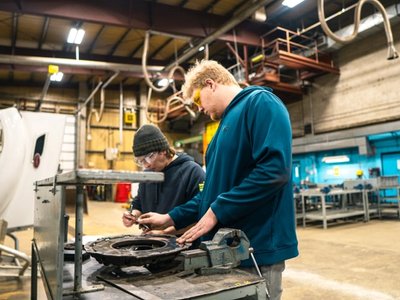
Practical Labs: Extensive lab work (Approximately 50% of courses), to apply what you've learned in real-world scenarios.

Royal Canadian Air Force Signing Bonus

Signing bonus
Signing Bonus - RCAF
RCAF Air Maintanance Occupation FAQ

Contact Information

Program Files

Get detailed information about program requirements, courses, and student resources.

The mandatory summer Co-op term gave me real-world experience and helped me build strong hands-on skills working with experienced AMEs.

AB
Adnan Bahbouh
Graduate of 2024

This program gave me the best hands-on experience with aircraft systems and a deep understanding of both fixed-wing and rotary-wing mechanics.

RP
Rushabh Patel
Graduate of 2024

The program gave me the knowledge and hands-on skills I needed to launch a rewarding career as an Aircraft Maintenance Engineer.

MW
Mark Walraad
Graduate of 2000 – Aircraft Maintenance Engineer, Confederation College

Confederation College gave me a wonderful experience, with supportive professors and staff who helped me adjust and succeed in Canada.

S
Shunyu
Graduate of 2016

Admission Requirements

Fall

Fall (0301)

Admission Requirements for Domestic Students

Ontario Secondary School Diploma (or equivalent) with courses from the College (C), University (U), University/College (U/C), or Open (O) preparation levels with Grade 12 English (C/U) Level.

  1. or successful completion of the Mature Student Assessment.
  2. or successful completion of the Canadian Adult Education Credential (CAEC) or General Education Development Test (GED), prior to May 2024.
  3. or appropriate credits from the Academic and Career Entrance program (ACE).

Other Courses Required

Grade 11 Mathematics (M or U) or Grade 12 Mathematics (C or U), or equivalent, or ACE Core Math (UM602)

Other Courses Recommended

  • Physics Grade 11 or 12

Admission Requirements for International Students

  1. A high school/senior secondary diploma with a Grade 12 Math.
    Original transcripts as well as a notarized, translated copy must be provided where applicable
  2. English Proficiency
    Academic IELTS: 6.5, no band less than 6.0

Prerequisites

Once you have accepted your offer you will receive a Student Agreement. This agreement must be read, signed and returned to the program coordinator before classes start. Important dates in the agreement are as follows:

  • Safety footwear is required by the first class
  • Complete tool kit is required by the start of the third week of classes
  • Textbooks by the first class

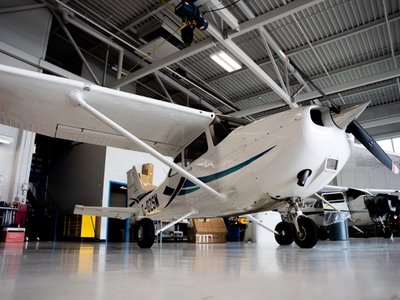
All aircraft maintenance students will be attending classes at our Aviation Center of Excellence located on the north side of the Thunder Bay airport at 2003 Derek Burney Drive.
All first year students must attend orientation at the Aviation Center of Excellence.

Tools

There is a mandatory tool kit that each student is required to bring to class. If you are ordering your toolkit from the links attached, please allow up to 4 weeks shipping.

Snap On Tools

If you're planning to order any tools, please contact:

Brett Kelly
Account Manager
(705) 725-2378
brett.kelly@snapon.com

Bring Your Own Devices

Students are expected to have the use of a laptop device for this program.

  • Newer Windows based device
  • Must operate on a battery
  • Wi-Fi and Internet capable

Alternative Pathways

If you do not meet the entrance requirements, we encourage you to apply for the Pre-Technology-Technology/Aviation program to facilitate success in your Technology path.

Student Accessibility and Essential Program Requirements

Confederation College is committed to providing an accessible and inclusive learning environment and will provide reasonable accommodations to students with disabilities in accordance with the Ontario Human Rights Code, the Accessibility for Ontarians with Disabilities Act (AODA), and College policy.

Students who require accommodations are encouraged to engage with Student Accessibility Services and are responsible for initiating and participating in the accommodation process. Accommodation is a collaborative process involving the student, Student Accessibility Services, faculty, and the Academic School. Requests for accommodation are considered on an individual basis, and the College will work with students to identify reasonable accommodations that provide equitable access to learning while maintaining the integrity of the program.

Students are expected to demonstrate the essential knowledge, skills, professional behaviours, learning outcomes, and competencies required to successfully complete their program. While the manner in which these requirements are demonstrated may be accommodated where appropriate, the essential requirements themselves must still be achieved.

For programs involving laboratories, field work, clinical placements, aviation environments, trades training, equipment operation, simulations, community placements, or other environments where health and safety are critical, accommodations must also be consistent with applicable legislation, professional standards, licensing requirements, accreditation standards, and workplace safety obligations.

In some circumstances, a requested accommodation may not be reasonable or possible where it would:

  • Fundamentally alter an essential program requirement, competency, or learning outcome.
  • Compromise the health or safety of the student or others.
  • Conflict with provincial or federal legislation.
  • Conflict with the requirements of an external regulatory, licensing, accreditation, or professional body.
  • Prevent the student from demonstrating competencies required for safe and effective professional practice.
Note

Where a particular accommodation cannot be provided, the College will work collaboratively with the student to identify whether an alternative accommodation can appropriately address the student’s disability-related needs while maintaining essential program requirements.

Tuition & Fees

Bus and Health fees can be modified or opted out of through SUCCI

Fees for Domestic StudentsProgram Code: 0301

Year 1
Total: $8,891.00
Fee Breakdown
Academic Fees
Total Tuition Fees:$3,926.00
Tuition Related Fees:$240.00
College Service Fee:$863.00
Health Fee:$305.00
Bus Fee:$332.00
$5,666.00
Program Fees
College Supplies:$35.00
Tools:$1,900.00
Boots / Uniform:$120.00
Books & Supplies:$700.00
Co-op Fee:$470.00
$3,225.00
Year 2
Total: $5,826.00
Fee Breakdown
Academic Fees
Total Tuition Fees:$3,926.00
Tuition Related Fees:$30.00
College Service Fee:$853.00
Health Fee:$305.00
Bus Fee:$332.00
$5,446.00
Program Fees
Exam Fees, Certifications, Licenses, Apprentice or Business Registration:$30.00
Books & Supplies:$350.00
$380.00

Fees for International StudentsProgram Code: 0301

Year 1
Total: $26,243.25
Fee Breakdown
Academic Fees
Total Tuition Fees:$19,806.00
Tuition Related Fees:$240.00
College Service Fee:$863.00
Health Fee:$652.25
Bus Fee:$332.00
$21,893.25
Program Fees
College Supplies:$35.00
Tools:$1,900.00
Boots / Uniform:$120.00
Books & Supplies:$700.00
Co-op Fee:$470.00
$3,225.00
Ancillary Fees
Municipal Levy:$75.00
Student Fees:$300.00
Recovery Fee:$750.00
$1,125.00
Year 2
Total: $23,178.25
Fee Breakdown
Academic Fees
Total Tuition Fees:$19,806.00
Tuition Related Fees:$30.00
College Service Fee:$853.00
Health Fee:$652.25
Bus Fee:$332.00
$21,673.25
Program Fees
Exam Fees, Certifications, Licenses, Apprentice or Business Registration:$30.00
Books & Supplies:$350.00
$380.00
Ancillary Fees
Municipal Levy:$75.00
Student Fees:$300.00
Recovery Fee:$750.00
$1,125.00
Note

Please note that fees are estimated and are subject to change.

Fees shown on this page are for full-time students attending the main Thunder Bay campus for Fall 2026.

Costing for Regional Campuses & Distance Education Students:

If this program is available at Regional Campuses, or to Distance Education students, see the following links for costing information.

Courses

1 intake

Fall0301

Semester 1

AM 178

Practical Aviation Mathematics

30 hours

This applied mathematics course provides an introduction to Imperial units used for length, velocity, weight, volume and temperature. Basic math operations will be reviewed.

AM 166

Reciprocating Engines I

45 hours

In this course, students will be introduced to the basics of piston engine operation and maintenance, including principles of operation, and engine construction.

AM 172

Aircraft Electrical I

45 hours

In this course, students will be introduced to Basic DC Electrical theory, units of measurement, circuit types (series and parallel) and basic electronic components. DC source and generation methods will be covered. Students will perform calculations using the laws and theorems associated with DC electrical circuits.

AM 173

Aircraft Electrical Lab I

45 hours

In this course, the student will construct various DC circuits and execute experiments to understand electrical behaviour. Students will perform aircraft battery maintenance. Students will adhere to shop safety standards while working in the lab.

AM 174

Aerodynamics

45 hours

In this course, students will be introduced to aerodynamics of fixed and rotary wing aircraft, and propellers.

AM 182

Structures I

30 hours

In this course, students will be introduced to various aircraft structures and the materials used.

AM 196

Standard Practices I

45 hours

In this course, students will learn about the tools in their toolbox, aircraft hardware and hangar safety. Students will also be introduced to visual inspection techniques.

AM 197

Standard Practices Lab I

75 hours

In this course, students will be introduced to acceptable industry standard practices in aviation, the importance of craftsmanship and the use of hand and power tools along with measuring tools, while adhering to shop safety standards.

AM 167

Reciprocating Engines Lab I

60 hours

In this course, students will learn about reciprocating engines and how they are commonly used to power aircraft. Also known as piston engines, students will learn about the parts of the engine and how to maintain them while adhering to shop safety standards.

Semester 2

AM 288

Turbines I

36 hours

In this course, students will be introduced to gas turbine powerplants. Students will examine the historical development, types, operation and construction of gas turbine powerplants.

AM 399

Aircraft Maintenance Co-op Work Term

420 hours

The placement is negotiated and coordinated by the Placement Office and the Program Coordinator. The procedures and regulations pertaining to this placement will be according to the College's 'CO-OP HANDBOOK FOR STUDENTS'. During this work placement, the actual duration of which will be 420 hours, the student has the opportunity to apply his/her theory and practical skills in a full-time work situation outside of the academic environment. This will help the student in developing his/her long-term career goals. In addition to having his/her work performance evaluated by the employer, the student will complete and submit for evaluation a formal report describing the placement.

AM 210

CARS & Human Factors

36 hours

In this course, students will examine human factors including the "Dirty Dozen". Students will be introduced to the Canadian Aviation Regulations.

AM 272

Aircraft Electrical II

54 hours

This course will introduce students to Alternating Current (AC) circuit types, semiconductors, wiring practices and basic electronic components used in aircraft systems. Students will also perform calculations of resistive, capacitive, and inductive circuits.

AM 273

Aircraft Electrical Lab II

54 hours

In this course, students will be introduced to Alternating Current (AC), circuit types, semiconductors, and basic electronic components used in aircraft systems. Students will construct resistive, capacitive, inductive circuits, and execute experiments to understand electrical behaviour in each circuit type. Students will learn wiring practices and create a wire harness.

AM 266

Reciprocating Engines II

36 hours

In this course, students will be introduced to carburetion principles, and reciprocating engine ignition systems.

AM 267

Reciprocating Engines Lab II

54 hours

In this course, students will perform the removal, inspection, replacement, repair, and testing of several engine components including magnetos, ignition harness along with float carburetors.

AM 282

Structures II

36 hours

In this course, students will be introduced to the fundamentals of sheet metal repair and composite materials. The students will also examine methods of non-destructive testing.

AM 283

Structures Lab II

72 hours

In this course, students will develop skills required to carry out basic aircraft sheet metal repairs. The students will apply the skills necessary to work with composite materials. Along with examining various methods used in non-destructive testing.

AM 296

Standard Practices II

36 hours

In this course, students will be introduced to weight and balance requirements and procedures. This course will also detail working practices in a hangar environment.

AM 297

Standard Practices Lab II

36 hours

In this course, students will conduct weight and balance of an aircraft along with appropriate documentation. Students will apply appropriate skills necessary, while performing various tasks in a hangar environment.

AS 115

Success Strategies

42 hours

Success can be defined in many ways. This course will look at ways to maximize your academic, employment and personal success. Academically, topics such as study skills, learning strategies, and time management will be discussed. Problem-solving, goal setting, budgeting, and effective communication will also be discussed in a variety of contexts. Topics relating to success in employment will provide useful career strategies. By combining all of the course topics you will have a better understanding of yourself and how you define your personal success.

Semester 3

AM 394

Airframe Systems I

48 hours

Students will explore various aircraft systems, their components and maintenance and servicing of these systems.

AM 370

Aircraft Instrumentation & Systems

48 hours

Students will explore aircraft instrumentation, and display types.

AM 371

Aircraft Instrumentation & Systems Lab

48 hours

Students will apply maintenance techniques to aircraft instrumentation. Maintenance of power distribution systems will be covered.

AM 395

Airframe Systems Lab I

48 hours

In this course the students will learn to maintain aircraft flight control and hydraulic systems.

AM 388

Turbines II

48 hours

Students will examine the maintenance and servicing of gas turbine engine systems. This course will also introduce and prepare them to operate a running turbine engine.

AM 389

Turbines Lab II

48 hours

In this course, the student will be conducting inspections on a variety of engines and components. Students will participate in a live engine run.

AM 302

CARS

32 hours

Students will continue learning about the Canadian Aviation Regulations.

AM 366

Reciprocating Engines III

48 hours

The student will study fuel injected, supercharged and turbocharged aircraft engines. Students will also study reciprocating engine propellers.

AM 367

Reciprocating Engines Lab III

48 hours

Students will carry out practical 'hands on' exercises in the running of aircraft piston engines and maintenance of their systems. The student will gain access to information through publications and apply this information to maintenance tasks.

AM 386

Rotary I

32 hours

Students will be introduced to rotary wing landing gear, drivetrain, flight controls and flight control rigging.

AM 387

Rotary Lab I

32 hours

Students will take hands on approach to become familiar with a helicopter and its basic components. Students will also conduct inspection and servicing along with maintenance of the drive train.

Choose one course from this group:

S01

SY 066

Sociology of Community: The Indigenous Context

42 hours

This course will provide students with an introduction to the history of colonization of Indigenous communities in Canada. Contemporary Indigenous community issues within Northwestern Ontario (NWO) and Canada will be examined. Students will explore the unique socio-political relationships between Canada and Indigenous peoples with an emphasis on colonial, legal and political issues. With a broader understanding of the context of colonization, students will analyze contemporary relationships and efforts towards renewed relationships and reconciliation.

LV 100

History of Indigenous Canadian Relations

42 hours

This course provides a comprehensive overview of the complex and evolving relationship between Indigenous peoples and the Canadian state from contact to present day. It will explore the different worldviews at contact, the years of cooperation and negotiation through the fur trade and treaty making era, and the impact of government colonial policy on Indigenous nations. The course will also explore the constitutional recognition of Aboriginal rights, which provides an important context for understanding contemporary issues between Indigenous and Canadian societies including land claims, treaties, and self-government.

Semester 4

AM 495

Airframe Systems Lab II

90 hours

Students will complete practical hands-on projects on various aircraft systems designed to enable the student to apply developed theory. Emphasis will be placed on completing the required tasks in accordance with applicable maintenance manuals, regulations, and equipment, using safe work practices.

AM 470

Avionics

54 hours

The student will study aircraft avionics systems. Radiotelephone operating procedures will also be covered.

AM 471

Avionics Lab

72 hours

The student will practice maintenance procedures on aircraft avionics systems. Students will carry out functional tests on systems and gain familiarity with documentation and procedures that apply to these systems. Scheduled inspections and servicing of systems will be carried out.

AM 488

Turbines III

36 hours

This course provides students with advanced level learning of turbine engine inspection, servicing, installation, and removal.

AM 489

Turbines Lab III

72 hours

This advanced level course has students inspecting and completing maintenance and servicing on various turbine engines and components. The student will also complete a hot section inspection on a selected turbine engine. Students will also be performing maintenance practices on propellers.

AM 490

Airframe Systems II

54 hours

Students will continue to explore various aircraft systems, components and the maintenance requirements for these systems.

AM 486

Rotary II

36 hours

The student will be introduced to vibrations and the effects on the helicopter, track and balance, special inspections, and helicopter operations.

AM 487

Rotary Lab II

36 hours

Students will continue with helicopter maintenance including dynamic components, along with static and dynamic balance procedures.

42 hours

Learning Outcomes

The graduate has reliably demonstrated the ability to:

  1. Inspect and service aircraft systems utilizing current and relevant theories and principles.
  2. Inspect, test, troubleshoot, evaluate, service and repair aircraft and components.
  3. Perform scheduled and unscheduled inspections on aircraft systems, structures, instruments, and related components to airworthiness standards.
  4. Install aircraft engines, parts, components and structures as part of routine and unscheduled maintenance.
  5. Diagnose malfunctions or other problems in aircraft systems, structures, instruments, and related components using technical manuals, drawings, blueprints, and standards of performance and safety.
  6. Complete structural and non-structural repairs and modifications by following applicable procedures and safety precautions, and meeting airworthiness standards.
  7. Perform component analysis using appropriate measuring devices to determine wear and fatigue repair or replacement tasks in order to maintain the aircraft’s airworthiness and safety.
  8. Perform service, maintenance, repair and modification procedures on aircraft systems, structures, instruments, and related components to maintain aircraft safety and airworthiness.
  9. Dismantle and reassemble airframes, aircraft engines and other systems for inspection and repair.
  10. Interpret written instructions, schematics, manufacturer's specifications, technical drawings, manuals, and computer-based information while performing routine and unscheduled tasks.
  11. Maintain detailed inspection, repair, maintenance, and certification records and reports to meet Canadian aviation regulations and logbook requirements.
  12. Perform all duties in a manner that ensures adherence to Canadian aviation regulations, airworthiness standards and workplace safety.
  13. Identify and apply discipline-specific factors that contribute to the local and global community through social responsibility, economic commitment and environmental stewardship.

Meet the Program Staff

5 staff members

Careers

Graduates soar into roles with:

  • Regional Airlines
  • Major Airlines
  • Charter Companies
  • Float Operators
  • Helicopter Operators
  • Maintenance and Overhaul facilities for fixed-wing aircraft and helicopters

Some tasks Aircraft Maintenance personnel might perform in their careers:

  • Conduct routine inspections on aircraft to ensure they meet safety standards.
  • Perform engine checks on various engine types such as piston, turbine, turbofan and jet engines.
  • Perform diagnostic tests to troubleshoot mechanical and technical issues.
  • Repair and replace faulty wiring and electrical components.
  • Inspect and maintain landing gear and brakes components.
  • Test and calibrate avionics systems, including navigation and communication equipment.
  • Repair structural components, such as the fuselage and wings, to maintain the aircraft’s integrity.
  • Overhaul aircraft equipment and systems.
  • Document maintenance activities and repairs in detailed reports.
  • Collaborate with other engineering and technical support to resolve complex issues.
See Career Opportunities

Clicking the button will take you to a detailed dashboard with up-to-date job data tailored to your program, including salary ranges, job titles, and projected demand.

Pathways

Confederation College offers a variety of articulation agreements designed to help you advance your education and career. Whether you're coming to us from another institution or planning your next steps after completing your program, our pathways make your transition seamless and effective.

Pathway Out — Credits recognized by another institution

University of New Brunswick — Bachelor of Applied Management (BAM)

Graduates from eligible 2-year or 3-year diploma programs at Confederation College can apply to enter the third year of the Bachelor of Applied Management at the University of New Brunswick, with a minimum 70% program average. Additional courses may be required.

Minimum Admission Average
70% overall program average
Entry Point
Year 3 of a 4-year degree

Institution: University of New Brunswick, Saint John, NB

Agreement Type: Memorandum of Understanding

Graduates of eligible diploma programs at Confederation College may be considered for advanced standing in the Bachelor of Applied Management (BAM).

Eligibility Requirements:

  • Completion of a 2-year (four-semester) or 3-year (six-semester) diploma program
  • Minimum overall program average of 70%

Transfer Details:

  • Eligible students may enter Year 3 of the 4-year BAM program
  • Additional courses may be required depending on the applicant’s academic background

Program Notes:

  • Eligible Confederation College programs are outlined in Appendix A of the Memorandum of Understanding
  • Students should consult the contact person for full details and program-specific requirements

Contacts

Students at Confederation College

We're here to help

Have questions before you apply?

Not sure if this is the right fit? Our recruitment team can help you navigate admission requirements, program details, and campus life.