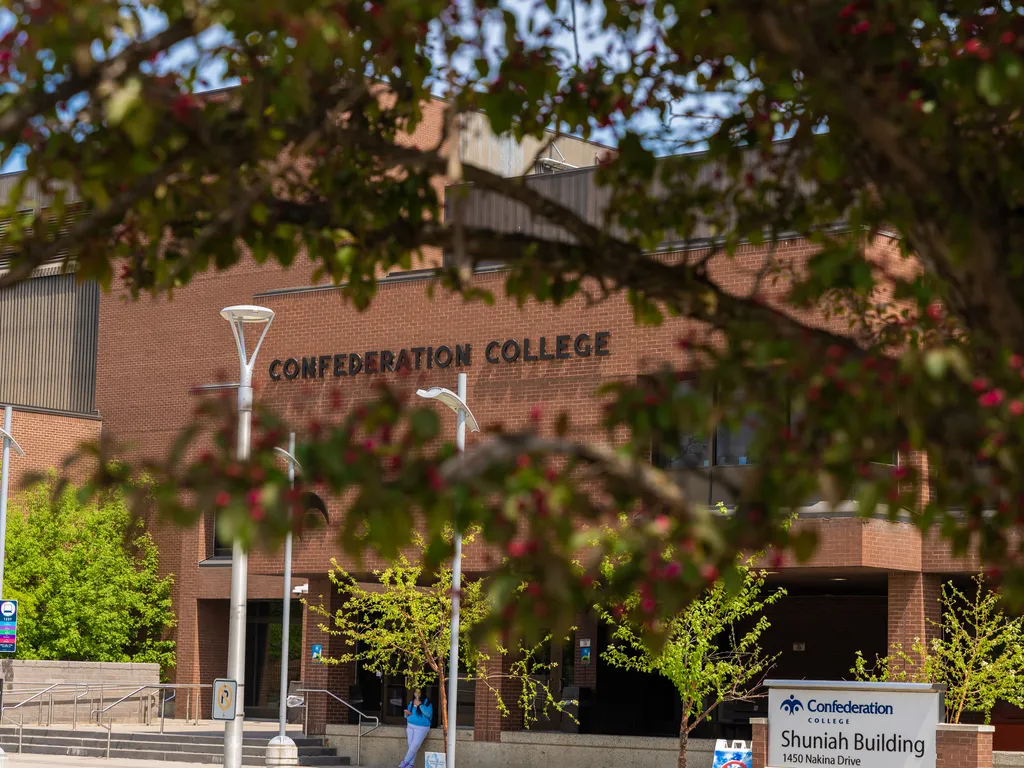
Sexual Assault & Sexual Violence Support
See a variety of resources and information on the navigation menu, including our Sexual Assault/Sexual Violence Policy, Protocol and how to File a Complaint/Make a Report.
Individuals who have experienced sexual violence often find it difficult to disclose. Confederation College recognizes the challenges faced by those who have experienced sexual violence, but urges individuals to seek support for their own healing.
If you are in danger and require immediate and urgent assistance, call:
- 911 for Police, or
- (807) 623‐0465, or 922 from a College phone, for Security at the Thunder Bay Campus (24 hours).
If you are physically injured, seek medical attention for your injuries:
- call 911 for an ambulance, or go directly to the Emergency Department, particularly if you have severe physical injuries and/or wish to have a forensic examination (commonly known as a "rape kit")
- if your injuries are less severe and you do not want a forensic examination, you may prefer to seek medical attention from your doctor, a walk-in clinic, or at the College Health Centre
- bring a friend if possible; or, call the Sexual Abuse Centre Thunder Bay 24 Hour Crisis Line at 344-4502 and they will get someone to accompany you
If you feel unsafe, go to a place where you feel safe:
- if you live in residence, go to a trusted friend, your Residence Advisor, or another Residence staff member;
- if you don’t live in residence, or are not a student, go to a trusted friend or relative
- at the Thunder Bay campus, go to: the Counselling Office: Shuniah Building, Room 153 (M‐F, 8:30 AM – 4:30 PM): (807) 475‐6618, or Toll Free: 1‐800‐465‐5493,
- the Public Safety – Security Office: Shuniah Building, Room 123D (office: M – F, 7 AM – 7 PM; security assistance: 24 hours): (807) 623‐0465, or 922 from a College phone
If you are in crisis either immediately after, or anytime after, an assault, 24 hour telephone support is available:
- Assaulted Women’s Helpline: 1‐866‐863‐0511 (Toll Free) 1‐866‐863‐7868 (TTY)
- Thunder Bay Sexual Abuse Centre - 24 Hour Crisis Line: (807) 344‐4502
- Students: Good2Talk (Ontario’s Postsecondary Student Helpline): 1‐866‐925‐5454 (Toll Free)
- Employees: Employee and Family Assistance Program: Sheppell‐fgi: 1‐800‐387‐4765 (Toll Free)
If you wish to access College support and resources, or obtain a referral to off-campus support and resources:
Individuals who have experienced sexual violence are under no obligation to file a formal complaint in order to access on‐campus support or resources, or to be referred to off‐campus support and resources.
To access support or resources, you may contact or visit the following offices directly, or you may contact the following individuals to assist you with your options:
- Students: Linda Gluck at Counselling Services in the Student Success Office, (807) 475‐6618, or Toll Free: 1‐800‐465‐5493, Shuniah Building, Room 153
- Students Living in Residence: Elaine Wilson, General Manager (Campus Living Centres): (807) 356‐0367, Sibley Hall main office, Room 149
- Employees of the College: Jill Symington, Director (Organizational Effectiveness): (807) 475‐6267, Shuniah Building, Room A213
View Confederation College’s Sexual Assault / Sexual Violence Policy in Section 4-4 of the Confederation College Policies and Procedures webpage.
Are You in Danger?
- Call 911 for Police & Ambulance assistance.
- Call 922 from a College phone, or 623-0465, for Security assistance on the Thunder Bay campus.
Resources
- File a Complaint/Make a Report
- Review our Sexual Assault/Sexual Violence Policy(opens in new window)
- Review our Sexual Assault/Sexual Violence Protocol(opens in new window)
Counselling Support:
Other Support:
Confederation College is committed to maintaining a safe learning and working environment for everyone. This video discusses sexual assault and sexual violence, the importance of getting consent and how to report sexual assault and sexual violence at Confederation's Thunder Bay Campus.
This video discusses sexual assault and sexual violence, the importance of getting consent and how to report sexual assault and sexual violence at Confederation's Regional and Distance Education Campuses.
Contact Us:
By e-mail: safety@confederationcollege.ca
If your question was not addressed or if you have further questions, please feel free to contact any of the following people:
- Jill Symington – Executive Director, Organizational Effectiveness – 475-6267 – jill.symington@confederationcollege.ca
- Mike Rozic – Director, Pubic Safety and Risk Management – 475-6624 – mrozic@confederationcollege.ca
Frequently Asked Questions
What exactly is sexual violence?
Sexual violence is a broad term that describes any violence - physical or psychological - carried out through sexual means or by targeting sexuality.
Sexual violence takes different forms and can range from sexual harassment, stalking, indecent or sexualized exposure, degrading sexual imagery, voyeurism, cyber harassment, sexual exploitation, sexual abuse, sexual assault, and rape.
Sexual Harassment is a form of discrimination. It involves unwanted behaviour that intimidates or causes another person offence or humiliation. It can cause severe anxiety, shame and fear.
Cyber-harassment is having an especially devastating impact on young people. It is the use of the internet to make unsolicited advances, communications or interactions with another person or entity. Cyber harassment can take many forms. A person intent on harassing another individual usually wants them to know they are doing it and will openly engage in online interaction to see the person’s response. The following techniques are often used.
- unsolicited posts and comments on social media sites
- emails
- texts
- graphic images and posts directed at the victim
- instant messaging
Sexual Assault is a crime under the Criminal Code of Canada. It is any assault of a sexual nature that violates a person’s sexual integrity.
What is my duty with this policy?
In a nutshell, your duty is to support and report.
An in-depth explanation of this duty can be found in our Sexual Assault / Sexual Violence Protocol(opens in new window).
If someone discloses sexual violence to you, first and foremost it is important to support them. A supportive response involves:
- listening without judgment and accepting the disclosure as true;
- communicating that sexual violence is never the responsibility of the victim;
- recognizing that disclosing can be traumatic and an individual’s ability to recall the events may be limited;
- respecting the individual’s choices as to what and how much they disclose about their experience;
- making every effort to respect confidentiality and anonymity;
- respecting the individual’s right to choose the services that they feel are most appropriate;
- helping the individual identify and/or to access available on‐ or off‐campus services, including emergency medical care and counselling; and
- respecting the individual’s right to decide whether to report to the police, or to file an informal (information) complaint, or a formal complaint.
Once the survivor has been properly supported, you now have a responsibility to report the incident. You can file an informal or formal complaint by filling out this webform.
It is important to understand that although a disclosure is to be kept confidential, it is not to be kept a “secret” once revealed to you. Explain this to the survivor as compassionately and supportively as possible. Although it is up to the Survivor if they would like to move forward and proceed with an investigation (with some exceptions), you are obligated to report the incident, as the College is obligated to ensure a safe & healthy environment.
How do I know if I should file a formal or informal complaint?
Sexual violence is broad, can take different forms, and covers a large range of incidents. Therefore each situation must be looked at on a case by case basis and the individual’s discretion must be applied.
The survivor should be in primary control regarding whether they would like to file a formal or informal complaint. If the survivor chooses not participate in the report process, filing a report is your responsibility. In this case you must use your best judgment. In general, informal complaints are for sharing information and formal complaints are to be used when an investigation should take place.
If someone discloses to me that they have been sexually assaulted, shouldn’t I just call the police?
Treat those who have disclosed sexual violence with compassion and recognize that they are the decision-makers about their own best interests. As a supporter of the survivor, you may want to report the situation to the police immediately; however, this is the survivor’s choice to make. It is important for the survivor to retain control over his/her life, so do not take charge of the situation or pressure the individual to do what you think should be done. Encourage survivors to seek the support they need. Survivors of sexual assault need the freedom to choose a path to recovery that is suitable for them. It is important to respect that, even if you would do things differently.
You should call the police:
- If you witness an assault taking place; and/or
- If the individual who discloses an assault is less than 18 years of age
Do I need to use the webform to file a complaint or make a report?
No. A complaint or a report can be made to any of the individuals identified in the Sexual Assault / Sexual Violence Protocol(opens in new window).
Are webforms secure and confidential?
Yes, webforms are secure and confidential. However, as with all sensitive information at the College, there are a limited number of employees who have access to the information. Those with access are held to the highest standard of professionalism and confidentiality.
Who will be trained to conduct investigations under this policy?
All investigators will be part of the management team as investigation is within the scope of their duties. Thorough training for investigators, provided by Hicks Morley, will be taking place in September.
How can I be sure that an investigator will proceed impartially?
All attempts will be made to insure the fairness and impartiality of an investigation.
- All investigations will be conducted by one lead investigator who will contact, engage, and consult with two other investigators as an investigation panel
- If a prior relationship creates a conflict, it is the responsibility of the investigator to declare the conflict and excuse themselves from the process.
- Designated investigators will respond in a prompt, compassionate, and personalized fashion, maintain all efforts to keep confidentiality wherever possible.
- In a situation where it is deemed that an impartial investigation panel cannot be found, an external investigator(s) may be hired.
What kind of sanctions can be imposed?
If an investigation finds that sanctions are to be imposed, they will be implemented on a case-by-case basis. A range of sanctions may be implemented, depending on the severity of the findings.
- When the individual is a student, such disciplinary action will be consistent with the Student Code of Conduct, and may include sanctions up to, and including, expulsion.
- When the individual is an employee, such disciplinary action will be consistent with the Workplace Discipline Policy, any applicable collective agreement, or any applicable terms and conditions of employment, and may include sanctions up to, and including, termination.
- When the individual is another member of the College community, such disciplinary action will be consistent with any prevailing contracts, and may include sanctions up to, and including, penalties, cancellation of contracts, notification of authorities, or other sanctions consistent with the College’s responsibility as an owner under the Occupiers’ Liability Act.
- When applicable, sanctions further to the Human Rights Policy and the Acceptable Use Policy may also be imposed. In addition, when warranted, the College may initiate civil or criminal proceedings, and may invoke No Trespass Notices further to the Trespass to Property Act.
Where will complaints under SAFE Campus be maintained, and for how long?
Because of the nature of these types of incidents, a record of complaints filed will be kept by the public safety office indefinitely. Records will only become part of an employee’s personnel file if the findings of an investigation substantiate the complaint.
What happens if the investigation decision is appealed?
Appeals can be directed to the President of the College. If the President determines that an appeal has merit, it will be turned over to a new Lead Investigator who will engage a new investigation panel to review the findings of the first investigation, compare them to the grounds for appeal and may choose to seek additional information and evidence. The completed appeal will be submitted to the President.
The appellant will be informed in writing of the appeal outcome by the President or her/his designate.
If an investigation decision is appealed, will sanctions be held while it is under appeal?
Although all situations will be considered on a case-by-case basis, the majority of the time, sanctions will be implemented while the appeal takes place.
How does this policy and protocol apply to contracted workers, vendors, and clients?
This policy applies to all members of the college community. This includes residents living on campus, contracted services (such as Reliable Cleaning Services and Sodexo), as well as clients of the Dental Clinic and Fitness Centre.
It is important to educate and inform contractors that they are subject to this policy. Therefore contracts now include the following language:
“Contractors are responsible for ensuring that all employees and representatives of the contractor comply with all Confederation College behaviour policies, including but not limited to the Code of Conduct and the Sexual Assault and Sexual Violence Policy.