Early Childhood Education

Ontario College Diploma

Early Childhood Education

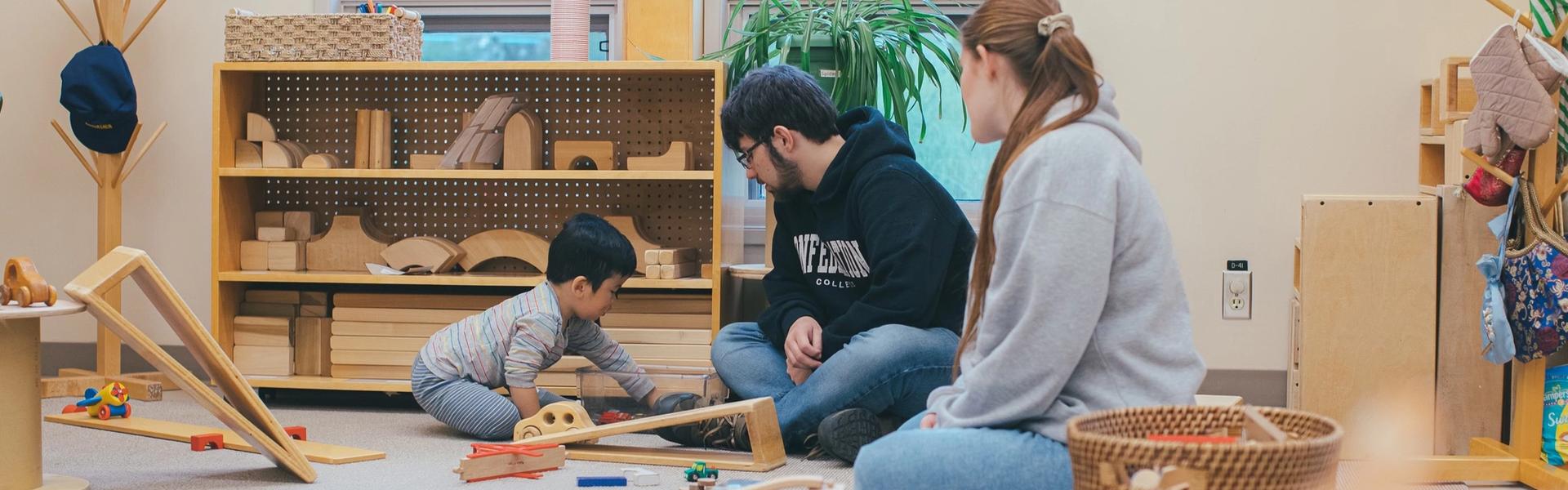
In the Early Childhood Education program, you will learn how to support children's development by creating play-based learning environments through hands-on classroom work and field placements.

CIP Code: 19.0709
PGWP Eligible
This program meets the criteria to be Post-Graduation Work Permit (PGWP) eligible as defined by Immigration, Refugees and Citizenship Canada (IRCC).

Note: PGWP eligibility does not guarantee approval. IRCC assesses all applications individually.

Program Start Options

IntakeDurationFormatCampusDomesticInternational
0102
Fall
2 years
4 semesters
Full-Time
In-Person
Thunder Bay
Domestic students accepted
International students accepted
0102
Fall
2 years
4 semesters
Full-Time
Online Live
Remote
Domestic students accepted
International students not accepted
Distance Education Program

Help a Child Grow and Discover

Early Childhood Education with the College of Early Childhood Educators (College of ECE)

The first years of a child’s life are crucial for their development. During this time, children learn the most, and educators have the opportunity to significantly impact their lives. Are you someone who wants to make a difference?

Confederation College’s Early Childhood Education program offers a comprehensive education in the theory and practice of early childhood education. It focuses on play-responsive practice through a holistic lens, including elements of child development, social justice, and an anti-bias curriculum, as well as how children flourish in the world with others.

You’ll acquire the skills and knowledge needed to plan early learning programs and create play-responsive environments that nurture each child’s growth, learning, and curiosities. Our courses cover various topics, including play and inquiry-based learning, effective communication, child development, family engagement, guidance, and health, safety, and wellness. This program will provide students with various theoretical approaches to provoke their thinking and inspire their work alongside children and families.


Top Highlights

  • Field Placements: Includes three field placements for real-world learning experiences
  • Hands-On Learning: Demonstration classroom used by faculty to create practical learning experiences
  • Current Curriculum: Course content follows the latest trends in professional practice, using new and innovative ways of thinking and learning in classroom settings. These unique methods of assessment and instruction include hands-on learning and collaborative dialogue with others.
  • Seamless Transition to University: Begin your academic journey at Confederation College and transfer directly into a related undergraduate degree at Lakehead University through a joint admission pathway.

Ideal Candidate Profile

  • Compassionate: Passionate about nurturing each child through a holistic lens.
  • Creative: Eager to co-create play-responsive places with, for, and alongside children and families.

  • Collaborative: Ready to communicate in partnership with children, families, communities, and colleagues.
  • Observant: Skilled at reflecting, noticing, and responding to the interests, needs, and abilities of all children.
  • Dedicated: Committed to ongoing continuous learning and professional development.

Contact Information

Program Files

Get detailed information about program requirements, courses, and student resources.

Admission Requirements

Fall

The following 2 intakes share the same admission requirements:

Fall (0102)Fall (0102)

Admission Requirements for Domestic Students

  1. Ontario Secondary School Diploma (or equivalent) with courses from the College (C), University (U), University/College (U/C), or Open (O) preparation levels with Grade 12 English (C/U) Level.
  2. or successful completion of the Mature Student Assessment.
  3. or successful completion of the Canadian Adult Education Credential (CAEC) or General Education Development Test (GED), prior to May 2024.
  4. or appropriate credits from the Academic and Career Entrance program (ACE).

It is strongly recommended that you have good communication skills and volunteer experience in an early childhood setting.

Distance Education Students

Please be advised that catchment (location) restrictions do apply. We are currently only accepting students within the area of Northwestern Ontario. If you are unsure if your location would qualify, please contact us by emailing de@confederationcollege.ca.

Admission Requirements for International Students

  1. A high school/senior secondary diploma
    Original transcripts as well as a notarized, translated copy must be provided where applicable
  2. English Proficiency
    Academic IELTS: overall 6.0, with no bands lower than 5.5.
    Click here for more information

Prerequisites

  1. Immunization and Communicable Disease’s Form
  2. Standard First Aid, Infant/Child CPR Certificate - Level C
  3. A recent Vulnerable Sector Check must be provided to the Program Coordinator at program registration and at the beginning of each academic year. All costs associated with police checks, testing and proof of certification are the responsibility of you, the applicant. The check is used by employers in this field as a screening requirement of field placement and employment. A criminal record may prevent agencies from providing you with a field placement experience, thus blocking your ability to complete program requirements. Outstanding charges, recent convictions and person-related crimes are of particular concern. For more information, contact the Program Coordinator.

Alternative Pathways

If you do not meet these admission requirements, we encourage you to consider the College Access or General Arts and Science Certificate or General Arts and Science Diploma programs, or Academic and Career Entrance program (ACE); if you successfully complete one of these programs, you will be eligible to apply to programs in the Community Services area.

Student Accessibility and Essential Program Requirements

Confederation College is committed to providing an accessible and inclusive learning environment and will provide reasonable accommodations to students with disabilities in accordance with the Ontario Human Rights Code, the Accessibility for Ontarians with Disabilities Act (AODA), and College policy.

Students who require accommodations are encouraged to engage with Student Accessibility Services and are responsible for initiating and participating in the accommodation process. Accommodation is a collaborative process involving the student, Student Accessibility Services, faculty, and the Academic School. Requests for accommodation are considered on an individual basis, and the College will work with students to identify reasonable accommodations that provide equitable access to learning while maintaining the integrity of the program.

Students are expected to demonstrate the essential knowledge, skills, professional behaviours, learning outcomes, and competencies required to successfully complete their program. While the manner in which these requirements are demonstrated may be accommodated where appropriate, the essential requirements themselves must still be achieved.

For programs involving laboratories, field work, clinical placements, aviation environments, trades training, equipment operation, simulations, community placements, or other environments where health and safety are critical, accommodations must also be consistent with applicable legislation, professional standards, licensing requirements, accreditation standards, and workplace safety obligations.

In some circumstances, a requested accommodation may not be reasonable or possible where it would:

  • Fundamentally alter an essential program requirement, competency, or learning outcome.
  • Compromise the health or safety of the student or others.
  • Conflict with provincial or federal legislation.
  • Conflict with the requirements of an external regulatory, licensing, accreditation, or professional body.
  • Prevent the student from demonstrating competencies required for safe and effective professional practice.
Note

Where a particular accommodation cannot be provided, the College will work collaboratively with the student to identify whether an alternative accommodation can appropriately address the student’s disability-related needs while maintaining essential program requirements.

Tuition & Fees

Fees for Domestic StudentsProgram Code: 0102

Year 1
Total: $5,080.00
Fee Breakdown
Academic Fees
Total Tuition Fees:$2,740.00
College Service Fee:$863.00
Health Fee:$305.00
Health Record Fee:$40.00
Bus Fee:$332.00
$4,280.00
Program Fees
Field Trip Fee:$10.00
Tools:$100.00
Record Check, Seminars, Courses, First Aid, Medicals:$240.00
Books & Supplies:$450.00
$800.00
Year 2
Total: $4,820.00
Fee Breakdown
Academic Fees
Total Tuition Fees:$2,740.00
College Service Fee:$853.00
Health Fee:$305.00
Health Record Fee:$40.00
Bus Fee:$332.00
$4,270.00
Program Fees
Field Trip Fee:$20.00
Tools:$200.00
Record Check, Seminars, Courses, First Aid, Medicals:$80.00
Books & Supplies:$250.00
$550.00

Fees for International StudentsProgram Code: 0102

Year 1
Total: $19,092.25
Fee Breakdown
Academic Fees
Total Tuition Fees:$15,280.00
College Service Fee:$863.00
Health Fee:$652.25
Health Record Fee:$40.00
Bus Fee:$332.00
$17,167.25
Program Fees
Field Trip Fee:$10.00
Tools:$100.00
Record Check, Seminars, Courses, First Aid, Medicals:$240.00
Books & Supplies:$450.00
$800.00
Ancillary Fees
Municipal Levy:$75.00
Student Fees:$300.00
Recovery Fee:$750.00
$1,125.00
Year 2
Total: $18,832.25
Fee Breakdown
Academic Fees
Total Tuition Fees:$15,280.00
College Service Fee:$853.00
Health Fee:$652.25
Health Record Fee:$40.00
Bus Fee:$332.00
$17,157.25
Program Fees
Field Trip Fee:$20.00
Tools:$200.00
Record Check, Seminars, Courses, First Aid, Medicals:$80.00
Books & Supplies:$250.00
$550.00
Ancillary Fees
Municipal Levy:$75.00
Student Fees:$300.00
Recovery Fee:$750.00
$1,125.00
Note

Please note that fees are estimated and are subject to change.

Fees shown on this page are for full-time students attending the main Thunder Bay campus for Fall 2026.

Costing for Regional Campuses & Distance Education Students:

If this program is available at Regional Campuses, or to Distance Education students, see the following links for costing information.

Courses

1 intake

Fall0102

Semester 1

CS 050

College Writing

42 hours

In this course, students will be introduced to academic writing styles with a thematic focus on current issues. This course will help students to express themselves clearly and correctly in written form. Students will critically analyse assigned readings and express their thoughts. The course will also focus on the development of an academic paper utilizing the APA style of documentation.

ED 142

Effective Interpersonal Communications

56 hours

Students will examine and apply effective communication concepts and theories including communication models, perceptions, listening, conflict management, group dynamic, assertiveness skills and communication differences. Self-reflective and experiential exercises will be used as tools for creating self-awareness, practicing skills, and gaining an understanding of their own communication patterns

ED 117

Theoretical Approaches in ECE

112 hours

Students will reflect on and broaden ideas about historical and contemporary theories and perspectives that inform the understanding of children's learning and implications for practices in the field of early childhood education and care. Students will examine the social/cultural, political, and economic influences that inform and guide educators' work with young children, families, and communities.

SY 066

Sociology of Community: The Indigenous Context

42 hours

This course will provide students with an introduction to the history of colonization of Indigenous communities in Canada. Contemporary Indigenous community issues within Northwestern Ontario (NWO) and Canada will be examined. Students will explore the unique socio-political relationships between Canada and Indigenous peoples with an emphasis on colonial, legal and political issues. With a broader understanding of the context of colonization, students will analyze contemporary relationships and efforts towards renewed relationships and reconciliation.

Semester 2

ED 234

Field Placement 1

96 hours

Students will experiment with decision making processes that will support the well being, belonging, expression and engagement of young children. Students will collaboratively work along side the Educators in Practice to actively observe, reflect and engage in pedagogical discussions using Ontario's Pedagogy for the Early Years and in response to Truth and Reconciliation Commission of Canada: Call To Action. This is a three-week block field practicum that provides students the opportunity to apply their knowledge of a particular group of children using pedagogical documentation that demonstrates critical reflection.

CS 223

Communications for Community Services

42 hours

In this course, students will enhance their communication skills as needed in the community services field. They will acquire the skills necessary to write memos, letters, email, informal reports and proposals and presentations that meet the professional standards in the community services field. Students will combine collaborative methods with advanced research, written and oral skills to produce and present an infographic.

ED 237

Pedagogical Approaches in ECE I

99 hours

Students will examine the principles and practices that influence contemporary approaches to teaching and learning with young children in the 21st century. Students will study elements of the Early Childhood Education curriculum and the dynamic role of the educator within multiple relationships. Encounters with space, time, material and relationships with others will be the focus of student inquiries. Students will attend Early Learning programs to collect documentation for collaborative group work and discussion. Students will also practice applying critical thinking and reflection strategies throughout the course.

ED 239

Play Responsive Practice

44 hours

Students will examine the connections between play, relationships, learning, and the role of the educator, as they participate in hands-on, experiential exchanges with materials in the indoor and outdoor environments. Play is the foundation of early learning practices and everyday encounters with children. Using a holistic and anti-bias pedagogy, students will apply and demonstrate an understanding of designing and engaging in play responsive environments.

42 hours

Semester 3

ED 330

FDK and School Age Practices

30 hours

This course is designed to introduce students to school-age children and the essentials to their care. Education plays an important role within the teaching team in both the Ontario Full Day Kindergarten and Before and After school programs. This course will provide students with an understanding of program guidelines and the implementation of programming for the school-age child.

ED 347

Field Practicum II and Seminar

128 hours

Students will complete a four-week block placement where they will build on the knowledge and skills acquired during their first field placement experiences. There will be an emphasis on the planning, preparation, and implementation of a play-based curriculum and the demonstration of skills and core competencies as outlined in the Field Placement Journal. Students are required to take more initiative and act as an effective team member.

ED 337

Pedagogical Approaches in ECE II

90 hours

Students will use pedagogical documentation to formulate curriculum ideas that aligns with Ontario's Pedagogy for the Early Years. Students will attend Early Learning programs to collect documentation for collaborative group work and discussion. Critical thinking strategies will be infused throughout the course content and delivery. Reflections on weekly readings will be assigned.

ED 127

Health, Safety and Well-being Practices

30 hours

Students will learn about and use guidelines, standards and laws as they apply to creating and maintaining safe and healthy early learning environments. Students will think critically about concepts that include supervision of children, illness prevention and management, nutrition and occupational health that aligns with Ontario's Pedagogy for the Early Years, and the Child Care Early Years Act.

42 hours

Semester 4

ED 452

Field Practicum III & Seminar

355 hours

In this final 11-week field placement experience students will attend three and a half days a week. Students will complete an extensive pedagogical documentation assignment that demonstrates the student's thinking, knowledge, and application of skills and behaviours within the scope of practice in Early Childhood Education. Students will be evaluated on their ability to collaborate and co-learn with others, as they research, inquire, plan, and learn alongside children, families, and educators.

ED 431

Reflective Educator in Professional Practice

42 hours

This course will provide students with the opportunity to examine professionalism, advocacy, ethics, and standards of practice. Students will explore workplace expectations and employability skills needed to succeed in today's early learning environments. Students will engage in continuous self-reflection and critical analysis to identify personal and professional skills, knowledge, and dispositions required for employment. Resume writing and interview skills will be studied to support and prime students for employment.

Learning Outcomes

The graduate has reliably demonstrated the ability to:

  1. Create learning contexts to enable, build and maintain caring, responsive relationships in partnerships with children, families and communities that value and respect social, cultural and linguistic diversity including Indigenous peoples’ worldviews and Francophone identity.
  2. Co-create, facilitate and reflect upon inquiry and play-based early years and child care programs and pedagogical approaches to support children’s learning, holistic development and well-being following children’s capabilities, interests, ideas and experiences.
  3. Co-design and maintain inclusive early learning environments to value and support equitable, accessible and meaningful learning opportunities for all children, their families and communities in a range of early years and child care settings.
  4. Collaborate with children, families, colleagues, agencies and community partners to create, maintain, evaluate and promote safe and healthy early learning environments to support independence, reasonable risk-taking and healthy development and well-being.
  5. Use observation strategies to identify children’s strengths and challenges and to ascertain when children and families might benefit from additional support or community resources.
  6. Use professional communication in interactions with children, families, colleagues, employers, the regulatory body, government authorities and children’s service agencies to meet legal and ethical standards of the early years sector.
  7. Act in accordance with relevant legislation, regulations, College of Early Childhood Educators Code of Ethics and Standards of Practice, agency policies and procedures and principles of evidence-informed practice and reflect upon their impact on one’s own role in early years and child care settings.
  8. Identify, report and document when a child is in a situation of perceived risk for, or actual neglect or abuse, in accordance with legislation, the College of Early Childhood Educators Code of Ethics and Standards of Practice, policies and procedures.
  9. Create and engage in partnerships with families, communities, colleagues, interdisciplinary professionals, authorities and child service agencies to advocate for quality early years and child care programs and services.
  10. Engage in reflective practice and continuous professional learning in accordance with principles of lifelong learning, evidence-informed practices in the early years sector and requirements of the College of Early Childhood Educators.

Meet the Program Staff

5 staff members

Careers

Graduates of the Early Childhood Education program work in a variety of settings, including:

  • Infant, toddler, and preschool programs
  • Before-and after-school programs
  • Kindergarten and primary grade classrooms
  • Special education and intervention programs
  • Ontario Early ON Centres
  • Head Start programs
  • Family support programs
  • Home child care programs
  • Parent/child/caregiver drop-in programs
  • Health care settings
Note

In Ontario, graduates of the ECE diploma program are required to apply for registration with the College of Early Childhood Educators to work as a Registered Early Childhood Educator (RECE). For more information, visit www.college-ece.ca.

See Career Opportunities

Clicking the button will take you to a detailed dashboard with up-to-date job data tailored to your program, including salary ranges, job titles, and projected demand.

Pathways

Confederation College offers a variety of articulation agreements designed to help you advance your education and career. Whether you're coming to us from another institution or planning your next steps after completing your program, our pathways make your transition seamless and effective.

Pathway Out — Credits recognized by another institution

Lakehead University — Undergraduate Degree Programs at Lakehead University

This pathway allows students to begin a diploma at Confederation College and then apply to Lakehead University to continue into a degree program, combining hands-on learning with academic study.

Confederation College and Lakehead University offer a joint admission pathway that supports a smooth transition from diploma to degree studies.

Pathway Structure:

  • Students begin with a diploma program at Confederation College, focusing on applied, hands-on learning over two years
  • After completing their diploma, students transition to Lakehead University to pursue undergraduate degree studies

Key Features:

  • Combines practical, career-focused training with academic and theoretical education
  • Provides experience in two distinct learning environments
  • Prepares students with both applied skills and advanced knowledge

Admission Process:

  • Students who complete their diploma at Confederation College can apply directly to Lakehead University

Contacts

University of New Brunswick — Bachelor of Applied Management (BAM)

Graduates from eligible 2-year or 3-year diploma programs at Confederation College can apply to enter the third year of the Bachelor of Applied Management at the University of New Brunswick, with a minimum 70% program average. Additional courses may be required.

Minimum Admission Average
70% overall program average
Entry Point
Year 3 of a 4-year degree

Institution: University of New Brunswick, Saint John, NB

Agreement Type: Memorandum of Understanding

Graduates of eligible diploma programs at Confederation College may be considered for advanced standing in the Bachelor of Applied Management (BAM).

Eligibility Requirements:

  • Completion of a 2-year (four-semester) or 3-year (six-semester) diploma program
  • Minimum overall program average of 70%

Transfer Details:

  • Eligible students may enter Year 3 of the 4-year BAM program
  • Additional courses may be required depending on the applicant’s academic background

Program Notes:

  • Eligible Confederation College programs are outlined in Appendix A of the Memorandum of Understanding
  • Students should consult the contact person for full details and program-specific requirements

Contacts

Students at Confederation College

We're here to help

Have questions before you apply?

Not sure if this is the right fit? Our recruitment team can help you navigate admission requirements, program details, and campus life.