Image for Pharmacy Technician

Ontario College Diploma

Pharmacy Technician

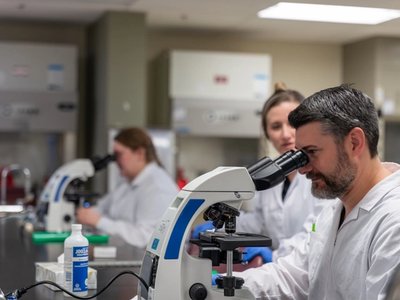
In the Pharmacy Technician program, you will learn how to prepare and dispense medications through hands‑on lab training and clinical placements so you’re ready to support patient care in diverse pharmacy settings.

CIP Code: 51.0805
PGWP Eligible
This program meets the criteria to be Post-Graduation Work Permit (PGWP) eligible as defined by Immigration, Refugees and Citizenship Canada (IRCC).

Note: PGWP eligibility does not guarantee approval. IRCC assesses all applications individually.

Program Start Options

IntakeDurationFormatCampusDomesticInternational
0645
Fall
2 years
4 semesters
Full-Time
In-Person
Thunder Bay
Domestic students accepted
International students accepted

Behind Every Prescription: Your Skill, Their Well-being

Launch your career in the dynamic world of pharmacy with Confederation College's two-year Pharmacy Technician program. As a Pharmacy Technician, you'll play a crucial role in ensuring patients receive the right medications and support. This comprehensive program equips you with the knowledge and skills needed to excel in various pharmacy settings, from hospitals to community pharmacies.

Confederation College’s Pharmacy Technician Program offers a comprehensive, hands-on curriculum aligned with the National Association of Pharmacy Regulatory Authorities (NAPRA) Professional Competencies for Canadian Pharmacy Technicians at Entry to Practice.

Students will develop essential skills based on the NAPRA competencies, which include:

  • Patient Care
  • Product Distribution
  • Knowledge and Expertise
  • Communication and Collaboration
  • Leadership and Stewardship
  • Professionalism

To practice as a Pharmacy Technician in Ontario, graduates must successfully complete the Pharmacy Examining Board of Canada (PEBC) qualifying exams and the Ontario College of Pharmacists (OCP) jurisprudence exam, meeting licensing requirements set by the Ontario College of Pharmacists. Pharmacy Technicians in Ontario will register with the Ontario College of Pharmacists.

As per the Canadian Council for Accreditation of Pharmacy Programs (CCAPP) standards, students must complete the Pharmacy Technician Program within four years of admission.

Given the demands of the profession, applicants should possess strong critical thinking, mathematical, and English communication skills, as well as a commitment to life-long learning.

The Confederation College Pharmacy Technician Program has been awarded provisional accreditation status by the Canadian Council for Accreditation of Pharmacy Programs (CCAPP).

Additional Requirements

Applicants must demonstrate language proficiency by meeting one of the following requirements.

  • Language proficiency test results that meet the NAPRA Language Proficiency Requirements for Licensure as a Pharmacy Technician in Canada; or
  • Graduation from a high school in Canada with three consecutive full years, first language English courses/credits; or
  • An undergraduate degree or college diploma from a university or college in Canada, whose instruction was provided in English.

Field Placement Requirements

After admission, but prior to attending each field placement(s), students are required to:

  • Obtain a clear police check with vulnerable sector screening. Vulnerable Sector Screenings must be issued within six months of each placement start date.
  • Successfully complete and regularly renew a recognized course in CPR (Health Care Provider level)
  • Successfully complete and regularly renew a recognized course in standard first aid
  • Obtain pre-clearance health form completed by a physician or nurse practitioner stating that the student meets the health requirements of legislated acts, ministry guidelines and agency policies

All of the above requirements must be in effect for the duration of each placement

Top Highlights

  • Professional Recognition: Eligibility for registration with The Ontario College of Pharmacists upon graduation.
  • Hands-On Experience: Gain practical skills through clinical placements working alongside experienced Pharmacy Technicians.
  • Accredited Program: Meet industry standards and prepare for real-world challenges with our accredited curriculum.
  • Comprehensive Training: Master pharmaceutical theory, procedures, pharmacology, and medication management.
  • Career-Ready Skills: Develop the expertise needed to contribute effectively in various pharmacy settings.

Ideal Candidate Profile

  • Detail-oriented: Meticulous in handling medications and following protocols.
  • A Strong Communicator: Able to interact effectively with patients, pharmacists, and healthcare professionals.
  • Tech-Savvy: Comfortable working with pharmacy software and dispensing systems.
  • Ethical: Committed to maintaining patient confidentiality and adhering to professional standards.
  • Adaptable: Capable of working in various pharmacy settings and handling diverse responsibilities.

Experiential Learning

Labs, Placement

Contact Information

Program Files

Get detailed information about program requirements, courses, and student resources.

Admission Requirements

Fall

Fall (0645)

Admission Requirements for Domestic Students

  1. Ontario Secondary School Diploma (or equivalent) with courses from the College (C), University (U), University/College (U/C), or Open (O) preparation levels with Grade 12 English (C/U) Level.
  2. or successful completion of the Mature Student Assessment.
  3. or successful completion of the Canadian Adult Education Credential (CAEC) or General Education Development Test (GED), prior to May 2024.
  4. or appropriate credits from the Academic and Career Entrance program (ACE).

Other Courses Required

  1. Grade 12 Math (College or University Preparation) or ACE Core Math (UM602) and
  2. Grade 11 or 12 Chemistry (College or University Preparation) and
  3. Grade 11 or 12 Biology (College or University Preparation)

Admission Requirements for International Students

  1. A high school/senior secondary diploma with a grade 12 math, biology, and chemistry credits
    • a) Original transcripts as well as a notarized, translated copy must be provided where applicable.
  2. English Proficiency
    • IELTS Academic:
      • Reading = 7.0
      • Listening = 7.0
      • Speaking = 7.0
      • Writing = 6.5

Alternative Pathways

If you do not possess the necessary admission requirements (or equivalency), we encourage you to consider our Pre-Health Sciences-Pathway to Certificates and Diplomas program which will provide the necessary preparation to apply to this program. Completion of the Pre-Health Sciences-Pathway to Certificates and Diplomas program does not guarantee admission to the Medical Laboratory Assistant program in a subsequent year.

Student Accessibility and Essential Program Requirements

Confederation College is committed to providing an accessible and inclusive learning environment and will provide reasonable accommodations to students with disabilities in accordance with the Ontario Human Rights Code, the Accessibility for Ontarians with Disabilities Act (AODA), and College policy.

Students who require accommodations are encouraged to engage with Student Accessibility Services and are responsible for initiating and participating in the accommodation process. Accommodation is a collaborative process involving the student, Student Accessibility Services, faculty, and the Academic School. Requests for accommodation are considered on an individual basis, and the College will work with students to identify reasonable accommodations that provide equitable access to learning while maintaining the integrity of the program.

Students are expected to demonstrate the essential knowledge, skills, professional behaviours, learning outcomes, and competencies required to successfully complete their program. While the manner in which these requirements are demonstrated may be accommodated where appropriate, the essential requirements themselves must still be achieved.

For programs involving laboratories, field work, clinical placements, aviation environments, trades training, equipment operation, simulations, community placements, or other environments where health and safety are critical, accommodations must also be consistent with applicable legislation, professional standards, licensing requirements, accreditation standards, and workplace safety obligations.

In some circumstances, a requested accommodation may not be reasonable or possible where it would:

  • Fundamentally alter an essential program requirement, competency, or learning outcome.
  • Compromise the health or safety of the student or others.
  • Conflict with provincial or federal legislation.
  • Conflict with the requirements of an external regulatory, licensing, accreditation, or professional body.
  • Prevent the student from demonstrating competencies required for safe and effective professional practice.
Note

Where a particular accommodation cannot be provided, the College will work collaboratively with the student to identify whether an alternative accommodation can appropriately address the student’s disability-related needs while maintaining essential program requirements.

Tuition & Fees

Fees for Domestic StudentsProgram Code: 0645

Year 1
Total: $4,494.00
Fee Breakdown
Academic Fees
Total Tuition Fees:$2,774.00
Tuition Related Fees:$180.00
College Service Fee:$863.00
Health Fee:$305.00
Health Record Fee:$40.00
Bus Fee:$332.00
$4,494.00
Year 2
Total: $4,484.00
Fee Breakdown
Academic Fees
Total Tuition Fees:$2,774.00
Tuition Related Fees:$180.00
College Service Fee:$853.00
Health Fee:$305.00
Health Record Fee:$40.00
Bus Fee:$332.00
$4,484.00

Fees for International StudentsProgram Code: 0645

Year 1
Total: $19,418.25
Fee Breakdown
Academic Fees
Total Tuition Fees:$16,226.00
Tuition Related Fees:$180.00
College Service Fee:$863.00
Health Fee:$652.25
Health Record Fee:$40.00
Bus Fee:$332.00
$18,293.25
Ancillary Fees
Municipal Levy:$75.00
Student Fees:$300.00
Recovery Fee:$750.00
$1,125.00
Year 2
Total: $19,408.25
Fee Breakdown
Academic Fees
Total Tuition Fees:$16,226.00
Tuition Related Fees:$180.00
College Service Fee:$853.00
Health Fee:$652.25
Health Record Fee:$40.00
Bus Fee:$332.00
$18,283.25
Ancillary Fees
Municipal Levy:$75.00
Student Fees:$300.00
Recovery Fee:$750.00
$1,125.00
Note

Please note that fees are estimated and are subject to change.

Fees shown on this page are for full-time students attending the main Thunder Bay campus for Fall 2026.

Costing for Regional Campuses & Distance Education Students:

If this program is available at Regional Campuses, or to Distance Education students, see the following links for costing information.

Courses

1 intake

Fall0645

Semester 1

CS 050

College Writing

42 hours

In this course, students will be introduced to academic writing styles with a thematic focus on current issues. This course will help students to express themselves clearly and correctly in written form. Students will critically analyse assigned readings and express their thoughts. The course will also focus on the development of an academic paper utilizing the APA style of documentation.

PT 140

Community Pharmacy Management

42 hours

In this course, a comprehensive exploration of community pharmacy practice, focusing on key areas such as federal and provincial regulations, safety, and effective inventory management strategies, are discussed. Students will learn the generic and trade names of frequently prescribed medications. Through collaborative work, students will sharpen their critical thinking and problem-solving abilities that are important for community pharmacy success. Students will learn error prevention, standards of practice and the role of the pharmacy technician in the community pharmacy setting.

PT 141

Pharmacy Calculations 1

42 hours

In this course, students will learn arithmetic manipulations and their application to pharmacy calculations. Emphasis will be placed on calculating medication doses and quantities of medications required, pricing, inventory and related business calculations. Additionally, calculations required for non-sterile and sterile compounding will be covered.

PT 142

Pharmacy Dispensing Theory

56 hours

In this course, exploration of dosage forms and dispensing theory, designed to support students in Dispensing Labs are taught. The course encompasses a range of skills, including interpreting prescriptions, deciphering Latin abbreviations, performing dosage and quantity calculations, and understanding drug nomenclature, prescription labeling, and auxiliary labeling. These concepts and skills will be comprehensively explained and applied through a combination of textbook resources and computer software tools. Students will gain knowledge about various dosage forms, their characteristics, and their application in patient care. Furthermore, they will develop proficiency in selecting the appropriate products for commonly encountered prescriptions in community pharmacy settings. Recognizing the importance of collaborative healthcare, this course will also introduce and allow practice in the essential elements of effective teamwork and leadership, vital for successful healthcare delivery.

PT 143

Pharmacy Dispensing Lab 1

70 hours

In this course, a foundational introduction to the fundamental principles of prescription dispensing and their practical application in a laboratory setting are discussed. The curriculum is structured to guide students through a step-by-step process, encompassing various tasks such as interpreting prescriptions, deciphering Latin abbreviations, calculating quantities based on patient instructions, creating labels, determining pricing, and maintaining accurate patient profiles in compliance with legal requirements for record keeping. Students will gain exposure to effective client interaction within a simulated community pharmacy environment. Throughout the course, both manual and computerized processes will be employed to perform these tasks. Students will have the opportunity to work independently as well as collaboratively, engaging in tasks such as medication dispensing, quality assurance assessments of peers' work, and responsibilities related to inventory management.

PT 144

Pharmacotherapeutics 1

42 hours

In this course, an overview of dosage forms and dispensing theory to equip students with the necessary skills for dispensing medications are discussed. Topics covered include dosage forms, dosages, dose calculations, drug nomenclature, prescription labeling, and auxiliary labeling. Additionally, students will gain insights into the effects of drugs on the human body, with a focus on special considerations for different age groups. The course also delves into the fundamental principles of the Central Nervous System (CNS) physiology and the underlying mechanisms of CNS-related pathophysiological conditions. Furthermore, students will explore pharmacological classifications of CNS drugs and their application in treating various medical conditions.

SY 066

Sociology of Community: The Indigenous Context

42 hours

This course will provide students with an introduction to the history of colonization of Indigenous communities in Canada. Contemporary Indigenous community issues within Northwestern Ontario (NWO) and Canada will be examined. Students will explore the unique socio-political relationships between Canada and Indigenous peoples with an emphasis on colonial, legal and political issues. With a broader understanding of the context of colonization, students will analyze contemporary relationships and efforts towards renewed relationships and reconciliation.

Semester 2

PT 240

Professionalism and Ethics

42 hours

In this course, students delve into the ethical and professional challenges common in daily pharmacy work. Drawing from the Code of Ethics for Members of the Ontario College of Pharmacists, they learn to navigate ethical dilemmas through a structured case-based approach. Moreover, students reflect on their roles and competencies within the pharmacy team.

PT 241

Pharmacy Calculations 2

42 hours

In this course, students perform pharmaceutical calculations essential for safe and professional practice. They engage with computations typically found in institutional environments and select community pharmacies. This encompasses calculations for sterile and non-sterile compounding, and parenteral dosing. Business and inventory calculations will also be covered.

PT 242

Hospital Practices and Pharmaceutics

42 hours

In this course, students explore the Canadian and Ontario health care systems, focusing on hospital organization and the roles of pharmacy personnel, from technicians to the director of pharmacy. Discussions cover hospital drug distribution, pharmacy services like inventory control, and the practical aspects of compounding in institutional settings.

PT 243

Pharmacy Dispensing Lab 2

70 hours

In this course, students will expand principles learned in Dispensing Lab 1, which includes to proficiently dispense prescriptions using computer software, entering and updating patient and physician details, and selecting correct drugs and dosages. They maintain patient profiles, handle billing, and print pertinent drug and billing sheets. Students understand therapeutic drug classifications and engage in role-play to demonstrate prescription management. Practical experience is gained in preparing various non-sterile medications, such as liquids, suspensions, and creams. They become adept at using laboratory equipment for compounding and emphasize accurate calculations, measurements, and record-keeping. Finally, students compound by adhering to master formula sheets and individual prescriptions.

PT 244

Pharmacotherapeutics 2

42 hours

In this course, students will be introduced to disease states, pathophysiology, and drug treatments, focusing on the Autonomic Nervous System (ANS), Respiratory, Cardiovascular, and Immune systems. They explore how drugs interact with these systems and continually apply this knowledge in a Pharmacy Technician context.

PT 245

Institutional Dispensing Lab 1

56 hours

In this course, students learn to implement hospital medication policies and procedures, dispense drugs in a hospital environment, interpret and fulfill hospital drug orders, and maintain essential records and documentation for effective institutional drug management. This includes manual and computerized order entry for unit doses. Independent double checks will be practiced.

PY 114

Understanding Addiction

42 hours

This course is designed to provide students with an introductory understanding of addictions and addictive behaviour. The course will explore the various theories of addiction including historical and current conceptions of 'the addict', an understanding of how drugs work, different methods of treatment and the recovery process. Issues of drug use in special populations and family issues will also be examined.

Semester 3

PT 340

Professional Communication Pharmacy Technician

42 hours

In this course, students enhance their written communication skills tailored to today's technological and collaborative workplaces. Building on critical reading, thinking, and writing proficiencies, students use a scenario-based approach to understand diverse audiences, address real-world communication challenges, conduct research, and culminate with a capstone project.

PT 341

Pharmacy Calculations 3

14 hours

In this course, students refine their skills in pharmaceutical calculations, building on prior arithmetic knowledge. They tackle measurement systems, dosage calculations, ingredient breakdowns for compounded products, and pharmacy accounting. The training prepares them for safe and professional practice as pharmacy technicians. Standard 15.1 of the the Canadian Council for Accreditation of Pharmacy Programs (CCAPP) which requires pharmaceutical calculations to be "taught with a zero tolerance assessment" will be implemented in this course.

PT 342

Aseptic Compounding

56 hours

In this course, students learn aseptic techniques and the preparation of intravenous (IV) admixtures and other parenteral medications, reinforced by a review of pharmaceutical calculations. The focus is on mastering techniques, precision, accuracy, thorough record-keeping, and prioritizing protocol adherence and critical thinking.

PT 343

Pharmacy Dispensing Lab 3

70 hours

In this course, students become proficient in prescription generation and dispensing using community pharmacy software. They explore pharmacy services like inventory control and practice dispensing for simulated care settings, such as long-term care. PACMED for dispensing in specialized settings will be introduced. A focus of this course includes selecting generic medication while following specific guidelines, enhancing compounding techniques, and understanding over-the-counter drugs, herbals, and alternative medications. Through case studies, students learn critical thinking, recognize the technician's role, and identify when pharmacist referrals are necessary. The course also delves into pharmaceutical devices and dosage forms, emphasizing the pharmacy technician's role.

PT 344

Pharmacotherapeutics 3

42 hours

In this course, students advance their understanding of disease states and their drug treatments, focusing on the Endocrine and Gastrointestinal Systems, as well as select inflammatory and dermatologic disorders. They consistently apply this knowledge in a Pharmacy Technician context.

PT 345

Institutional Dispensing Lab 2

42 hours

In this course, students implement hospital medication policies, focusing on drug procurement, dispensing, and management. They maintain essential records using medication management software and practice fulfilling hospital drug orders. Additionally, they learn to prepackage drugs and utilize automated cabinets for dispensing and restocking.

42 hours

Semester 4

PT 440

Professional Communication and Collaboration

42 hours

In this capstone course, students sharpen their critical thinking using case studies emphasizing the pharmacy technician's collaborative role. They cultivate adaptability, conflict resolution, and effective communication in pharmacy settings, while also refining skills for the professional licensing exams.

PT 444

Pharmacotherapeutics 4

42 hours

In this course, students delve into microbiology fundamentals, understanding disease-causing organisms and their drug treatments. Bacterial, fungal, viral and other infection treatments will be covered. Cytotoxic medications will be discussed along with safe handling and dispensing of cytotoxic and hazardous treatments.

PT 450

Prof. Practicum Pharm. Tech.

400 hours

In this course, students undertake fieldwork placements, spending four weeks each in community and hospital pharmacy settings. They observe pharmacy technicians' roles, interact with healthcare professionals, and apply skills from the Pharmacy Technician program. The practicum emphasizes refining technical abilities and enhancing professional communication. No compensation is provided for this placement.

Learning Outcomes

The graduate has reliably demonstrated the ability to:

  • Communicate effectively with clients and healthcare professionals.
  • Assess medication needs across different age groups.
  • Plan and execute safe and competent pharmacy services.
  • Perform pharmaceutical interventions with clinical judgment.
  • Act ethically and professionally in your pharmacy practice.
  • Adapt to various pharmacy settings and demonstrate leadership as needed.
  • Contribute to a safe and healthy work environment.
  • Practice in compliance with regulatory standards and ethical guidelines.

Meet the Program Staff

1 staff member

Careers

Graduates of the Pharmacy Technician program can pursue diverse roles, including:

  • Hospital Pharmacy Technician
  • Community Pharmacy Technician
  • Long-Term Care Facility Pharmacy Technician
  • Pharmaceutical Company Representative
  • Pharmacy Inventory Specialist
  • Compounding Pharmacy Technician
See Career Opportunities

Clicking the button will take you to a detailed dashboard with up-to-date job data tailored to your program, including salary ranges, job titles, and projected demand.

Pathways

Confederation College offers a variety of articulation agreements designed to help you advance your education and career. Whether you're coming to us from another institution or planning your next steps after completing your program, our pathways make your transition seamless and effective.

Students at Confederation College

We're here to help

Have questions before you apply?

Not sure if this is the right fit? Our recruitment team can help you navigate admission requirements, program details, and campus life.