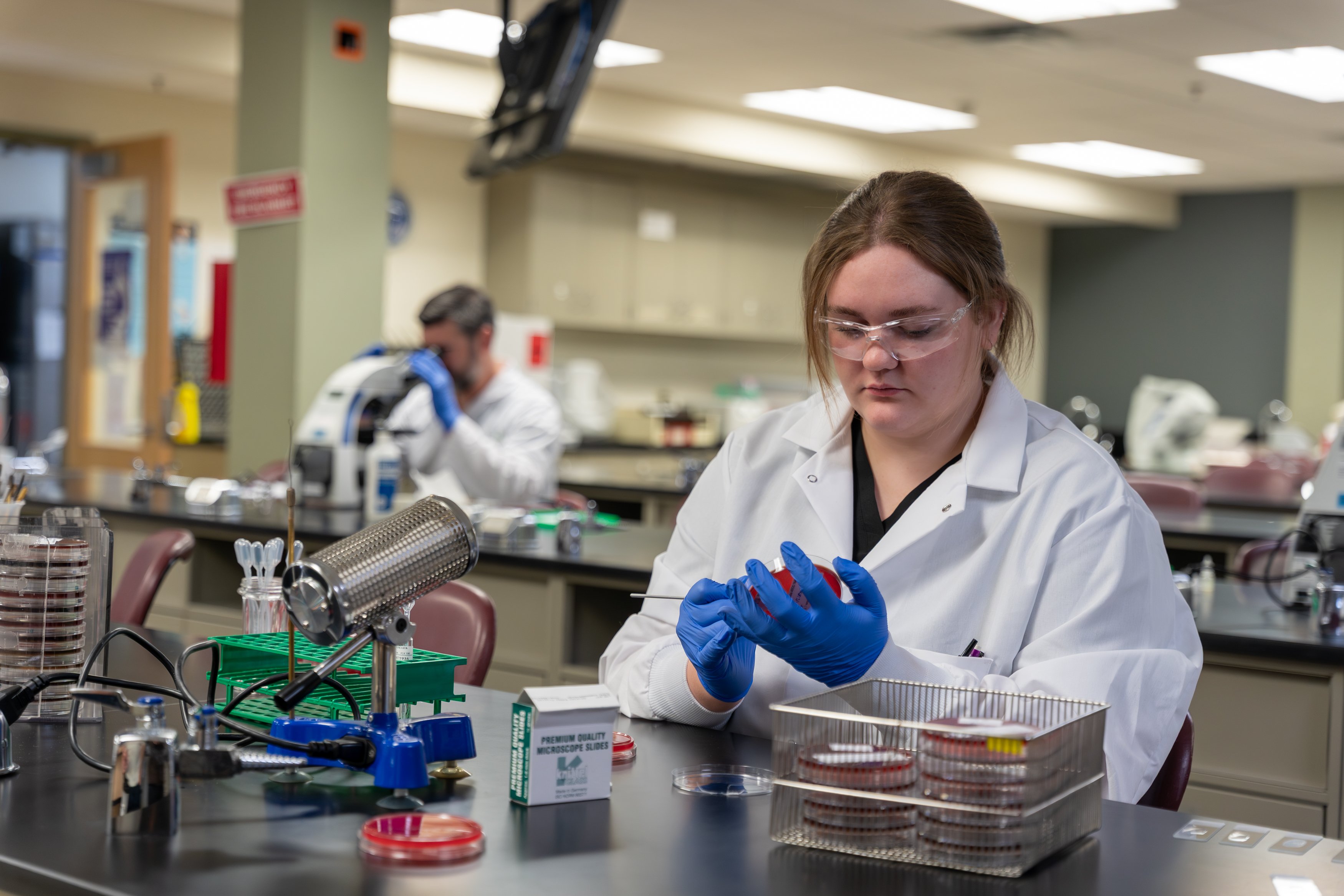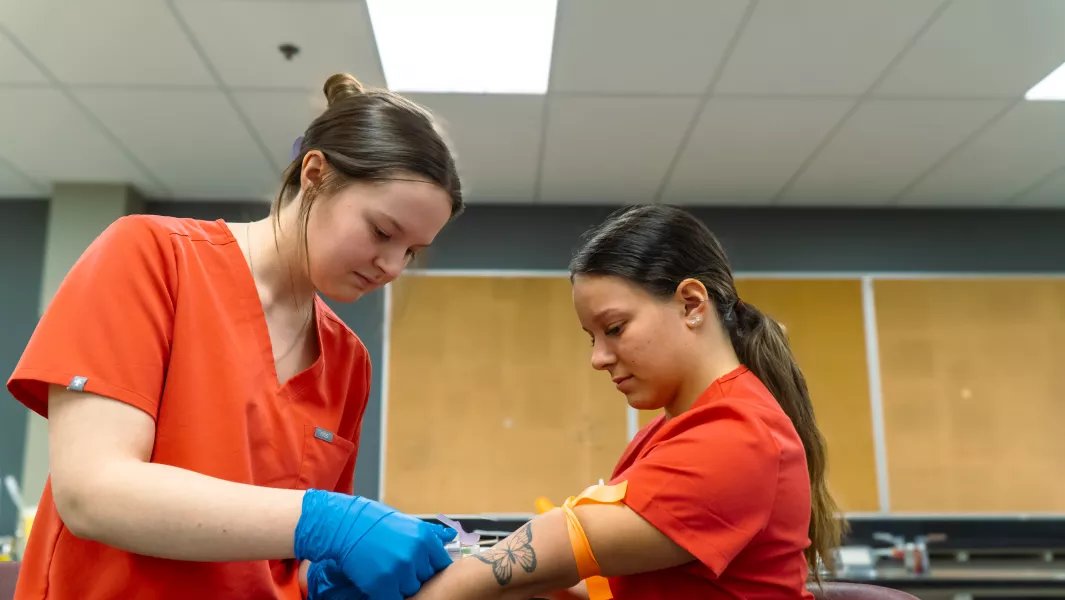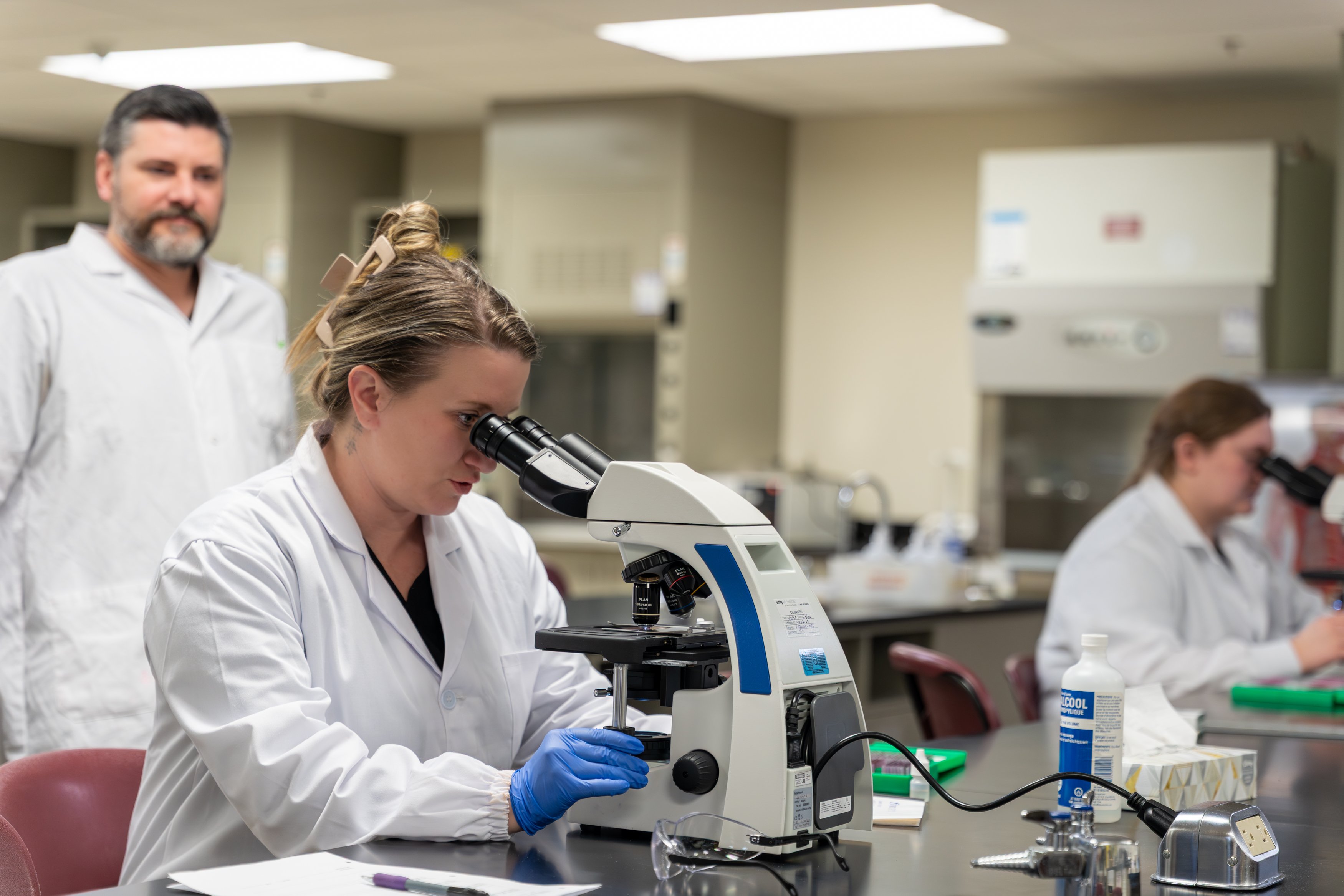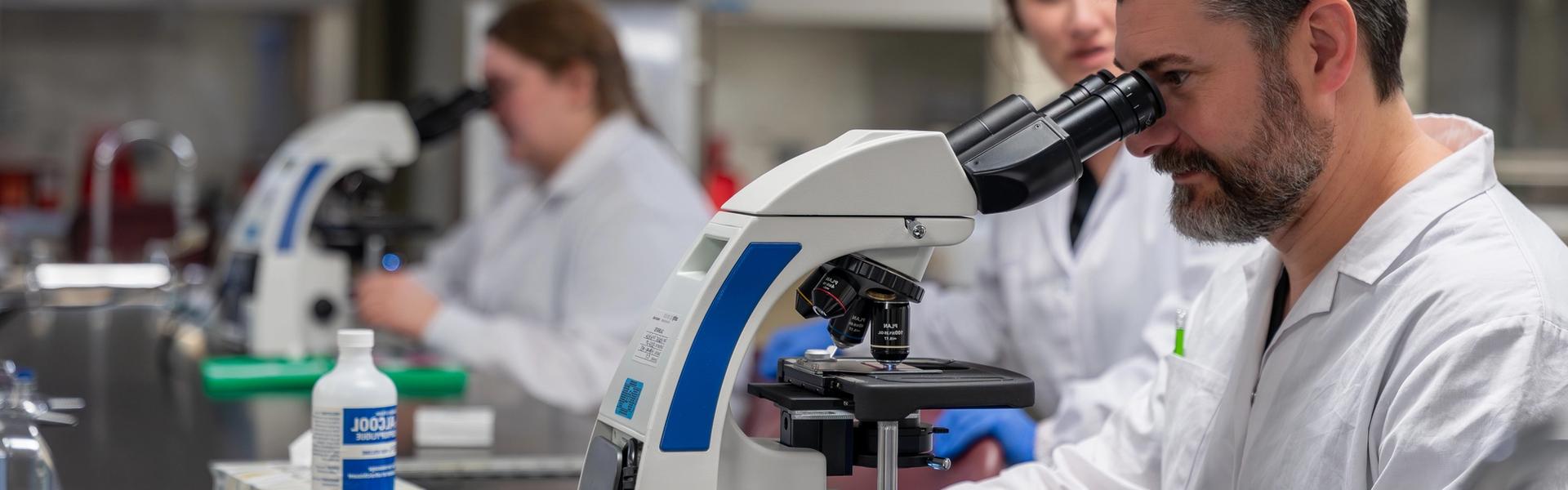
Students in lab coats examining samples with microscopes in a science laboratory

Ontario College Certificate

Medical Laboratory Assistant

In the Medical Laboratory Assistant program, you will learn how to collect and process patient samples through hands‑on labs and a clinical placement, preparing you to support diagnostic testing and patient care preparation.

CIP Code: 51.0802
PGWP Eligible
This program meets the criteria to be Post-Graduation Work Permit (PGWP) eligible as defined by Immigration, Refugees and Citizenship Canada (IRCC).

Note: PGWP eligibility does not guarantee approval. IRCC assesses all applications individually.

Program Start Options

IntakeDurationFormatCampusDomesticInternational
0603
Fall
1 year
2 semesters
Full-Time
In-Person
Thunder Bay
Domestic students accepted
International students accepted

Launch your Career in the Medical Laboratory Environment

Embark on a rewarding healthcare career with Confederation College's Medical Laboratory Assistant program. This comprehensive one-year certificate program equips you with the knowledge, skills, and hands-on experience needed to excel in a laboratory setting. Learn to collect blood samples, conduct laboratory tests, and assist healthcare professionals in vital diagnostic procedures.

Our program emphasizes practical skills development alongside crucial theoretical knowledge. You'll master techniques for sample collection, laboratory test preparation, and various technical procedures including ECG and Holter Monitor positioning. The curriculum blends in-class learning with hands-on experience, covering essential topics such as professional practice, microbiology, and sociology to provide a well-rounded understanding of the field.

Exciting New Pathway for MLA Students to MLS – Apply Now!

Confederation College is thrilled to announce its new partnership with St. Lawrence College, offering an incredible opportunity for graduates of our Medical Laboratory Assistant program. Starting in Fall 2024, eligible graduates from Confederation College’s MLA program can apply directly into the second year of St. Lawrence College’s Medical Laboratory Science (MLS) program through an internal application process.

This collaboration provides a seamless pathway for students to advance their careers in the healthcare field without having to leave Northern Ontario. With theory classes offered online and hands-on lab training conducted in Thunder Bay, this partnership ensures that students can achieve their professional goals while staying close to home.

Important Admission Requirement

Admission to Year 2 of the Medical Laboratory Science (MLS) program requires a minimum final grade of 63% in every course used toward admission. This requirement applies to all Confederation College MLA students, including previous graduates receiving transfer credit or completing bridging courses. Completion of the MLA program with the minimum graduation requirement of 60% per course does not, by itself, qualify a student for admission to the MLS pathway.

Highlights of the MLA to MLS Pathway

  • Internal application of MLA Confederation College grads into Year 2 MLS with St. Lawrence College:
    • Confederation College MLA graduates (starting Fall 2024) can apply directly to the second year of the St. Lawrence MLS program through an internal application form(opens in new window). You must meet the requirements of the MLS program and will be evaluated through St. Lawrence College.
    • Eligibility Requirement: To be eligible for admission into Year 2 of the Medical Laboratory Science (MLS) program, applicants must have achieved a minimum final grade of 63% in every course being used toward admission or advanced standing. This requirement applies to all courses, including those completed as part of the Confederation College MLA program and any courses granted as transfer credit or advanced standing. Previous graduates of the MLA program (prior to Fall 2024) must also meet the minimum 63% requirement in every course used toward MLS eligibility, including any courses completed to bridge to the updated curriculum.
    • Submit your completed application, along with your transcripts (request your unofficial transcripts if you have not yet completed your MLA program) to DomesticAdmissions@sl.on.ca by February 1st as the equal consideration date.
    • Students will gain advanced skills and knowledge required to become Medical Laboratory Technologists (MLTs).
  • Hands-On Labs in Thunder Bay:
    • All lab training is completed locally in Thunder Bay, making it convenient for Northern Ontario students.
  • Clinical Placement Opportunities Across Northern Ontario:
    • The final year of the MLS program includes a two-semester clinical placement at partner hospitals and private labs across Northern Ontario.
    • Placement details, including start dates and locations, are determined by the program and clinical site requirements.
  • Continued Opportunities for Past MLA Graduates:
    • Graduates of Confederation College's MLA program prior to Fall 2024 may enroll in the updated MLA program to complete the courses required to align with the new curriculum. To be considered eligible for admission to the MLS program, applicants must achieve a minimum final grade of 63% in every course required for MLS admission, including previously completed MLA courses receiving credit and any additional bridging courses completed. A grade below 63% in any required course will not meet the admission requirements for the MLS pathway.

Program Highlights

Medical Laboratory Assistant/Technician (MLA/T) Program

  • A one-year Ontario College Certificate program.
  • Requires a minimum grade of 60% in each course to successfully complete the MLA program. However, students wishing to progress into Year 2 of the Medical Laboratory Science (MLS) program through the Confederation College/St. Lawrence College partnership must achieve a minimum final grade of 63% in every course being used toward MLS admission.

Medical Laboratory Science (MLS) Program

  • A three-year Ontario College Advanced Diploma program.
  • Requires a minimum grade of 63% in each course to progress.
  • Graduates are eligible to write the CSMLS General Certificate Exam and meet regulatory requirements set by the College of Medical Laboratory Technologists of Ontario (CMLTO).

Why Choose This Pathway?

This partnership is designed to address the growing demand for skilled medical laboratory professionals in Ontario. By offering a common first-year curriculum, both the MLA/T and MLS programs share foundational courses, making it easier for students to progress from one program to the next.

  • Greater Opportunities:
    Graduates can continue their professional development seamlessly while contributing to Ontario’s healthcare sector.
  • Alignment with Industry Standards:
    The curriculum follows the CSMLS (Canadian Society for Medical Laboratory Science) Competency Profiles, ensuring students are well-prepared for certification and professional success.
  • Satellite Campus for St. Lawrence College:
    Confederation College has been designated as a satellite campus with 15 seats available for MLS students.

Curriculum and Learning Environment

Both Medical Laboratory Assistant and Medical Laboratory Sciences programs offers a dynamic learning experience that combines classroom instruction with practical training. Key components include:

  • Hands-on Skills Development: Learn to collect and process various biological samples, prepare laboratory tests, and perform technical procedures.
  • Work Placement: Gain real-world experience through placements in various professional laboratory setting.
  • Diverse Course Offerings: Study subjects like anatomy, physiology, medical terminology, and laboratory safety to build a strong foundation in medical laboratory science.
  • Professional Certification Preparation: Upon graduation in the MLA, you will be qualified to write two important certification exams, enhancing your employability.

Top Highlights

Ideal Candidate Profile

  • Detail-Oriented: Meticulous in following protocols and handling samples.
  • Strong Communicator: Able to interact professionally with patients and healthcare team members.
  • Technologically Adept: Comfortable working with laboratory equipment and computer systems.
  • Ethical and Responsible: Committed to maintaining patient confidentiality and adhering to safety guidelines.
  • Team Player: Capable of collaborating effectively in a fast-paced healthcare environment.

Ready to Take the Next Steps?

Current MLA Students (Fall 2024 Onwards)

Past MLA Graduates

  • If you graduated before Fall 2024, you may enroll in the updated MLA program at Confederation College to complete the courses required to align with the current curriculum.
  • To be eligible for admission to the MLS program, applicants must have achieved a minimum final grade of 63% in every course used toward admission, including previously completed MLA courses receiving credit and any additional bridging courses required.
  • Contact the Academic Manager for guidance regarding your individualized pathway to eligibility.

Contact Information

Program Files

Get detailed information about program requirements, courses, and student resources.

Confederation College helped me discover my passion for laboratory science and gave me the skills and experience to build a rewarding healthcare career.

ML
Meagen Lepage
Graduate of 2016

Admission Requirements

Fall

Fall (0603)

Admission Requirements for Domestic Students

  1. Ontario Secondary School Diploma (or equivalent) with courses from the College (C), University (U), University/College (U/C), or Open (O) preparation levels with Grade 12 English (C/U) Level.
  2. or successful completion of the Mature Student Assessment.
  3. or successful completion of the Canadian Adult Education Credential (CAEC) or General Education Development Test (GED), prior to May 2024.
  4. or appropriate credits from the Academic and Career Entrance program (ACE).

Other Courses Required

  1. Grade 12 Math (College or University Preparation) or ACE Core Math (UM602) and
  2. Grade 11 or 12 Chemistry (College or University Preparation) and
  3. Grade 11 or 12 Biology OR Physics (College or University Preparation)

Admission Requirements for International Students

  1. A high school/senior secondary diploma with a grade 12 math, biology, and chemistry credits
    a) Original transcripts as well as a notarized, translated copy must be provided where applicable.
  2. English Proficiency
    a) Academic IELTS: 6.5, no band lower than 6.0.

Prerequisites

Refer to “Field Placement Requirements” section for requirements that ideally should be completed in the summer BEFORE attending classes.

Alternative Pathways

​If you do not possess the necessary admission requirements (or equivalency), we encourage you to consider our Pre-Health Sciences-Pathway to Certificates and Diplomas program which will provide the necessary preparation to apply to this program. Completion of the Pre-Health Sciences-Pathway to Certificates and Diplomas program does not guarantee admission to the Medical Laboratory Assistant program in a subsequent year.

Student Accessibility and Essential Program Requirements

Confederation College is committed to providing an accessible and inclusive learning environment and will provide reasonable accommodations to students with disabilities in accordance with the Ontario Human Rights Code, the Accessibility for Ontarians with Disabilities Act (AODA), and College policy.

Students who require accommodations are encouraged to engage with Student Accessibility Services and are responsible for initiating and participating in the accommodation process. Accommodation is a collaborative process involving the student, Student Accessibility Services, faculty, and the Academic School. Requests for accommodation are considered on an individual basis, and the College will work with students to identify reasonable accommodations that provide equitable access to learning while maintaining the integrity of the program.

Students are expected to demonstrate the essential knowledge, skills, professional behaviours, learning outcomes, and competencies required to successfully complete their program. While the manner in which these requirements are demonstrated may be accommodated where appropriate, the essential requirements themselves must still be achieved.

For programs involving laboratories, field work, clinical placements, aviation environments, trades training, equipment operation, simulations, community placements, or other environments where health and safety are critical, accommodations must also be consistent with applicable legislation, professional standards, licensing requirements, accreditation standards, and workplace safety obligations.

In some circumstances, a requested accommodation may not be reasonable or possible where it would:

  • Fundamentally alter an essential program requirement, competency, or learning outcome.
  • Compromise the health or safety of the student or others.
  • Conflict with provincial or federal legislation.
  • Conflict with the requirements of an external regulatory, licensing, accreditation, or professional body.
  • Prevent the student from demonstrating competencies required for safe and effective professional practice.
Note

Where a particular accommodation cannot be provided, the College will work collaboratively with the student to identify whether an alternative accommodation can appropriately address the student’s disability-related needs while maintaining essential program requirements.

Tuition & Fees

Placement Pass

Confederation College has partnered with Placement Pass to provide a dedicated portal to upload your medical and non-medical requirements to achieve placement clearance. This fee includes full support from the Placement Pass team to review your required documents, unlimited questions and support from a nurse-led team, access to orientation drop-in support sessions, secure document storage for 7 years. More information on Placement Pass will be provided through email for those students who are confirmed in the program.

  • Year 1 Cost: $65 + tax

Fees for Domestic StudentsProgram Code: 0603

Year 1
Total: $6,500.00
Fee Breakdown
Academic Fees
Total Tuition Fees:$3,024.00
College Service Fee:$863.00
Health Fee:$305.00
Health Record Fee:$40.00
Bus Fee:$332.00
$4,564.00
Program Fees
College Supplies:$17.00
Tools:$50.00
Boots / Uniform:$100.00
Record Check, Seminars, Courses, First Aid, Medicals:$315.00
Exam Fees, Certifications, Licenses, Apprentice or Business Registration:$375.00
Books & Supplies:$979.00
Parking Fee:$100.00
$1,936.00

Fees for International StudentsProgram Code: 0603

Year 1
Total: $20,522.25
Fee Breakdown
Academic Fees
Total Tuition Fees:$15,574.00
College Service Fee:$863.00
Health Fee:$652.25
Health Record Fee:$40.00
Bus Fee:$332.00
$17,461.25
Program Fees
College Supplies:$17.00
Tools:$50.00
Boots / Uniform:$100.00
Record Check, Seminars, Courses, First Aid, Medicals:$315.00
Exam Fees, Certifications, Licenses, Apprentice or Business Registration:$375.00
Books & Supplies:$979.00
Parking Fee:$100.00
$1,936.00
Ancillary Fees
Municipal Levy:$75.00
Student Fees:$300.00
Recovery Fee:$750.00
$1,125.00
Note

Please note that fees are estimated and are subject to change.

Fees shown on this page are for full-time students attending the main Thunder Bay campus for Fall 2026.

Costing for Regional Campuses & Distance Education Students:

If this program is available at Regional Campuses, or to Distance Education students, see the following links for costing information.

Courses

1 intake

Fall0603

Semester 1

ML 111

Laboratory Techniques

56 hours

This integrated laboratory-theory course will teach the student how to use and handle various laboratory equipment and materials safely and properly. This course provides the student with the theory knowledge and essential applied skills required for the safe practice and complexities of clinical laboratory work.

ML 112

Laboratory Communications

28 hours

This theory course provides students with communication skills needed in the healthcare field. Students will develop active listening skills, overcome communication barriers, and produce professional-quality reports and correspondence using basic medical/scientific vocabulary. Students will also develop interprofessional skills and gain an understanding of the roles, responsibilities, and challenges of different healthcare professionals from the lens of laboratory professionals.

ML 113

Laboratory Anatomy

56 hours

This theory course explores the principles of human anatomy and physiology, with a focus on the relationship between the structure and function of the major body systems. Students will learn about the chemical and cellular basis of life, energy metabolism, genetics, and cell diversity, as well as the anatomy and physiology of the body's systems. Students will also explore how these systems work together to maintain homeostasis and how laboratory tests can help diagnose diseases by detecting deviations from homeostasis.

ML 114

Laboratory Math

56 hours

This theory course covers the essential skills and knowledge for students to perform calculations, measurements, and data analysis in the laboratory. The course integrates topics from mathematics, chemistry, statistics, and instrumentation, with a focus on their practical applications in medical laboratory settings.

ML 115

Laboratory Skills 1

42 hours

This integrated laboratory-theory course introduces students to the principles and techniques of specimen collection and microscopy in the medical laboratory science field. Students will learn how to handle blood and other body fluids and tissues for diagnostic testing. Students will also learn how to use bright field microscopy to examine different cell and tissue types. This course integrates theory and applied components and emphasizes the development of professional behaviours and safety standards.

ML 116

Laboratory Foundations

28 hours

This theory course provides an overview of the Medical Laboratory profession and the Canadian healthcare system. Students will gain an understanding of the Quality Management and Safety Legislation that governs laboratory operations and patient care. Additionally, students will examine the historical and current trends and issues in healthcare.

42 hours

Semester 2

ML 212

Chemistry 1

56 hours

This integrated laboratory-theory course introduces students to the principles and applications of clinical chemistry, biochemistry, and molecular biology. It covers the basic theoretical concepts and applications that underlie the practice of clinical chemistry. Students will gain knowledge of skills and methods necessary to prepare them for working in a clinical chemistry laboratory.

ML 213

Microbiology 1

70 hours

This integrated laboratory-lecture course introduces students to the methods, safety protocols, and aseptic techniques required in clinical microbiology. Students will gain the knowledge to classify and understand the physiology and identification of bacteria at an introductory level. Practical skills developed encompass the isolation, staining, culturing, and sterilization/disinfection methods related to common pathogenic microorganisms encountered in clinical microbiology.

ML 214

Blood Science

56 hours

This integrated laboratory-theory course introduces students to immunological concepts and the blood system. Students will learn about the mechanisms of self-recognition, antigen-antibody reactions, and complement activation. Students will acquire practical skills in using immunological methodologies and principles. Students will gain knowledge of skills and methods necessary to prepare them for working in a transfusion laboratory.

ML 215

Laboratory Skills 2

42 hours

This integrated laboratory-theory course covers the skills and knowledge needed to collect blood samples by venipuncture and capillary methods. Students will also learn how to receive, accession, and assess the integrity of various body fluids and tissues for diagnostic testing. Students will build upon their knowledge from Laboratory Skills 1 to follow laboratory safety rules and comply with relevant laws and professional standards.

ML 216

Histology 1

42 hours

This integrated laboratory-theory course covers the fundamentals of EKG and anatomical pathology lab skills. Students will learn about the heart's structure, function, and electrical activity, as well as how to perform and interpret EKG tests. Students will also learn about the preparation and examination of tissue specimens for histological analysis. The course emphasizes the importance of professionalism, patient education, informed consent, confidentiality, and ethics in both settings.

ML 220

Placement

150 hours

Field placement provides an opportunity for students to demonstrate entry-to-practice technical and professional competency while applying skills in the practice setting. Under supervision, students collect blood samples and handle information, equipment, and specimens inside the laboratory. Through the deliberation of assigned topics online, the student demonstrates reflective practice and professional growth.

Learning Outcomes

The graduate has reliably demonstrated the ability to:

  1. Perform all assigned tasks in a manner consistent with established competencies of the profession.
  2. Complete all work in accordance with established protocols, safety guidelines, and existing legislation to ensure safe work practices.
  3. Interact with clients/patients in a professional and competent manner, projecting a professional image with other health care professionals and following generally accepted practices regarding client/patient service.
  4. Verify relevant data and contribute to the assurance that appropriate specimens are procured according to established protocols.
  5. Process specimens from a variety of sources according to established protocols.
  6. Perform pre-analytical procedures on specimens from a variety of sources according to established protocols.
  7. Prepare reagents for medical laboratory testing using approved methods and according to laboratory standards and established procedures.
  8. Follow quality assurance policies and procedures and participate in quality assurance initiatives.
  9. Conduct professional practice according to established protocols, safety guidelines, and existing legislation to ensure safe work practices.

Meet the Program Staff

2 staff members

Careers

Graduates of the Medical Laboratory Assistant program are prepared for diverse roles, including:

  • Laboratory Technician
  • Phlebotomist
  • Clinical Assistant
  • Research Laboratory Assistant
  • Diagnostic Supply Specialist
  • Opportunities are available in various settings such as hospitals, clinics, research laboratories, private and public testing facilities, and commercial diagnostic supply companies.
See Career Opportunities

Clicking the button will take you to a detailed dashboard with up-to-date job data tailored to your program, including salary ranges, job titles, and projected demand.

Pathways

Confederation College offers a variety of articulation agreements designed to help you advance your education and career. Whether you're coming to us from another institution or planning your next steps after completing your program, our pathways make your transition seamless and effective.

Students at Confederation College

We're here to help

Have questions before you apply?

Not sure if this is the right fit? Our recruitment team can help you navigate admission requirements, program details, and campus life.