Environmental Technician - Water Resource Management
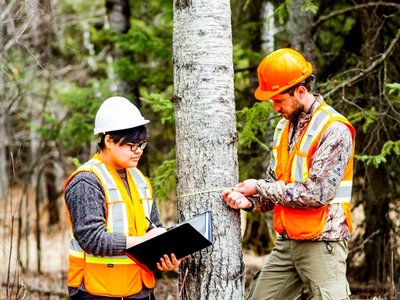
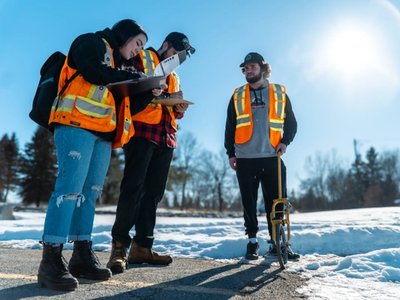
In the Environmental Technician – Water Resource Management program, you will learn how to assess and protect ecosystems through hands-on fieldwork in forests, waterways, and wetlands.
CIP Code:03.0101
PGWP Eligible
This program meets the criteria to be Post-Graduation Work Permit (PGWP) eligible as defined by Immigration, Refugees and Citizenship Canada (IRCC).
Note: PGWP eligibility does not guarantee approval. IRCC assesses all applications individually.
Are you interested in learning how to responsibly develop our resource-based economy while protecting our forests, waterways, and land?
Through Confederation College’s Environmental Technician two-year diploma program, you will learn to effectively manage natural and man-made environments. This program will explore environmental issues and provide hands-on tools for assessing, protecting and restoring ecosystems. Best of all, you’ll learn in one of the greatest natural labs available: the Boreal Forest, a rich and diverse forest ecosystem that stretches around the Northern Hemisphere. Courses cover a wide variety of related topics including plant identification, natural resource measurements, soils & geomorphology, ecology, waste management, groundwater, surface water and water & waste water treatment.
Top Highlights
Courses developed in consultation with industry and government familiar with northern Ontario and based on current cutting-edge practices
Program includes two optionalco-ops after the second and fourth semesters that give you work experience in the field
Balance of class work, field study and placements for a well-rounded education
Ontario's Entry-Level Drinking Water Operator Certificate possible, upon graduation
Transfer credits to other related college and university programs through our Articulation Agreements
The Environmental Technician program at Confederation College gave me the knowledge and skills to launch my career right after graduation—I highly recommend it!
LV
Lauren Vold
Graduate of 2019 – Geological Labourer, New Gold Inc.
The small class sizes and supportive educators at Confederation College helped me overcome barriers and reach my potential in the Environmental program.
Ontario Secondary School Diploma (or equivalent) with courses from the College (C), University (U), University/College (U/C), or Open (O) preparation levels with Grade 12 English (C/U) Level.
or successful completion of the Mature Student Assessment.
or successful completion of the Canadian Adult Education Credential (CAEC) or General Education Development Test (GED), prior to May 2024.
or appropriate credits from the Academic and Career Entrance program (ACE).
Note
The Environmental Technician program starts with a two-week field school at the beginning of both of the fall semesters. Students must be prepared for long days outside during field school.
The Environmental Technician program is clustered with the Forest Ecosystem Management Technician program. It is possible to complete both of these two-year diplomas in three years, if the co-op option is completed, either at the end of the first or second year of the program.
Other Courses Recommended
Grade 11 or 12 College or University preparation Chemistry & Biology
If you do not meet the entrance requirements, or if you want to earn some credits toward the Environmental Technician Diploma while exploring your career options in Technology, we encourage you to apply for the Pre-Technology-Trades program.
Courses
1 intake
Starts in Fall. Program code 0387.
Semester 1
NR 100
Natural Resource Measurements
48 hours
Students will examine the characteristics of the growth and yield of forest stands and gain a thorough understanding of forest measurement sampling techniques and navigation/orientation. Students will also be introduced to surface water grab sampling and groundwater level measurements. Sampling design, sampling intensity, data collection, compilation, and analysis are emphasized.
Students learn first about scientific classification and how it applies to forest trees. The organization of tree species in Canada by morphology (external appearance) is emphasized in both lectures and laboratory sessions. The use of dichotomous keys for identification of unknown samples is practiced. In lectures, an overview of the Forest Regions in Canada is included. Silvics ('how trees grow') and some basic ecology of the major Boreal and Great Lakes - St. Lawrence forest regions follow. Traditional uses of local forest plants and trees are highlighted. Laboratory sessions use live, frozen and pressed tree foliage, twigs and fruit to help students learn to identify and name (common and scientific names) the most important species of trees in Canada, as well as local woody shrubs. An herbarium-standard plant collection, started in field school, is a major component of out-of-class work. It will include samples of Ontario Land Classification (ELC) plant species that will be reviewed in NR216 Introductory Ecology.
The student will gain the skills to identify fundamental characteristics of forest soils and sites and to classify forest ecosystems and ecosites using standard terminologies. The student will then discover how soils and site parameters affect the structure and function of forest ecosystems and how they influence forest operations including road construction, forest harvesting and silviculture. Other topics include hydrology, landform origin, description and identification.
Students will participate in a two-week field school designed to introduce them to the science of terrestrial ecosystems. Field safety, plant identification, orienteering, field soil assessment, and forest measurement concepts will be covered.
In this course, students will be introduced to academic writing styles with a thematic focus on current issues. This course will help students to express themselves clearly and correctly in written form. Students will critically analyse assigned readings and express their thoughts. The course will also focus on the development of an academic paper utilizing the APA style of documentation.
In this course, engineering technology students will be introduced to Microsoft Excel and Microsoft Word. Students will develop skills in creating polished, professional documents, format data, process numbers with formulas, or present data to find patterns of any other information that can be laid out in a grid. The course also familiarizes students with the college's data systems, including email, Blackboard, and the Local Area Network (LAN), using Windows 11 as the operating environment.
This is an introductory chemistry course that allows the student to become familiar with the terms, tools and calculations that are a part of chemistry. Topics covered include matter, the use of the periodic table, bonding, nomenclature, mole calculations and concentration of solutions.
Applied Math for Technology I provides a foundation in mathematics for students in engineering technology and technician programs. Students will work with whole numbers, fractions, decimals, percentages, ratios, systems of measurements, units, and introductory algebra while solving applied problems involving variation, geometry, and right trigonometry.
This course will provide students with an introduction to the use of Geographic Information Systems (GIS) and build basic skills required by the entry level Natural Resource Technician. Topics explored will include the fundamentals of creating and managing information in a digital environment, performing common queries and analysis, and presenting information in the format of maps and reports in a professional manner. Additional topics covered in the course will include the use of Global Positioning Systems (GPS) and an introduction to the science of Remote Sensing.
Basic biology of plants from the cellular level to a whole forest. Students will gain an elementary understanding of metabolic process in plants such as photosynthesis and respiration. Plant diversity and the life cycles of conifers (gymnosperms) and hardwoods (angiosperms) will be explored. The structure and function of non-woody and woody plant tissues and organs will be examined along with plant growth and genetics.
This course in basic ecology explores the biotic and abiotic elements of ecosystems, along with the chemical, geological, and biological processes that impact how an ecosystem functions. Terrestrial, freshwater, and wetland ecosystems are highlighted. Students will research and write a technical report on an environmental issue of interest to the student. Laboratory activities will include a foundational number of Ontario Ecological Land Classification plants of various forms to be learned. Winter twig identification of local native woody deciduous shrub and tree species will also be explored.
The course will provide the student with knowledge of fundamental chemistry, chemical calculations and laboratory procedures commonly applied to environmental testing and monitoring. Introduction to organic chemistry will cover principles of structure, reactions and applications common to organic chemistry.
Applied Math for Technology II is a continuation of its pre-requisite course MA115. Students will further develop mathematical problem-solving techniques as applied to the different technical areas. After successful completion of this course, the student will be able to solve applications involving factoring, algebraic fractions, functions, graphing, geometry, trigonometry, and vectors.
This course is designed to broaden the participant’s perspective on contemporary natural resource issues in Canada, with an emphasis on the history and culture of Indigenous peoples. Forested lands are an essential part of life and economy in Canada. While First Nations, Metis, and Inuit communities are vastly different from each other, a close connection to the land is a commonality. They have lived on and managed the land and its forests for generations. Understanding of the past, present, and future roles of Indigenous governments in the management of their land and forests is essential for anyone planning on working on the land. The key topics of Indigenous views of land use, land claims, and the braiding of sustainable industrial development with Indigenous Knowledge into forest management are explored. Non-wood forest products and ethno-ecology are also examined.
This course introduces the students to the basic principles of groundwater occurrence, flow, exploration and monitoring. Students will study the basic theory of soil mechanics, water flow in the natural ground and procedures of basic soil testing in the laboratory. Students will work individually and in groups to complete laboratory experiments.
Water is a major constituent of all living matter and is therefore considered the 'molecule of life'. Water quality is the degree to which water is pure enough to fulfill the requirements of various uses. The water quality course involves the analysis of the water molecule, its capacities and limitations, limnology and sampling. Emphasis will be placed on the application of regulatory sampling and laboratory procedures for analyzing common physical, chemical, microbiological and toxicological parameters of water quality.
This course introduces students to environmental sampling, monitoring, and evaluation through hands-on field and lab exercises. Topics include environmental monitoring, site rehabilitation of decommissioned mine site(s), lake and stream assessments for chemical and biological indicators of water quality, streamflow assessment, urban storm-water impacts and mitigation through Low Impact Developments, and water/wastewater treatment. An overnight field camp may be included.”
This course will provide the learner with the ability to initiate and complete environmental audits, which have become an increasingly important part of efforts to improve and protect our environment. Emphasis will be placed on environmental site assessments, regulatory compliance audits, environmental management systems, waste reduction and energy audits, risk assessment and due diligence.
Effective supervisors are able to organize and motivate their staff to successfully and productively accomplish tasks and goals. Valuable employees are able to take direction and responsibility for assigned tasks as individuals and as team members. In this class, students will learn about and practice 'people management' skills, including empathic listening and self-awareness (personal assessment and development). The art of conflict resolution in the workplace will be learned and practiced (leaders and 'team players').
This course is designed to introduce the students to the tools, calculations, and methods of surveying as related to civil and environmental engineering. Students will use steel tape, automatic level, laser level, electronic theodolite, and the total station to measure and layout design features.
In this course, students will acquire a working understanding of federal and provincial environmental legislation in Canada. This course will examine key legislation dealing with environmental protection, remediation and conservation for all aspects of our environment. As these laws affect all aspects of the environment, and violations can bring stiff penalties, all environmental practitioners must be conversant with them and the court systems. The course will also examine the evolution of the Canadian court system to gain an understanding of the basis of environmental legislation applicable in today's society.
Ethical Practice & Sustainable Project Development
42 hours
This course will assist the student in understanding fundamental concepts of environmental ethics and sustainable development. The importance of sustainable development in the management of our environment and natural resources will be emphasized through discussions of current resource and environmental issues occurring regionally and globally.
The course will provide students with an understanding of the industrial processes that generate and control air pollutants. An emphasis is placed on processes that are important for the industries of Northwestern Ontario.
Introductory Statistics for Environmental Applications
56 hours
This course will introduce the learner to the fundamental concepts of statistics used in natural resource applications. Emphasis will be placed on fundamental terminology, descriptive statistics, basic probability and an introduction to inferential statistics. Actual environmental data will be used to perform basic summary statistics, correlations, linear regressions, and hypothesis tests comparing means and proportions using z-tests, t-tests, ANOVA and goodness-of-fit. An introduction to non-parametric data and tests will also be conducted.
This course is designed as a practical introduction to the study of fluid mechanics as it applies to Environmental Engineering Technology. Surface water hydrology including watershed delineation, storm-water assessment and storm-water management practices including Low Impact Development designs will also be emphasized during the course. The student will also gain fundamental knowledge of the properties of fluids, hydrostatics and gravity flow in pipes, open channels, pressure flow, pressure piping, flumes and weirs.
The graduate has reliably demonstrated the ability to:
Collect representative environmental samples and perform routine tests, using current and relevant tools.
Use scientific concepts and models when contributing to the prevention, control and elimination of environmental hazards and remediation of contaminated sites.
Assist with analysis of water/soil/air samples and with the resolution of environmental problems through the application of scientific and engineering principles.
Follow standard procedures for conducting environmental sampling projects including the use of appropriate equipment and materials.
Promote and maintain sustainable practices by applying the elements of ecosystem-based management.
Carry out work responsibilities adhering to standards of professional conduct and principles of professional ethics.
Complete assigned tasks in adherence to occupational health and safety standards and applicable legislative requirements.
Follow established protocols in support of environmental management systems.
Provide ongoing support for project management.
Communicate technical information accurately and effectively in oral, written, visual and electronic forms.
Develop and present strategies for ongoing personal and professional development to enhance performance as an environmental technician.
Graduates pursue many different types of work in the Environmental sector. Some graduates choose to work in laboratory settings, some choose to work primarily out in the field and some choose jobs that include a combination of both. While there is a heavy emphasis on water resources in the program, you will also gain extensive experience working with terrestrial ecosystems and be introduced to the environmental aspect of industrial settings. Many graduates have found work with consulting firms that offer a wide variety of experiences, including the Mining sector. Most students graduate with the Ontario Entry-Level Drinking Water Certification; many also obtain the (Water Treatment) Operator-in-Training Certificate.
Clicking the button will take you to a detailed dashboard with up-to-date job data tailored to your program, including salary ranges, job titles, and projected demand.
Pathways
Confederation College offers a variety of articulation agreements designed to help you advance your education and career. Whether you're coming to us from another institution or planning your next steps after completing your program, our pathways make your transition seamless and effective.
Pathway Out — Credits recognized by another institution
Lakehead University — Undergraduate Degree Programs at Lakehead University
This pathway allows students to begin a diploma at Confederation College and then apply to Lakehead University to continue into a degree program, combining hands-on learning with academic study.
Confederation College and Lakehead University offer a joint admission pathway that supports a smooth transition from diploma to degree studies.
Pathway Structure:
Students begin with a diploma program at Confederation College, focusing on applied, hands-on learning over two years
After completing their diploma, students transition to Lakehead University to pursue undergraduate degree studies
Key Features:
Combines practical, career-focused training with academic and theoretical education
Provides experience in two distinct learning environments
Prepares students with both applied skills and advanced knowledge
Admission Process:
Students who complete their diploma at Confederation College can apply directly to Lakehead University
University of New Brunswick — Bachelor of Applied Management (BAM)
Graduates from eligible 2-year or 3-year diploma programs at Confederation College can apply to enter the third year of the Bachelor of Applied Management at the University of New Brunswick, with a minimum 70% program average. Additional courses may be required.
Minimum Admission Average
70% overall program average
Entry Point
Year 3 of a 4-year degree
Institution: University of New Brunswick, Saint John, NB
Agreement Type: Memorandum of Understanding
Graduates of eligible diploma programs at Confederation College may be considered for advanced standing in the Bachelor of Applied Management (BAM).
Eligibility Requirements:
Completion of a 2-year (four-semester) or 3-year (six-semester) diploma program
Minimum overall program average of 70%
Transfer Details:
Eligible students may enter Year 3 of the 4-year BAM program
Additional courses may be required depending on the applicant’s academic background
Program Notes:
Eligible Confederation College programs are outlined in Appendix A of the Memorandum of Understanding
Students should consult the contact person for full details and program-specific requirements
Student Accessibility and Essential Program Requirements
Confederation College is committed to providing an accessible and inclusive learning environment and will provide reasonable accommodations to students with disabilities in accordance with the Ontario Human Rights Code, the Accessibility for Ontarians with Disabilities Act (AODA), and College policy.
Students who require accommodations are encouraged to engage with Student Accessibility Services and are responsible for initiating and participating in the accommodation process. Accommodation is a collaborative process involving the student, Student Accessibility Services, faculty, and the Academic School. Requests for accommodation are considered on an individual basis, and the College will work with students to identify reasonable accommodations that provide equitable access to learning while maintaining the integrity of the program.
Students are expected to demonstrate the essential knowledge, skills, professional behaviours, learning outcomes, and competencies required to successfully complete their program. While the manner in which these requirements are demonstrated may be accommodated where appropriate, the essential requirements themselves must still be achieved.
For programs involving laboratories, field work, clinical placements, aviation environments, trades training, equipment operation, simulations, community placements, or other environments where health and safety are critical, accommodations must also be consistent with applicable legislation, professional standards, licensing requirements, accreditation standards, and workplace safety obligations.
In some circumstances, a requested accommodation may not be reasonable or possible where it would:
Fundamentally alter an essential program requirement, competency, or learning outcome.
Compromise the health or safety of the student or others.
Conflict with provincial or federal legislation.
Conflict with the requirements of an external regulatory, licensing, accreditation, or professional body.
Prevent the student from demonstrating competencies required for safe and effective professional practice.
Note
Where a particular accommodation cannot be provided, the College will work collaboratively with the student to identify whether an alternative accommodation can appropriately address the student’s disability-related needs while maintaining essential program requirements.
We use cookies to analyze site traffic and measure how our advertising performs. By accepting, you consent to the use of analytics and advertising cookies. See our privacy policy.