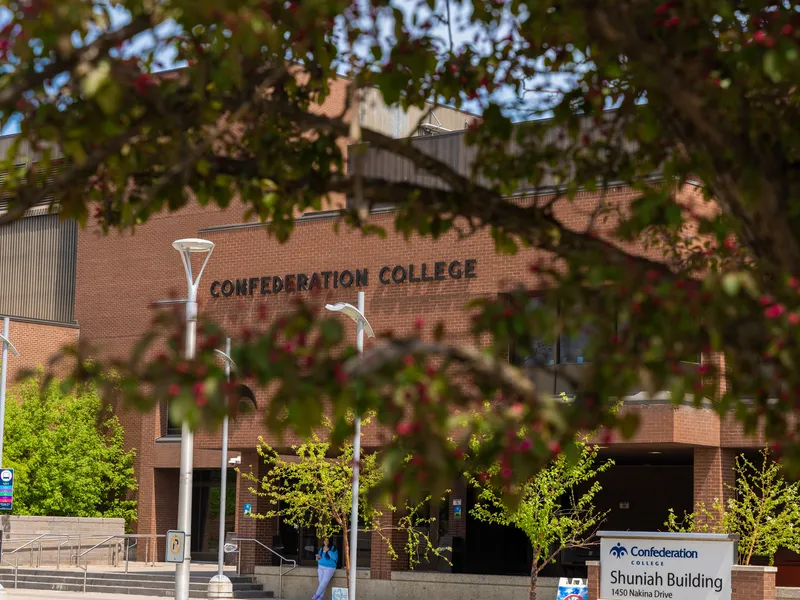
The Addiction & Mental Health program prepares professionals to support individuals with mental health and substance use challenges using trauma-informed, culturally relevant and person-centred practices.
Are you looking for practical training that will help you have a positive impact on the lives of those with mental health and addiction challenges?
The Addiction and Mental Health Post Graduate Certificate prepares students to support people, families, and communities with empathy, respect, and cultural humility. Grounded in trauma-informed and anti-oppressive practices, the program emphasizes seeing people beyond labels and diagnoses, honouring lived experience, and supporting self-determination. Students learn to work collaboratively, recognizing the social, cultural, and systemic factors that shape mental health and substance use.
Graduates are equipped to deliver ethical, culturally safe, and responsive care across a range of community and health settings. The program builds skills in assessment, crisis response, advocacy, and collaborative wellness planning, while also emphasizing reflective practice and practitioner well-being. Graduates leave prepared to contribute to addiction and mental health services and to support more compassionate, inclusive systems of care.
Top Highlights
Benefit from online delivery and flexible courses that enable you to study at a time and place convenient for you
Learn to recognize and effectively support a diverse set of client needs and experiences through accessible and responsive programs and services
Practice appropriate treatment, prevention and harm reduction strategies
Develop strategies for client advocacy and examine policy, legislation, and systems that impact service delivery in the field
Note
Program Continuation Criteria:
Students require a 60% in each class in order to pass
Starts in Fall, Winter, Spring. Program code 0199.
Semester 1
CD 230
Safety & Crisis Intervention
42 hours
In this course, students will examine crisis intervention for individuals living with addiction and mental health problems. The indicators of suicide, self harm, and violence will be explored in relation to risk assessment and management strategies. Students will examine safety planning, risk management practices, and non-violent crisis intervention to respond to situations that may arise when working with clients.
This course is potentially available for registration.
PREREQUISITE: Acceptance into the Addiction and Mental Health Graduate Certificate.
Complete program application www.ontariocolleges.ca
To request to register for this course contact de@confederationcollege.ca
Introduction to Addictions, Mental Health, and Concurrent Disorders
42 hours
This course provides an introduction to addictions, mental health and concurrent disorders, the unique features of each and the integration of services and supports in addictions and mental health. Students explore the prevention and treatment continuum in Canada, historical and cultural perspectives and frameworks and models. A bio-psycho-social-spiritual framework is addressed, and current practices are reviewed, including research and best practice guidelines.
"This practical course covers the application of knowledge and skills for counselling in addictions and mental health in a professional counselling environment, within the Competencies for Canada’s Substance Abuse Workforce. Students explore and practice behavioural and technical competencies in simulated scenarios and will develop a personal learning plan to further develop their professional competencies."
This course educates students about drug and alcohol use and the abuse of various substances in the body and how it affects ones behaviour. An introduction to the science of Pharmacology is included and students will study a number of drugs such as: alcohol, nicotine, prescription drugs, hallucinogens, cocaine, narcotics and marijuana, inhalants and steroids. They will also examine concepts of clinical practice and program design and learn how and when to apply them.
In this course students explore trauma-informed practices at the individual, organizational and systemic levels. Students develop and understanding of the diverse needs of trauma survivors and how women, men, children and youth experience trauma differently. The effect of trauma on the brain is studied and the way service may be adapted is discussed. Content includes an overview of services for people with trauma, substance use and mental health including parenting, child welfare and supports for children.
This course is potentially available for registration.
PREREQUISITE: Acceptance into the Addiction and Mental Health Graduate Certificate.
Complete program application www.ontariocolleges.ca
To request to register for this course contact de@confederationcollege.ca
In this course, students will engage in the exploration of key social challenges that impact Indigenous peoples in Canada. The curriculum embraces an Indigenized perspective by interweaving Indigenous knowledge, perspectives, and lived experiences. Emphasis will be placed on analysis of prevention and intervention strategies, while respecting the distinctive spiritual customs and traditions of the Indigenous populations.
Impulse Control Disorders and Behavioural Addiction
45 hours
In this course students critically review disorders characterized by diminished control over behaviour such as gambling, internet use, and gaming. These disorders have historically been conceptualized as impulse control disorders and / non-substance or "behavioural" addictions. An overview of disordered eating and sexual addiction will also be covered. Students study the classification of DSM.
Access to mental health and addictions services can be challenging due to the complexity of the system of service, funding sources and issues relating to stigma and barriers. In this course, students learn about the current issues, trends and developments in the integration of services in order to promote co-ordinated, efficient access to services while focusing on early intervention, treatment and community supports. Students explore a range of services for children, youth, adults, older adults and individuals with special needs. Workplace issues and supports are discussed. This course includes two mandatory chats. We recommend viewing the course schedule immediately upon logging into the course to view course meeting dates and times.
Holistic Assessment and Interventions: Determinants of Health
45 hours
Bio-psycho-social-spiritual assessments and interventions and the determinants of health are explored in this course. Holistic interventions and current practices are included such as mindfulness, nutrition, exercise, and alternative therapeutic approaches. Interdisciplinary practice and inter-professional collaboration is emphasized. Students also explore the notion of family and community in the role of holistic intervention.
This course is potentially available for registration.
PREREQUISITE: Acceptance into the Addiction and Mental Health Graduate Certificate.
Complete program application www.ontariocolleges.ca
To request to register for this course contact de@confederationcollege.ca
Motivational interviewing is a client-centered, collaborative conversation style for strengthening a person's own motivation to change. This course will examine the foundational principles and practices of motivational interviewing in addictions and mental health. Students will learn how to apply the values, processes and skills of this approach to promote client behaviour change for individuals with a mental illness and/or addiction.
This course is potentially available for registration.
PREREQUISITE: Acceptance into the Addiction and Mental Health Graduate Certificate.
Complete program application www.ontariocolleges.ca
To request to register for this course contact de@confederationcollege.ca
For this capstone project, students will use skills and competencies obtained through their academic studies to translate addiction and mental health knowledge into practice. They will develop an addiction and mental health resource or practical tool based on a determined need that may be used for prevention or screening purposes, direct client education, clinic use, etc. Students will have the opportunity to determine their own special topic for this project; it will be based on need, current research and best practice. Students will work independently to complete this project, with support from the instructor. This capstone project will promote collaboration, community partnerships, prevention and health promotion in addiction and mental health.
This course is potentially available for registration.
PREREQUISITE: Acceptance into the Addiction and Mental Health Graduate Certificate.
Complete program application www.ontariocolleges.ca
To request to register for this course contact de@confederationcollege.ca
This course will focus on the specific drug families, their general features and the dynamics of the psychoactive drugs included in each classification. Attention will be given to commonly identified substances within each of the families (e.g. alcohol, heroin, marijuana) as well as the legal and illicit psychoactive drugs that have appeared in recent years.
This course will focus specifically on the role of group counselling within the addictions setting. Students will explore the dynamics of group counselling, including an understanding of the various types and functions of a group counselling. Students will have the opportunity to practice and demonstrate group counselling.
The graduate has reliably demonstrated the ability to:
Provide holistic and culturally relevant assessments in collaboration with individuals experiencing addiction and mental health challenges, guided by trauma-informed and anti-oppressive practices.
Co-create and collaboratively monitor wellness plans that meet the unique needs of the individual to determine if additional goals, interventions, and supports are required.
Provide services and resources to individuals, families/natural supports, and communities in accordance with various frameworks and informed by multiple research perspectives.
Make ethical decisions aligned with professional standards and adhere to workplace policies and legislation within scope of practice.
Educate and advocate alongside individuals, families/natural supports, and communities to reduce stigma, navigate referral processes, and challenge barriers to holistic care.
Build collaborative relationships with individuals, families/natural supports, community members, and networks to enhance addiction and mental health services.
Work safely and in accordance with trauma-informed critical incident and crisis management practices to increase the safety of self and others.
Develop individualized self-care and critical self-reflection strategies to maintain health, growth, and resilience as an addiction and/or mental health practitioner.
Comply with confidentiality requirements and documentation standards to respect individual rights and self-determination.
Meet the Program Staff
3 staff members
Kim Gerrish
SSW, MSW, RSW
Faculty & Program Coordinator - for Addiction and Mental Health program & 2nd Year of the regular SSW program only
There is a high demand for mental health and addictions professionals. Graduates may find employment opportunities in the addictions and mental health field as community support workers, front-line shelter workers, team leaders, housing workers, case managers, counsellors, crisis workers, addictions counsellors and mental health workers. For more details on related occupations, job market information and career opportunities, see the Government of Canada website: www.jobbank.gc.ca/home(opens in new window).
Clicking the button will take you to a detailed dashboard with up-to-date job data tailored to your program, including salary ranges, job titles, and projected demand.
Pathways
Confederation College offers a variety of articulation agreements designed to help you advance your education and career. Whether you're coming to us from another institution or planning your next steps after completing your program, our pathways make your transition seamless and effective.
Student Accessibility and Essential Program Requirements
Confederation College is committed to providing an accessible and inclusive learning environment and will provide reasonable accommodations to students with disabilities in accordance with the Ontario Human Rights Code, the Accessibility for Ontarians with Disabilities Act (AODA), and College policy.
Students who require accommodations are encouraged to engage with Student Accessibility Services and are responsible for initiating and participating in the accommodation process. Accommodation is a collaborative process involving the student, Student Accessibility Services, faculty, and the Academic School. Requests for accommodation are considered on an individual basis, and the College will work with students to identify reasonable accommodations that provide equitable access to learning while maintaining the integrity of the program.
Students are expected to demonstrate the essential knowledge, skills, professional behaviours, learning outcomes, and competencies required to successfully complete their program. While the manner in which these requirements are demonstrated may be accommodated where appropriate, the essential requirements themselves must still be achieved.
For programs involving laboratories, field work, clinical placements, aviation environments, trades training, equipment operation, simulations, community placements, or other environments where health and safety are critical, accommodations must also be consistent with applicable legislation, professional standards, licensing requirements, accreditation standards, and workplace safety obligations.
In some circumstances, a requested accommodation may not be reasonable or possible where it would:
Fundamentally alter an essential program requirement, competency, or learning outcome.
Compromise the health or safety of the student or others.
Conflict with provincial or federal legislation.
Conflict with the requirements of an external regulatory, licensing, accreditation, or professional body.
Prevent the student from demonstrating competencies required for safe and effective professional practice.
Note
Where a particular accommodation cannot be provided, the College will work collaboratively with the student to identify whether an alternative accommodation can appropriately address the student’s disability-related needs while maintaining essential program requirements.
We use cookies to analyze site traffic and measure how our advertising performs. By accepting, you consent to the use of analytics and advertising cookies. See our privacy policy.