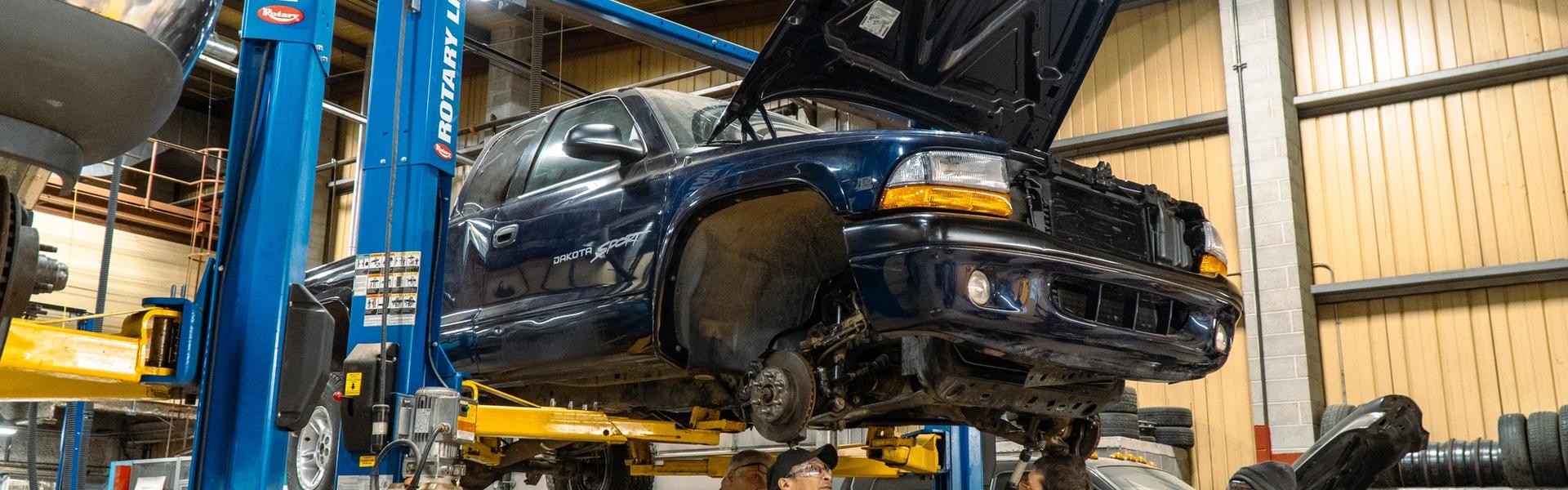
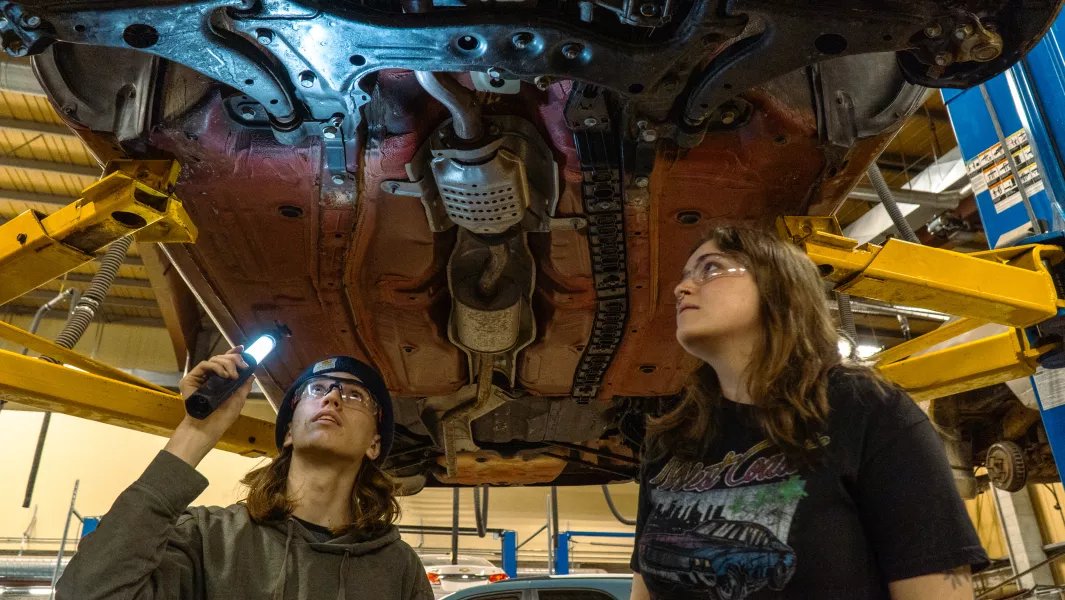
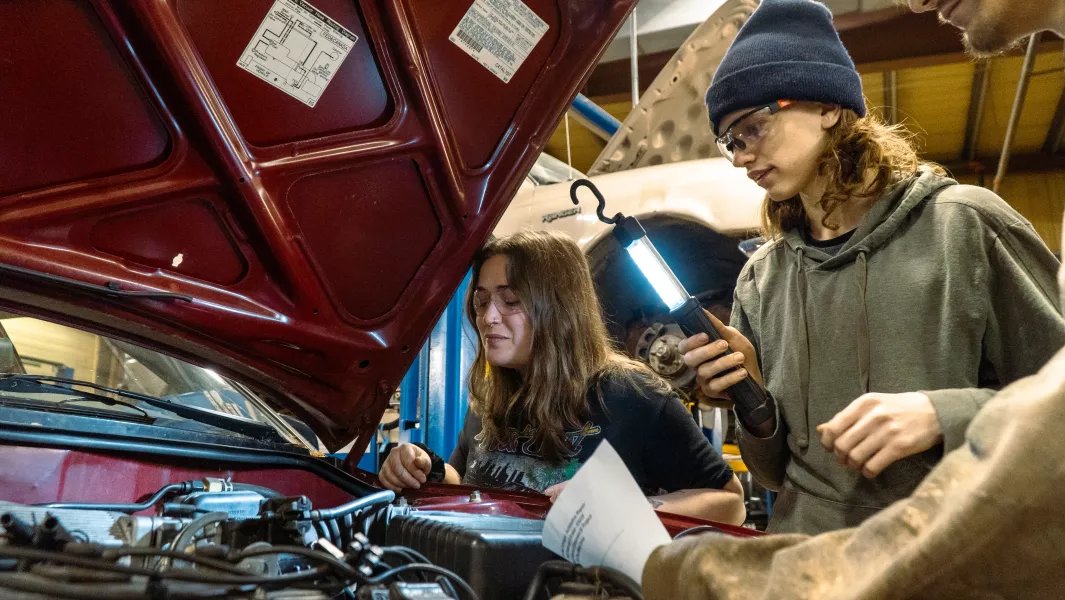
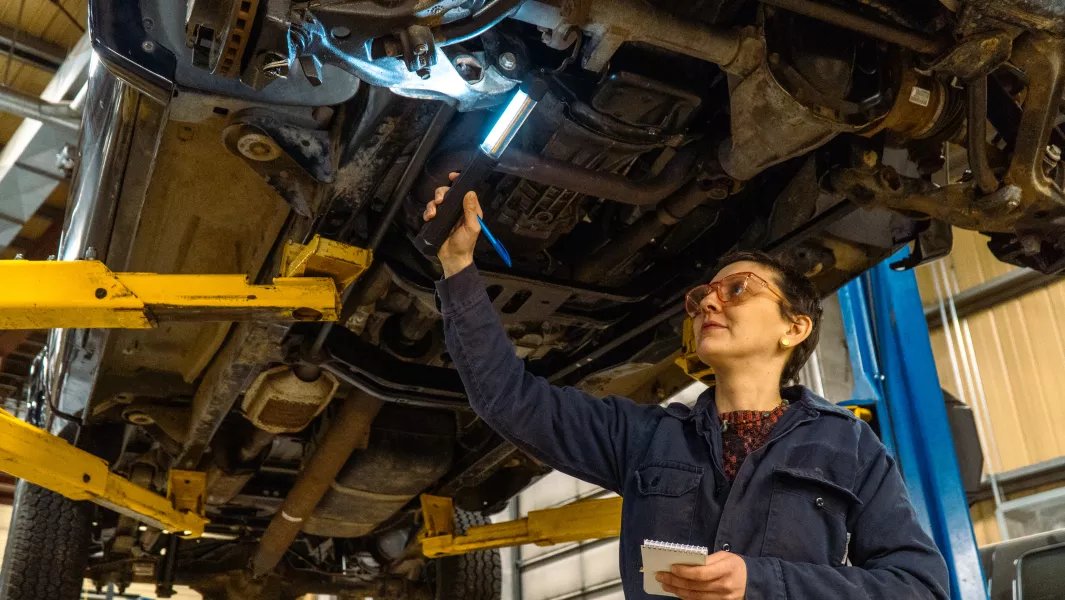
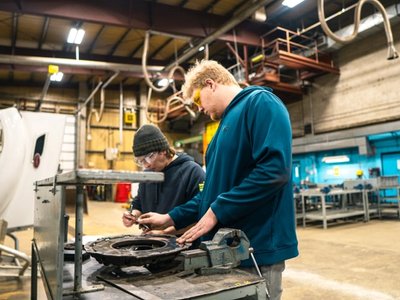
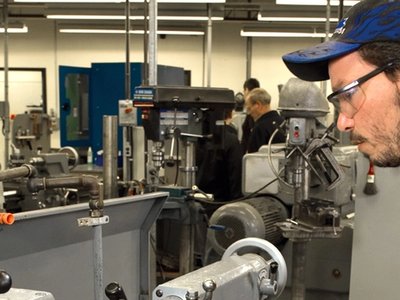
In the Motive Power Techniques – Automotive program, you will learn how to service vehicle systems through hands-on shop work that builds real-world diagnostic and repair skills.
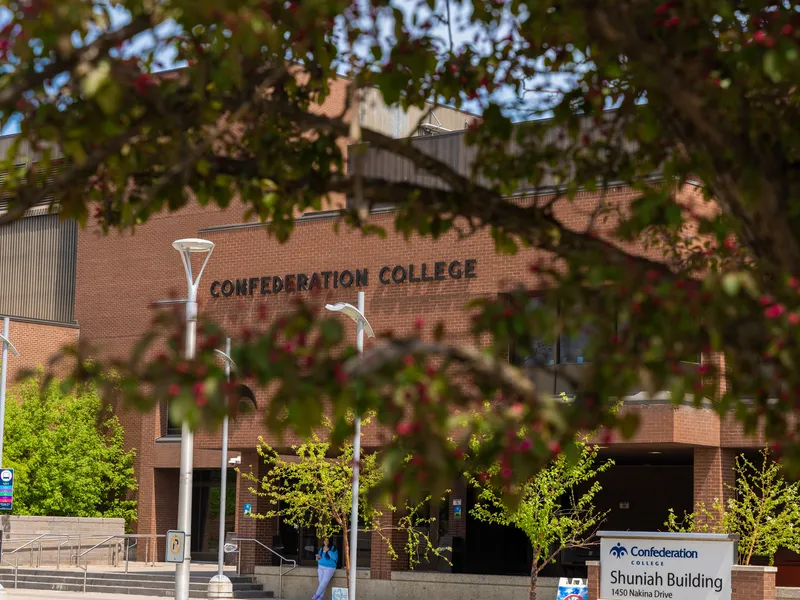
Advance your automotive knowledge with Confederation College’s Motive Power Techniques – Automotive certificate program.
This comprehensive program covers all aspects of vehicle maintenance and repair, including electrical systems, electronics, fuels, brakes, gear trains, steering, and suspension. With hands-on instruction and practical workplace skills, you'll be well-prepared to excel in the automotive industry. Whether you're interested in working on cars or light trucks, this program provides the technical expertise and mechanical knowledge needed to succeed in today’s modern and competitive job market.
Top Highlights
Field Placement: The program includes a two-week field placement, providing on-the-job training in a real shop setting.
Industry-Standard Training: Courses follow industry standards and practices, ensuring you are job-ready upon graduation.
Cutting-Edge Technology: Learn today’s technologies and how to adapt to future advancements.
Apprenticeship Opportunities: Graduates can also go on to an apprenticeship program.
Ideal Candidate Profile
Mechanically Inclined: Naturally drawn to working with cars and mechanical systems.
Problem Solver: Possess strong analytical skills to troubleshoot and repair automotive issues.
Team Player: Able to work effectively both independently and as part of a team.
Physically Fit: Capable of handling the demanding physical tasks associated with automotive maintenance.
Detail-Oriented: Appreciate the importance of precision and safety in mechanical practices.
Get detailed information about program requirements, courses, and student resources.
Confederation College gave me the foundation to become a Red Seal Technician—all while staying close to home with my young family. The people made the experience unforgettable.
This program breaks down how automotive systems work and gives you hands-on experience that builds true understanding. I highly recommend it to anyone pursuing the trade.
MC
Matthew Caratti
Graduate of 2006 – Licensed Automotive Technician, D&M Automotive, Thunder Bay
Ontario Secondary School Diploma (or equivalent) with courses from the College (C), University (U), University/College (U/C), or Open (O) preparation levels with Grade 12 English (C/U) Level.
or successful completion of the Mature Student Assessment.
or successful completion of the Canadian Adult Education Credential (CAEC) or General Education Development Test (GED), prior to May 2024.
or appropriate credits from the Academic and Career Entrance program (ACE).
If you do not meet the entrance requirements, we encourage you to apply for the Pre-Technology-Trades program to facilitate success in your technology path.
Courses
1 intake
Starts in Fall. Program code 0384.
Semester 1
HC 123
Electricity and Electronics 1
72 hours
This course introduces the student to the principles of electricity and electronics as they apply to the Motive Power Trade. Electrical laws, circuits, circuit calculations, test equipment and their application are covered.
In this course, students will develop the fundamental comprehension, technical, business, and oral communication skills required of employees in the trades. Upon completion of this course, you will be more adept at analyzing real-world writing scenarios; writing clearly and concisely; and communicating professionally.
This course introduces the student to occupational health and safety, basic hand and power tools, precision measuring tools, hoisting and lifting equipment
This course introduces students to basic operating principles and concepts of electrical/electronic and fuel systems. Electrical and fuel system diagnosis is introduced. The operation and application of diagnostic test equipment as it pertains to electrical/electronic fuel systems is also explored. Hybrid and EV concepts are introduced.
This course introduces students to basic operating principles and concepts of drive train systems. The student is introduced to clutch and flywheel systems, basic gear theory, as well as, manual and automatic transmission principles.
This course introduces students to basic operating principles and concepts of steering, suspension and braking systems. The student is also introduced to component inspection and diagnosis. Wheel alignment theory and principles are also introduced.
Students are placed for a two week period in selected industry throughout the Northwestern Ontario region and are expected to satisfactorily perform basic functions under the supervision of industry personnel. Performance evaluations will be conducted by both industry supervisors and college staff. It is important for students to practice their newly acquired skills in an actual work environment. It is an opportunity for the students to sell themselves to the industry. Industry can use this Field Placement as a tool to 'try before you buy.' This allows the employer to be aware of the new tradesperson's skills, attitude and work habits before a commitment is made for employment.
Graduates of the Motive Power Techniques – Automotive program will have the skills to secure employment in various automotive and mechanical fields, including:
Clicking the button will take you to a detailed dashboard with up-to-date job data tailored to your program, including salary ranges, job titles, and projected demand.
Pathways
Confederation College offers a variety of articulation agreements designed to help you advance your education and career. Whether you're coming to us from another institution or planning your next steps after completing your program, our pathways make your transition seamless and effective.
Student Accessibility and Essential Program Requirements
Confederation College is committed to providing an accessible and inclusive learning environment and will provide reasonable accommodations to students with disabilities in accordance with the Ontario Human Rights Code, the Accessibility for Ontarians with Disabilities Act (AODA), and College policy.
Students who require accommodations are encouraged to engage with Student Accessibility Services and are responsible for initiating and participating in the accommodation process. Accommodation is a collaborative process involving the student, Student Accessibility Services, faculty, and the Academic School. Requests for accommodation are considered on an individual basis, and the College will work with students to identify reasonable accommodations that provide equitable access to learning while maintaining the integrity of the program.
Students are expected to demonstrate the essential knowledge, skills, professional behaviours, learning outcomes, and competencies required to successfully complete their program. While the manner in which these requirements are demonstrated may be accommodated where appropriate, the essential requirements themselves must still be achieved.
For programs involving laboratories, field work, clinical placements, aviation environments, trades training, equipment operation, simulations, community placements, or other environments where health and safety are critical, accommodations must also be consistent with applicable legislation, professional standards, licensing requirements, accreditation standards, and workplace safety obligations.
In some circumstances, a requested accommodation may not be reasonable or possible where it would:
Fundamentally alter an essential program requirement, competency, or learning outcome.
Compromise the health or safety of the student or others.
Conflict with provincial or federal legislation.
Conflict with the requirements of an external regulatory, licensing, accreditation, or professional body.
Prevent the student from demonstrating competencies required for safe and effective professional practice.
Note
Where a particular accommodation cannot be provided, the College will work collaboratively with the student to identify whether an alternative accommodation can appropriately address the student’s disability-related needs while maintaining essential program requirements.
We use cookies to analyze site traffic and measure how our advertising performs. By accepting, you consent to the use of analytics and advertising cookies. See our privacy policy.