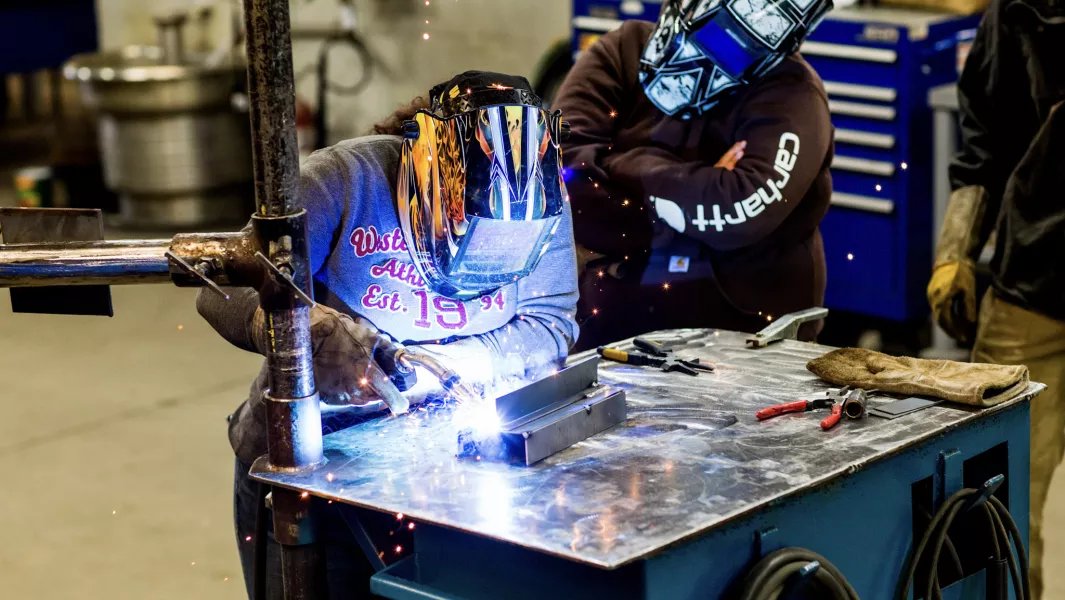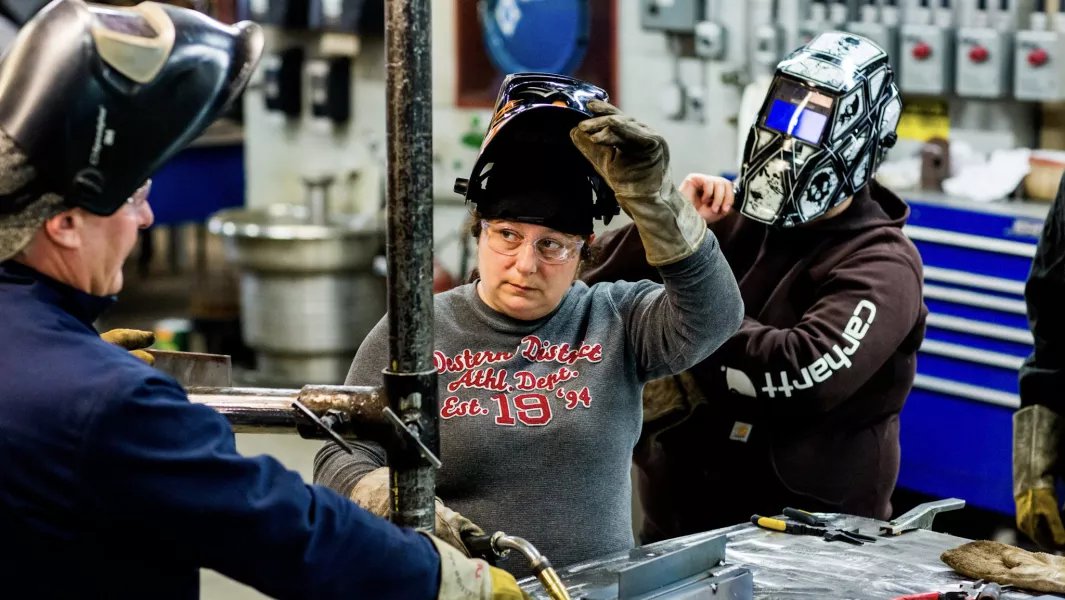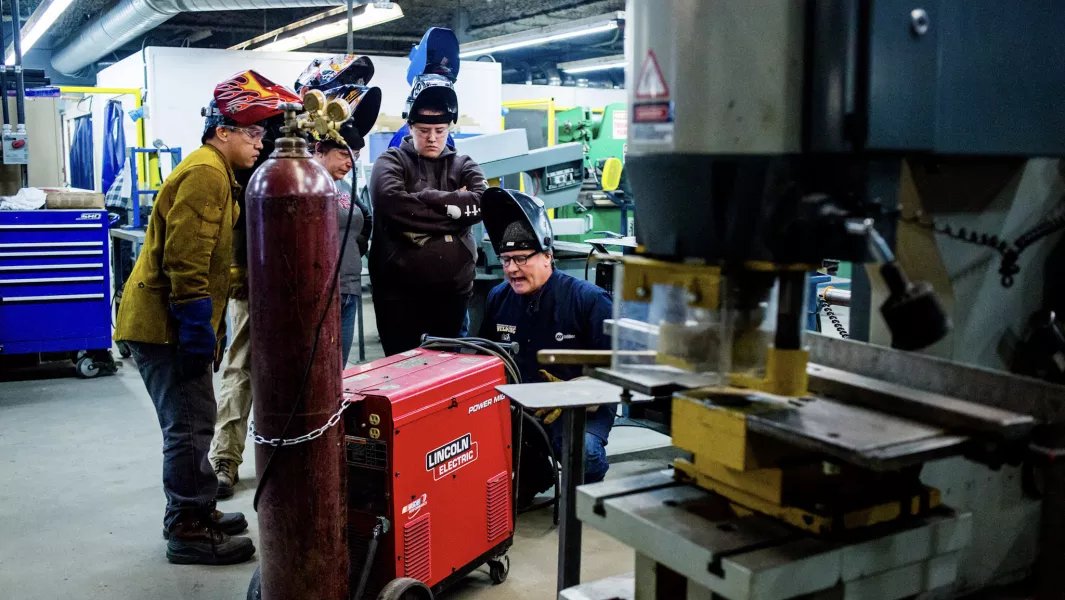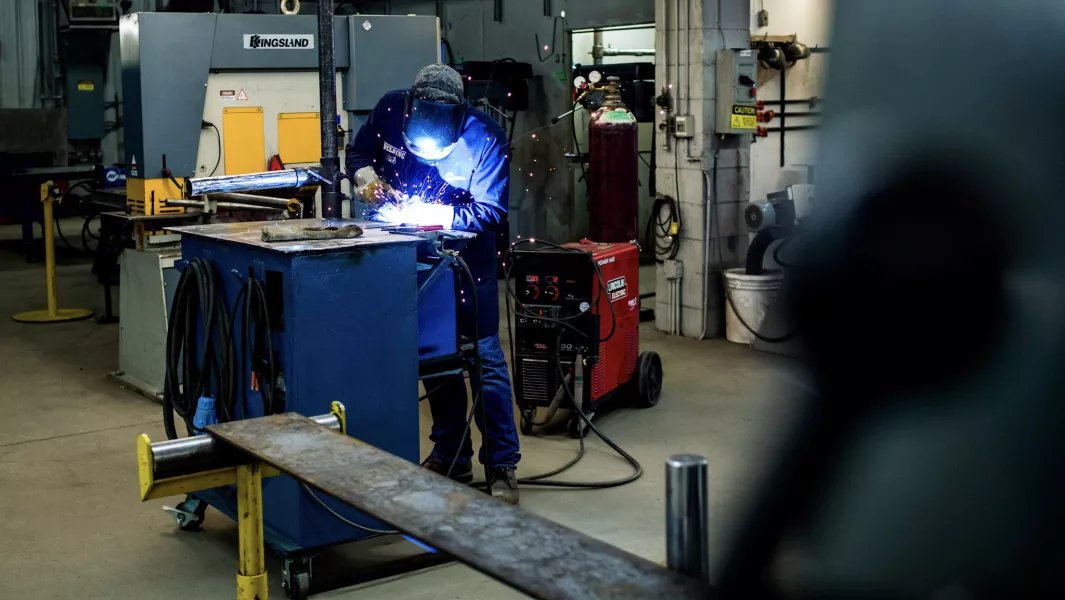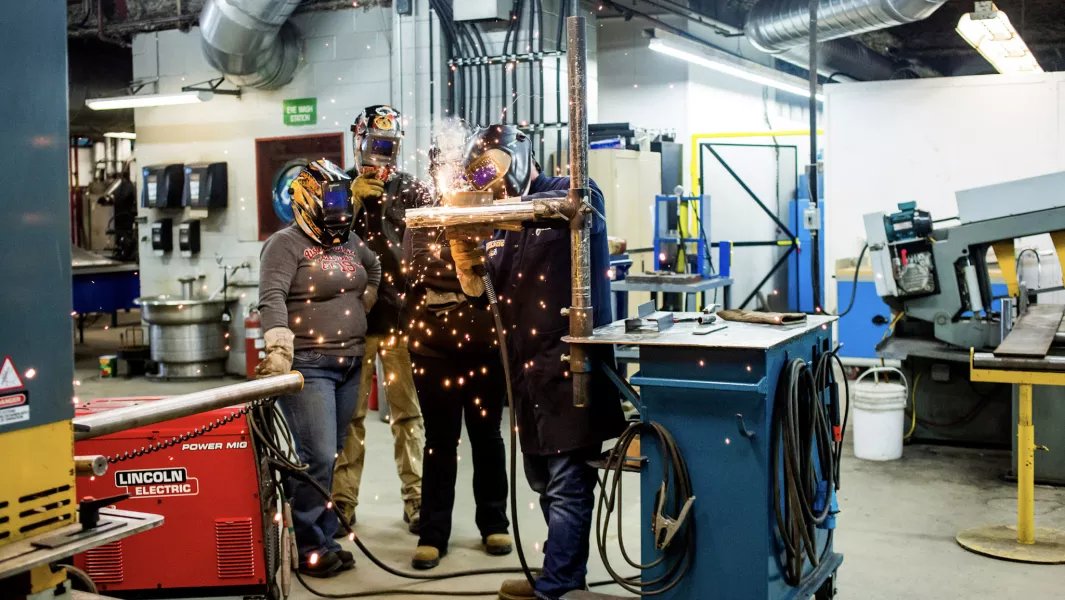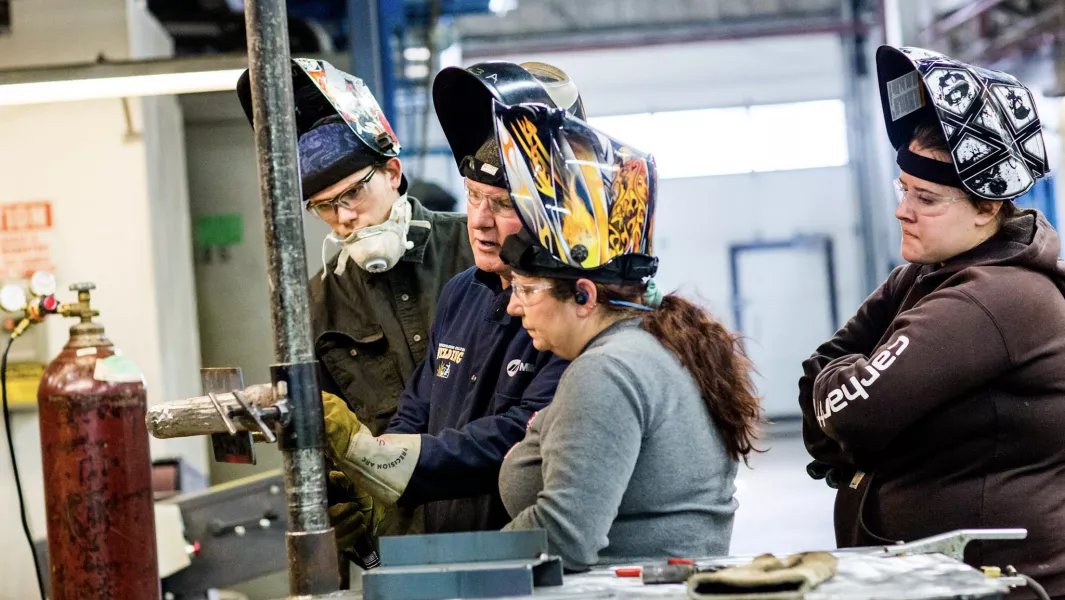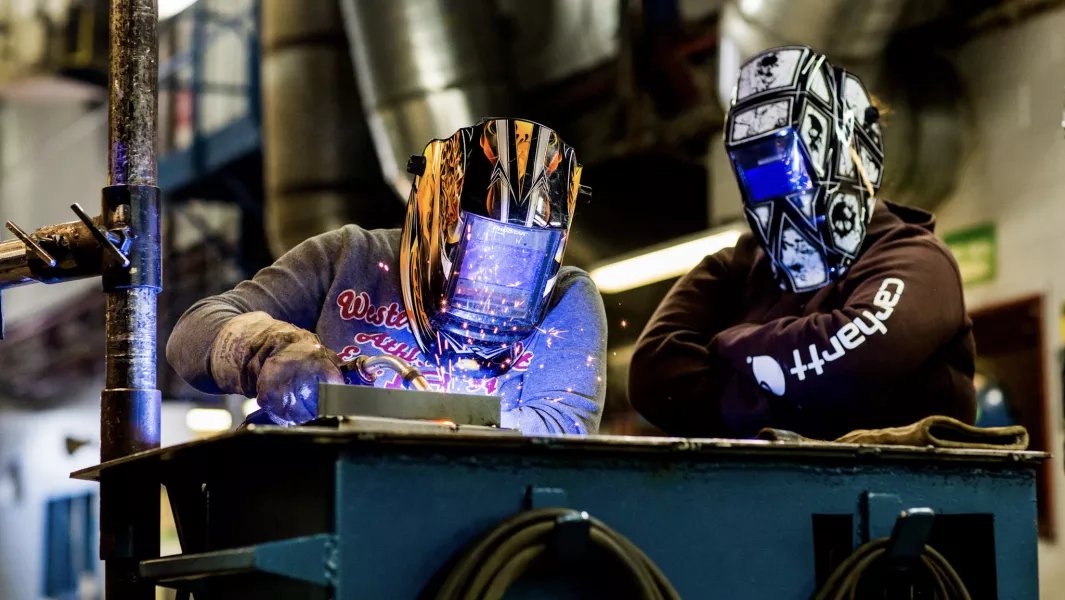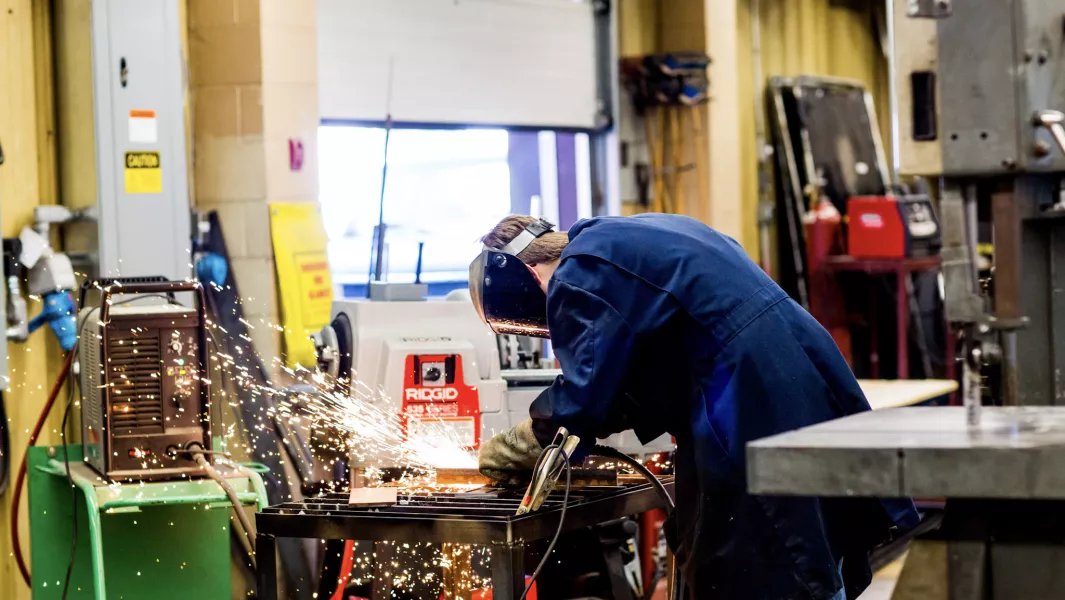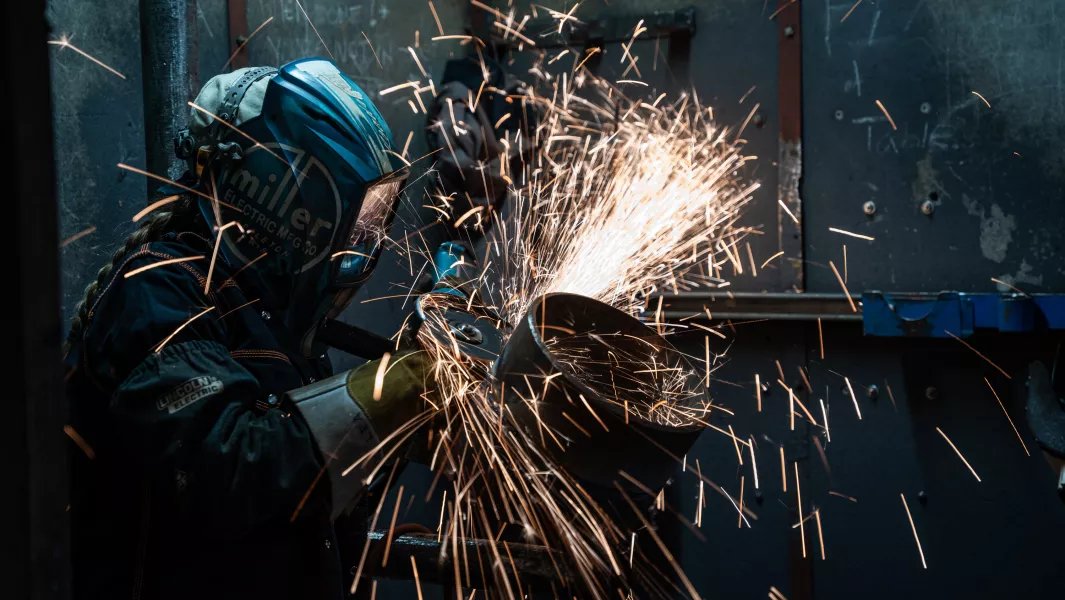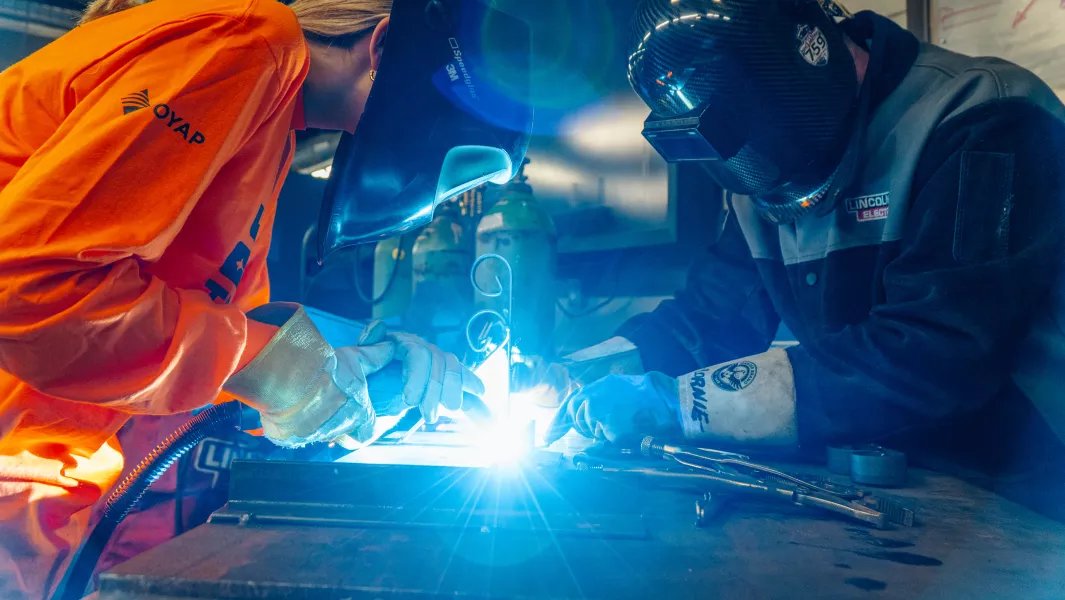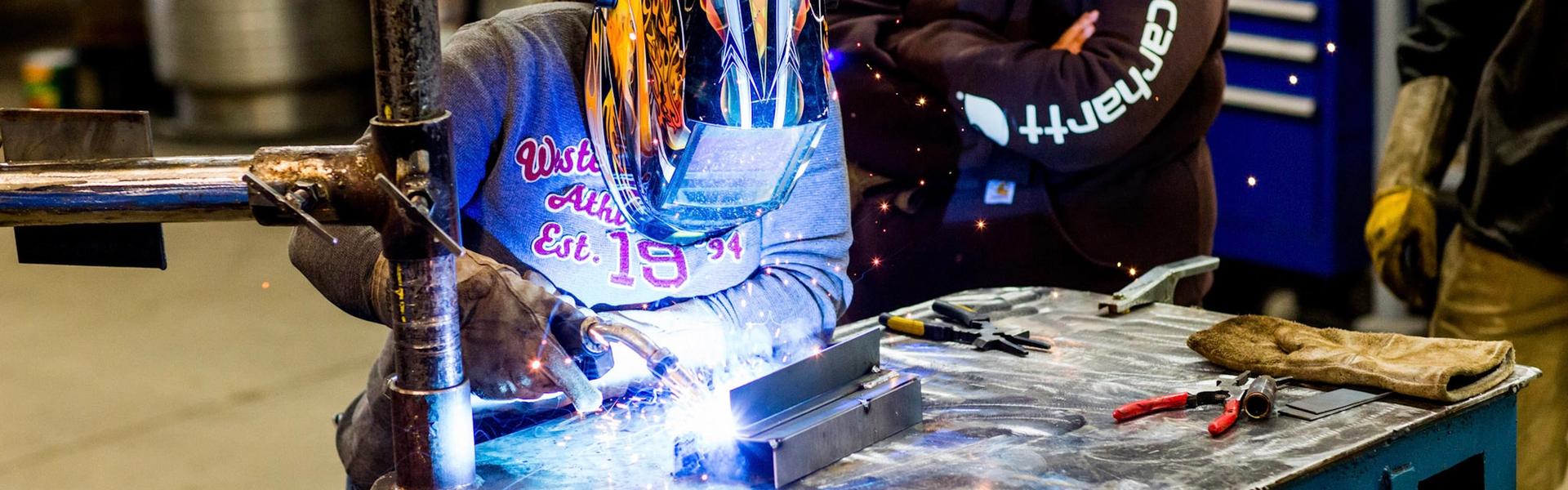
Welding apprentices practicing metal welding with protective helmets in a shop

Apprenticeship

Welding Apprenticeship

In the Welding Apprenticeship program, you will learn how to perform high-quality welds using multiple techniques through hands-on lab training and extensive on-the-job experience.

Program Start Options

IntakeDurationFormatCampusDomesticInternational
456A
Any Time
2–5 years (varies by trade)
Part-Time
In-Person
Thunder Bay
Domestic students accepted
International students not accepted

The Welding Apprenticeship Program (Trade Code 456A) is an in-depth training course designed for individuals aspiring to become skilled professionals in the welding industry. It combines theoretical learning with practical training, ensuring apprentices gain both knowledge and hands-on experience.

Program Structure:

  1. Duration and Components:
    • Total Program Duration: Combination of 720 in-school hours and 5280 on-the-job hours.
    • Three-Level Structure: Progressive learning divided into three distinct levels, each building on the skills learned in the previous stage.
  2. Curriculum Highlights:
    • Welding Techniques: Training in various welding methods such as SMAW, GMAW, GTAW, FCAW, SAW, and PAW.
    • Quality Control: Emphasis on maintaining high standards of quality before, during, and after welding processes.
    • Safety Training: Focus on safety practices and the use of personal protective equipment (PPE) in welding.
  3. Skills Development:
    • Practical Skills: Hands-on training in cutting, forming, and joining metal pieces.
    • Technical Knowledge: Understanding of metallurgy, welding theory, and blueprint reading.
    • Special Processes: Skills in specialized techniques like welding studs and brazing.

Certification:

  • Successful completion of the program and practical assessments leads to a Certificate of Qualification with a Red Seal endorsement.

Updates and Innovations:

  • The program curriculum is regularly updated to incorporate new technologies and practices in the welding industry.

This program is not just a learning journey but a stepping stone to a rewarding career in welding, offering comprehensive training that meets the evolving needs of the industry.

The welding field has many aspects to it that must be learned and used every day for the welding apprentice. A Welder is a tradesperson who can apply these aspects effectively and safely. These skills range from technical knowledge and skill in welding, cutting and allied processes that allow a welder the ability to tack, weld, assemble, fabricate, maintain, and repair many components that are required for structural standards.

A Welding Apprenticeship is generally trained areas such as:

  • The use and maintenance of tools, material handling equipment and welding equipment.
  • How to prepare a worksite.
  • The ability to perform lay-outs, cuts and formation of metals to specific standards.
  • The use of a variety of welding methods including, SMAW, GMAW, GTAW, FCAW, SAW, and PAW.
  • The ability to carry out special processes such as welding studs and brazing.
  • The ability to maintain controls to ensure quality of work before, during, and after welding.

Ideal Candidate Profile

Open to both new apprentices and experienced tradespersons through the Trade Equivalency Assessment.

Contact Information

Admission Requirements

Any Time

Any Time (456A)

Admission Requirements for Domestic Students

  1. To be eligible for an apprenticeship, you must:
    • Be at least 18 years of age (16 years of age in limited cases)
    • Have legal permission to work in Canada (i.e., have a valid social insurance number)
    • Meet the educational requirements of the trade.
      Grade 12 or equivalent is the generally accepted standard, however, grade 10 or equivalent may be accepted by some sponsors.
    • Have a sponsor located in Ontario. This can be a private employer, association or union.
  2. Apply for an apprenticeship through Skilled Trades Ontario(opens in new window). This step is usually completed when you have received an offer of employment from a sponsor.
  3. After completing the apprenticeship application, a Registered Training Agreement will be drafted by the Ministry of Labour, Immigration, Training and Skills Development (MLITSD). The apprentice and their sponsor will both sign this document, officially recognizing the apprentice to begin the training process through their employer.

Admission Requirements for International Students

This program is not currently available for international students.
To enroll in an apprenticeship program, international students must meet specific criteria, including possessing a valid Social Insurance Number (SIN) and securing a sponsor.

Prerequisites

People who want to become apprentices must apply directly to employers, unions or joint apprenticeship training committees for the trade they are interested in. Most trades require between two and five years of work and training to become certified. During that time apprentices will be notified of offers to attend in-class training at the closest available training facility.

Apprentices are permitted to attend other training facilities within Ontario if they choose by making arrangements with their local Ministry office in advance

Student Accessibility and Essential Program Requirements

Confederation College is committed to providing an accessible and inclusive learning environment and will provide reasonable accommodations to students with disabilities in accordance with the Ontario Human Rights Code, the Accessibility for Ontarians with Disabilities Act (AODA), and College policy.

Students who require accommodations are encouraged to engage with Student Accessibility Services and are responsible for initiating and participating in the accommodation process. Accommodation is a collaborative process involving the student, Student Accessibility Services, faculty, and the Academic School. Requests for accommodation are considered on an individual basis, and the College will work with students to identify reasonable accommodations that provide equitable access to learning while maintaining the integrity of the program.

Students are expected to demonstrate the essential knowledge, skills, professional behaviours, learning outcomes, and competencies required to successfully complete their program. While the manner in which these requirements are demonstrated may be accommodated where appropriate, the essential requirements themselves must still be achieved.

For programs involving laboratories, field work, clinical placements, aviation environments, trades training, equipment operation, simulations, community placements, or other environments where health and safety are critical, accommodations must also be consistent with applicable legislation, professional standards, licensing requirements, accreditation standards, and workplace safety obligations.

In some circumstances, a requested accommodation may not be reasonable or possible where it would:

  • Fundamentally alter an essential program requirement, competency, or learning outcome.
  • Compromise the health or safety of the student or others.
  • Conflict with provincial or federal legislation.
  • Conflict with the requirements of an external regulatory, licensing, accreditation, or professional body.
  • Prevent the student from demonstrating competencies required for safe and effective professional practice.
Note

Where a particular accommodation cannot be provided, the College will work collaboratively with the student to identify whether an alternative accommodation can appropriately address the student’s disability-related needs while maintaining essential program requirements.

Tuition & Fees

The Welding Apprenticeship program provides foundational skills in welding techniques. For Level 1, the program cost is $500.00.

Note

Prices are subject to change, and we advise verifying the current fees before enrollment.

Note

Please note that fees are estimated and are subject to change.

Fees shown on this page are for full-time students attending the main Thunder Bay campus for Fall 2026.

Costing for Regional Campuses & Distance Education Students:

If this program is available at Regional Campuses, or to Distance Education students, see the following links for costing information.

Courses

The Welding Apprenticeship Program offers a comprehensive curriculum designed to provide apprentices with the skills and knowledge required for a successful career in welding. The program is divided into three levels, each focusing on different aspects of welding. Below is an overview of the key courses and content areas covered in each level:

Level 1: Fundamental Skills and Techniques

  1. Introduction to Welding: Basics of welding, safety protocols, and personal protective equipment (PPE) usage.
  2. Blueprint Reading and Welding Symbols: Understanding and interpreting welding blueprints and symbols.
  3. Welding Theory I: Principles of welding processes, metallurgy, and materials science.
  4. Shielded Metal Arc Welding (SMAW) Practical I: Basic SMAW skills, electrode selection, and application.
  5. Gas Shielded Semi-Automatic Welding Practical I: Introduction to Gas Metal Arc Welding (GMAW) and Flux Cored Arc Welding (FCAW).
  6. Thermal Cutting Practices: Techniques in oxy-fuel cutting, plasma cutting, and safety practices.

Level 2: Advanced Welding Practices

  1. Welding Theory II: Advanced concepts in welding metallurgy and welding process variations.
  2. SMAW Practical II: Advanced techniques in SMAW, including various positions and joints.
  3. Semi-Automatic Welding Practical II: Advanced GMAW and FCAW techniques, including equipment setup and maintenance.
  4. Gas Tungsten Arc Welding (GTAW) Practical I: Introduction to GTAW, focusing on thin materials and precision welding.
  5. Blueprint Reading/Fitting: Advanced blueprint reading skills with a focus on complex structures and fittings.

Level 3: Specialization and Mastery

  1. Fitting and Fabrication: Techniques in metal fabrication, layout, and pattern development.
  2. Quality and Inspection: Advanced quality control methods, inspection techniques, and codes.
  3. GTAW Practical II and Plasma Arc Welding (PAW): Advanced GTAW and PAW skills, focusing on different materials and specialized applications.
  4. Automatic and Semi-Automatic Processes: Mastery of automated welding processes and equipment.
  5. SMAW Practical III: Mastery of SMAW in various complex applications and environments.

Additional Components:

  • Practical Assessments: Hands-on assessments to evaluate skills in various welding processes.
  • Safety Training: Ongoing focus on safety in all aspects of welding.
  • Workplace Readiness: Preparation for working in a professional welding environment, including communication and teamwork skills.

These courses are designed to ensure that apprentices are well-rounded in their skills, capable of performing a variety of welding tasks, and prepared for the challenges of the welding profession. The program's structure allows for incremental skill development, ensuring a solid foundation is built before moving onto more advanced topics.

Learning Outcomes

The graduate has reliably demonstrated the ability to:

  • Apprentices will develop proficiency in using and maintaining welding equipment, preparing worksites, and executing high-quality welds.
  • Graduates will be equipped with the skills needed for various roles in construction, manufacturing, and engineering sectors.

Meet the Program Staff

1 staff member

Careers

Graduates of the Welding Apprenticeship Program can look forward to a variety of promising career opportunities in diverse industries. The comprehensive skills and certifications obtained through the program open doors to numerous positions where welding expertise is crucial. Here's an overview of the potential employment avenues:

  1. Construction Industry:
    • Roles: Structural welding, pipeline construction, and infrastructure projects.
    • Opportunities: Engage in building and maintaining critical infrastructure such as bridges, buildings, and public utilities.
  2. Manufacturing Sector:
    • Roles: Production welding, custom fabrication, and assembly line welding.
    • Opportunities: Work in the manufacturing of vehicles, machinery, and other equipment, where precision welding is key.
  3. Energy Sector:
    • Roles: Welding in oil, gas, and renewable energy projects.
    • Opportunities: Specialized welding tasks in the construction and maintenance of energy-producing installations like wind turbines, solar panels, and oil rigs.
  4. Transportation and Aerospace:
    • Roles: Automotive welding, aircraft production, and shipbuilding.
    • Opportunities: Critical welding roles in the production and maintenance of various modes of transportation, including cars, ships, and aircraft.
  5. Maintenance and Repair:
    • Roles: Maintenance welding in industrial settings, equipment repair, and overhaul.
    • Opportunities: Vital roles in ensuring the longevity and proper functioning of industrial machinery and equipment.
  6. Self-Employment:
    • Roles: Independent contractor, custom welding services.
    • Opportunities: Start your own welding business, offering specialized services to a variety of clients.
  7. Education and Training:
    • Roles: Welding instructor, technical training specialist.
    • Opportunities: Educate future welders in trade schools, colleges, or through apprenticeship programs.
  8. Art and Creative Fields:
    • Roles: Sculpture and artistic welding.
    • Opportunities: Use welding skills creatively in art installations, custom furniture, and decorative metalwork.

Benefits of a Career in Welding:

  • Versatility: Welding skills are applicable in a wide range of industries, offering diverse career paths.
  • Advancement Opportunities: Potential for career growth into supervisory, management, and specialist roles.
  • Global Demand: Skilled welders are in demand worldwide, opening opportunities for international work.
  • Financial Rewards: Competitive salaries with potential for lucrative contracts, especially in specialized areas.

With the Red Seal endorsement, graduates possess a nationally recognized credential, enhancing their employability across Canada and potentially abroad. The Welding Apprenticeship Program not only provides the foundational skills necessary for these careers but also instills a commitment to safety, quality, and continuous learning, making its graduates highly valued in the job market.

Pathways

Confederation College offers a variety of articulation agreements designed to help you advance your education and career. Whether you're coming to us from another institution or planning your next steps after completing your program, our pathways make your transition seamless and effective.

Students at Confederation College

We're here to help

Have questions before you apply?

Not sure if this is the right fit? Our recruitment team can help you navigate admission requirements, program details, and campus life.