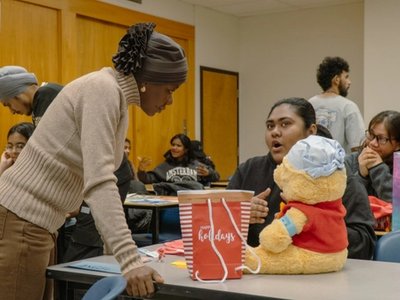
In the Personal Support Worker program, you will learn how to deliver compassionate daily care through hands‑on lab practice and clinical placements so you’re ready to support individuals across diverse healthcare settings.
CIP Code:51.2602
PGWP Eligible
This program meets the criteria to be Post-Graduation Work Permit (PGWP) eligible as defined by Immigration, Refugees and Citizenship Canada (IRCC).
Note: PGWP eligibility does not guarantee approval. IRCC assesses all applications individually.
Embark on a rewarding career in healthcare with Confederation College's Personal Support Worker (PSW) program. This comprehensive one-year program prepares you to provide essential care and support to individuals across various healthcare settings. As a PSW, you'll play a crucial role in enhancing the quality of life for clients, working closely with them in their homes, long-term care facilities, hospitals, and community care settings.
Our recently updated curriculum reflects the evolving role of PSWs in the healthcare field. You'll gain hands-on experience through in-person courses, labs, and clinical placements, ensuring you're well-prepared for the demands of this vital profession. With the increasing demand for PSWs across various healthcare sectors, graduates enjoy excellent job prospects and opportunities for career growth.
Note
Both domestic and international students are welcome to apply but must reside in Thunder Bay or surrounding regional campuses.
Top Highlights
High Demand: PSWs are in high demand across various healthcare settings, offering excellent job prospects.
Hands-On Experience: Gain practical skills through in-person courses, labs, and clinical placements.
Comprehensive Training: Learn to provide care for clients across the lifespan, including palliative and end-of-life care.
Interprofessional Collaboration: Develop skills to work effectively as part of a healthcare team.
Career Versatility: Prepare for roles in long-term care, home care, hospitals, and community settings.
Ideal Candidate Profile
Compassionate: Genuinely care about improving the well-being of others.
Patient: Able to work calmly and effectively with individuals who may have physical or cognitive challenges.
Physically Fit: Capable of assisting clients with mobility and daily living activities.
A Strong Communicator: Skilled at interacting with clients, families, and healthcare team members.
Adaptable: Comfortable working in various settings and handling diverse client needs.
Taking the PSW program through Distance Education gave me confidence, support, and lasting friendships. Moving to the Thunder Bay campus enriched my experience and confirmed I was in the right place.
The following 3 intakes share the same admission requirements:
Fall (0630)Winter (0620)Spring (0634)
Admission Requirements for Domestic Students
Ontario Secondary School Diploma (or equivalent) with courses from the College (C), University (U), University/College (U/C), or Open (O) preparation levels with Grade 12 English (C/U) Level.
or successful completion of the Mature Student Assessment.
or successful completion of the Canadian Adult Education Credential (CAEC) or General Education Development Test (GED), prior to May 2024.
or appropriate credits from the Academic and Career Entrance program (ACE).
There are many mandatory clinical requirements that must be completed prior to your orientation date (September for regular stream and January for compressed stream) PSW program. The process may take several months so beginning the process as soon as you have accepted your offer of admission is strongly advised to ensure you will be able to attend clinical placements.
Students are required to complete Immunizations, TB Skin Testing, First Aid & CPR, Criminal Record Check with Vulnerable Sector Screening, and Mask fit testing. There are costs associated with all of these health requirements and it is the responsibility of the student to pay for them.
You are asked to hand deliver, mail, email, or fax your completed Confidential Student Health Record to the Health Centre by the end of August. The fax number to the Health Centre is (807) 622-2646.
Any questions about the health requirements can be directed to the Health Centre at Confederation College – Thunder Bay campus at (807) 475-6169.
The Thunder Bay District Health Unit provides a by “appointment only” Immunization Clinic (this clinic is for Measles, Mumps, Rubella, and Tetanus Diphtheria). To make an appointment please call (807) 625-8346., Please remember to bring your yellow Immunization Status Card to the Immunization Clinic or contact the Health unit to obtain yours. For further information on the Immunization Clinic at the Thunder Bay District Health Unit(opens in new window).
Out of town students must obtain their immunization status from their local district.
All students are required to have two COVID-19 vaccines & one booster to be eligible for clinical placement. Flu shots are strongly encouraged by our clinical agencies.
Two Step TB Skin Testing is required for students who have not had a TB skin test in two years. If a student has had a Two Step TB Skin Test, a one step annual skin test is required.
Hepatitis B vaccination is required.
First Aid and CPR
Personal Support Worker students must provide proof of current Canadian certification in the Standard First Aid and CPR with Level C (BLS). CPR must be renewed yearly. Students must submit a photocopy of their clinical requirements on the first day of classes to their program designate.
Criminal Record Check (Vulnerable Sector Screen)
To be eligible for required clinical placements in the Personal Support Worker program, a student must not have been convicted of any criminal offense for which the student has not yet been pardoned. An unpardoned criminal record could result in the student not being able to participate in clinical placement courses and therefore prevent the student from graduating. A recent and valid criminal reference check (CRC) with a Vulnerable Sector Screen is therefore required to enable the student to progress through this program. If a student has a previous CRC with Vulnerable Sector screen it cannot be more than 6 months old at the time the student starts the program.
Note
The RCMP identified a means to enhance vulnerable sector checks to make the searches more rigorous. In the interest of public safety, the enhancements were quickly implemented to protect vulnerable members of society. As a result of the enhancement, a Vulnerable Sector Verification now requires the submission of fingerprints whenever the gender and date of birth of an applicant match to an existing pardoned sex offender record. This is not an accusation of criminality, but a requirement for a thorough verification to confirm identity and protect personal privacy.
Students are required to be fitted every 2 years for N95 Masks.
Uniform Requirements
Uniform scrubs must be solid burgundy in colour (no prints allowed).
A white sweater or short lab coat may be worn except when you are giving client care (hoodies and sweatshirts are not allowed).
An approved Confederation College and/or agency determined identification nametag(s) worn on the left side of the uniform at all times. One Confederation College name tag will be provided by the college.
An approved program patch worn on the left sleeve of the uniform at all times. This program patch can be purchased from the Confederation College bookstore (2 patches are recommended for purchase).
White, closed-toe & heal footwear that are safe, comfortable, clean and intact are required for clinical practice. Visible labelling must be minimal. A leather shoe or athletic type shoe is required for proper support.
Fieldwork/Placement Requirements
(must be done annually and submitted during orientation in September):
**Prior to entering any clinical setting in any semester you MUST HAVE all of the field requirements completed. Our clinical partners are requesting that every student obtain a blood serology for MMR (measles, mumps, rubella), Varicella, and Hepatitis B as a clinical requirement. You will be required to submit lab documentation proving immunity to Measles, Mumps, Rubella, Varicella, and Hepatitis B. If you are found not to have immunity, you must get booster vaccines. We appreciate the effort to now obtain further lab reports, and kindly ask that you submit this with all your other prerequisite documents to the Health Centre. We DO NOT accept original documents and ask that you copy your documents prior to visiting the health centre.
If all of your field requirements are not completed prior to ORIENTATION day in September, you jeopardize not being able to begin placement. To avoid disappointment, the process of getting your requirements completed should be done at the beginning of summer as many of these requirements will require booking appointments and a wait time is expected due to the high volume of students requiring the same requirements.
Current criminal reference check (CRC) with vulnerable sector screen-renewed yearly and prior to the start of September (a letter from the College will be required for Thunder Bay Regional Police in order to obtain this CRC)
First Aid and CPR – HCP (Health Care Provider) level--renewed yearly. Note that First Aid is current for 2 years.
Up-to-date immunization record with blood "serology" (see new requirements as above) is mandatory.
Two-step Tuberculosis (TB) test are required once only and then one-step for returning students prior to the start of September. The TB skin tests can be done by a walk in clinic or book an appointment through our Health Centre as soon as possible. There will be a charge for the TB skin testing. Book early! Note that the Thunder Bay District Health Unit DOES NOT provide TB skin testing. Please visit Ontario 211 for walk-in clinics that offer TB skin testing(opens in new window).
Mask Fit testing--a current fit test is required and is good for 2 years once this mask fit is done. However, should your facial shape change for some reason (ie weight gain or weight loss) you will need to have your mask fit test redone to ensure proper fit. Some places of employment offer their employees mask fit testing (check with your employer if they offer this service to you), or alternatively please book an appointment with the Health Centre as soon as possible for this testing. If you live in Thunder Bay, Superior Safety also offers this service. There is a charge for Mask Fit testing.
If you do not meet these admission requirements, we encourage you to consider the College Access or General Arts and Science Certificate or General Arts and Science Diploma programs orAcademic and Career Entrance program (ACE); if you successfully complete one of these programs, you will be eligible to apply to programs in the Community Services area.
Tuition & Fees
Placement Pass
Confederation College has partnered with Placement Pass to provide a dedicated portal to upload your medical and non-medical requirements to achieve placement clearance. This fee includes full support from the Placement Pass team to review your required documents, unlimited questions and support from a nurse-led team, access to orientation drop-in support sessions, secure document storage for 7 years. More information on Placement Pass will be provided through email for those students who are confirmed in the program.
Year 1 Cost: $65 + tax
Fees for Domestic StudentsProgram Code: 0630
Year 1
Total: $4,928.00
Fee Breakdown
Academic Fees
Total Tuition Fees:$2,740.00
College Service Fee:$863.00
Health Fee:$305.00
Health Record Fee:$40.00
Bus Fee:$332.00
$4,280.00
Program Fees
College Supplies:$45.00
Boots / Uniform:$150.00
Record Check, Seminars, Courses, First Aid, Medicals:$143.00
Exam Fees, Certifications, Licenses, Apprentice or Business Registration:$10.00
Books & Supplies:$300.00
$648.00
Fees for International StudentsProgram Code: 0630
Year 1
Total: $19,274.25
Fee Breakdown
Academic Fees
Total Tuition Fees:$15,614.00
College Service Fee:$863.00
Health Fee:$652.25
Health Record Fee:$40.00
Bus Fee:$332.00
$17,501.25
Program Fees
College Supplies:$45.00
Boots / Uniform:$150.00
Record Check, Seminars, Courses, First Aid, Medicals:$143.00
Exam Fees, Certifications, Licenses, Apprentice or Business Registration:$10.00
Books & Supplies:$300.00
$648.00
Ancillary Fees
Municipal Levy:$75.00
Student Fees:$300.00
Recovery Fee:$750.00
$1,125.00
Note
Please note that fees are estimated and are subject to change.
Fees shown on this page are for full-time students attending the main Thunder Bay campus for Fall 2026.
Costing for Regional Campuses & Distance Education Students:
If this program is available at Regional Campuses, or to Distance Education students, see the following links for costing information.
Starts in Fall and Winter. Program code 0630 / 0620.
Semester 1
PW 130
Anatomy & Physiology
42 hours
This course will provide the learner with a basic understanding of the human body. Understanding structure of the human body and how it relates to our functions lays a foundation for the learner to identify common diseases and conditions that will help them to provide the care that each client needs. This course will support the knowledge that is required during clinical placements.
This course introduces learners to the development and maintenance of professional nurse-client relationships. Learners examine caring, collaboration, people-centered care, professional boundaries, and therapeutic communication as foundations of nursing relationships. Through exploration of the College of Nurses of Ontario’s Professional Boundaries and Nurse-Client Relationships (2025) practice standard, learners examine trust, respect, empathy, professional intimacy, power, and the prevention of boundary violations and abuse of power. The course also examines the principles of the CNO's Code of Conduct (2026), which outlines nurses' professional accountabilities and the public's expectations of nursing practice. The RNAO Best Practice Guideline Transitions in Care and Services (2nd ed.) is integrated to support communication, collaboration, continuity of care, and safe transitions. This course supports the knowledge, skills, judgment, and professional attitudes required during clinical and simulation experiences throughout the Practical Nursing program.
The course is a combination of theory, laboratory skills, and simulations to support the role of the Personal Support Worker in a variety of health care settings. The foundation of this course focuses on the Personal Support Worker role in the care planning process and implementation. Through knowledge and skill acquisition, the Personal Support Worker student learns to execute basic and advance skills to support the personal support worker role and collaborate with clients, families and the interprofessional team. Skills learned in this course encompass infection prevention and control, safety, activities of daily living, urinary and bowel elimination, medications, nutrition, and vital signs. As these skills are developed, the Personal Support Worker will learn documentation and reporting of information to supervisors, regulated health care professionals, and the interprofessional team.
In this course, students will be introduced to academic writing styles with a thematic focus on current issues. This course will help students to express themselves clearly and correctly in written form. Students will critically analyse assigned readings and express their thoughts. The course will also focus on the development of an academic paper utilizing the APA style of documentation.
The course provides the learner with the foundational theoretical concepts to support the Personal Support Worker role across the life span and a variety of health care environments. Through the foundation of the nursing process, basic assessment, care planning process and documentation, the learner will develop their knowledge base of infection prevention and control, medical terminology, health promotion, disease and illness prevention, holistic health, cultural competence, nutrition, urinary and bowel elimination, common disorders, and basic pharmacology. This course will support the knowledge that is required throughout laboratory, simulation, and clinical scenarios in the Personal Support Worker program.
This course will examine the concepts of the Canadian health care system, legislation, consumer rights, including ethical and safe practice in relation to the role and scope of the Personal Support Worker. Thoughtful analysis of client centered care practices will be enhanced through discussions around health, wellness, diversity, and the social determinants of health. The course will provide an overview of the various opportunities for Personal Support Workers, offer insight into job preparedness, and explore concepts around time and stress management to enhance success within the classroom and the workplace.
This clinical experience will provided the learner with the opportunity to consolidate skills and knowledge obtained throughout the Personal Support Worker program. The learner is expected to safely integrate the care planning process through applying the knowledge and skills in the role of the Personal Support Worker. In collaboration with a Personal Support Worker preceptor in the clinical setting, the learner will gradually increase their practice to the graduate level and prepare to enter practice as a Personal Support Worker. This clinical experience will take place in a community or long-term care setting of the learner's choosing in consultation with the Program Coordinator.
This course will provide the learner with opportunities to examine the role of the personal support worker when caring for individuals across the life span. The learner will utilize and implement knowledge and fundamental skills for the personal support worker including gentle persuasive approach and behaviour management in the community and long term care settings. This course is evenly distributed between the community and long term setting to prepare a competent holistic personal support worker for all clinical settings. The learner is expected to safely integrate the care planning process through applying the role of the personal support worker in all past and present courses including skills acquired in the laboratory and simulation setting.
This course will focus on applying the Personal Support Worker (PSW) scope of practice to assisting and caring for clients and their families across the lifespan. The learner will apply the concepts of holistic and client centered care to clients and their families at various stages of growth. Using Gordon's Functional Framework (1994), the learner will gain an understanding of the unique needs of clients including physical, cognitive, emotional, spiritual, social, personality, and sexual needs at various stages across the lifespan. This course will support the knowledge that is required during clinical placements.
This course provides a more in-depth look at the nursing process, basic assessment and client care, which will help prepare the learner for their role as a member of an interprofessional team. Enhanced knowledge of various common disorders, communicable diseases, alterations in speech and language, hearing and vision impairments, mental health disorders, disorientation, delirium, and various forms of dementia will be covered. This course is also designed to support the knowledge and skills for clinical practice of PW 200.
In this course, students will be introduced to academic writing styles with a thematic focus on current issues. This course will help students to express themselves clearly and correctly in written form. Students will critically analyse assigned readings and express their thoughts. The course will also focus on the development of an academic paper utilizing the APA style of documentation.
This course introduces learners to the development and maintenance of professional nurse-client relationships. Learners examine caring, collaboration, people-centered care, professional boundaries, and therapeutic communication as foundations of nursing relationships. Through exploration of the College of Nurses of Ontario’s Professional Boundaries and Nurse-Client Relationships (2025) practice standard, learners examine trust, respect, empathy, professional intimacy, power, and the prevention of boundary violations and abuse of power. The course also examines the principles of the CNO's Code of Conduct (2026), which outlines nurses' professional accountabilities and the public's expectations of nursing practice. The RNAO Best Practice Guideline Transitions in Care and Services (2nd ed.) is integrated to support communication, collaboration, continuity of care, and safe transitions. This course supports the knowledge, skills, judgment, and professional attitudes required during clinical and simulation experiences throughout the Practical Nursing program.
The course is a combination of theory, laboratory skills, and simulations to support the role of the Personal Support Worker in a variety of health care settings. The foundation of this course focuses on the Personal Support Worker role in the care planning process and implementation. Through knowledge and skill acquisition, the Personal Support Worker student learns to execute basic and advance skills to support the personal support worker role and collaborate with clients, families and the interprofessional team. Skills learned in this course encompass infection prevention and control, safety, activities of daily living, urinary and bowel elimination, medications, nutrition, and vital signs. As these skills are developed, the Personal Support Worker will learn documentation and reporting of information to supervisors, regulated health care professionals, and the interprofessional team.
The course provides the learner with the foundational theoretical concepts to support the Personal Support Worker role across the life span and a variety of health care environments. Through the foundation of the nursing process, basic assessment, care planning process and documentation, the learner will develop their knowledge base of infection prevention and control, medical terminology, health promotion, disease and illness prevention, holistic health, cultural competence, nutrition, urinary and bowel elimination, common disorders, and basic pharmacology. This course will support the knowledge that is required throughout laboratory, simulation, and clinical scenarios in the Personal Support Worker program.
This course will examine the concepts of the Canadian health care system, legislation, consumer rights, including ethical and safe practice in relation to the role and scope of the Personal Support Worker. Thoughtful analysis of client centered care practices will be enhanced through discussions around health, wellness, diversity, and the social determinants of health. The course will provide an overview of the various opportunities for Personal Support Workers, offer insight into job preparedness, and explore concepts around time and stress management to enhance success within the classroom and the workplace.
This course will provide the learner with a basic understanding of the human body. Understanding structure of the human body and how it relates to our functions lays a foundation for the learner to identify common diseases and conditions that will help them to provide the care that each client needs. This course will support the knowledge that is required during clinical placements.
This course will provide the learner with opportunities to examine the role of the personal support worker when caring for individuals across the life span. The learner will utilize and implement knowledge and fundamental skills for the personal support worker including gentle persuasive approach and behaviour management in the community and long term care settings. This course is evenly distributed between the community and long term setting to prepare a competent holistic personal support worker for all clinical settings. The learner is expected to safely integrate the care planning process through applying the role of the personal support worker in all past and present courses including skills acquired in the laboratory and simulation setting.
This clinical experience will provided the learner with the opportunity to consolidate skills and knowledge obtained throughout the Personal Support Worker program. The learner is expected to safely integrate the care planning process through applying the knowledge and skills in the role of the Personal Support Worker. In collaboration with a Personal Support Worker preceptor in the clinical setting, the learner will gradually increase their practice to the graduate level and prepare to enter practice as a Personal Support Worker. This clinical experience will take place in a community or long-term care setting of the learner's choosing in consultation with the Program Coordinator.
This course provides a more in-depth look at the nursing process, basic assessment and client care, which will help prepare the learner for their role as a member of an interprofessional team. Enhanced knowledge of various common disorders, communicable diseases, alterations in speech and language, hearing and vision impairments, mental health disorders, disorientation, delirium, and various forms of dementia will be covered. This course is also designed to support the knowledge and skills for clinical practice of PW 200.
This course will focus on applying the Personal Support Worker (PSW) scope of practice to assisting and caring for clients and their families across the lifespan. The learner will apply the concepts of holistic and client centered care to clients and their families at various stages of growth. Using Gordon's Functional Framework (1994), the learner will gain an understanding of the unique needs of clients including physical, cognitive, emotional, spiritual, social, personality, and sexual needs at various stages across the lifespan. This course will support the knowledge that is required during clinical placements.
The graduate has reliably demonstrated the ability to:
Work within the personal support worker role in community, retirement homes, long-term care homes and/or hospital care settings in accordance with all applicable legislation and employer’s job description, policies, procedures and guidelines.
Act responsibly and be accountable for own actions while recognizing the boundaries of knowledge and skills within the personal support worker role that require collaboration with the clients, families, supervisors and/or other members of the interprofessional care/service team.
Participate as a member of the interprofessional care/service team and maintain collaborative working relationships in the provision of supportive care in community, retirement homes, long-term care homes and/or hospital care settings.
Provide client-centred and client-directed care that is based on ethical principles, sensitive to diverse client and family values, beliefs and needs, and which follows the direction of the plan of care/service plan.
Establish and maintain helping relationships with clients and their families reflecting open communication, professional boundaries, employer’s policies and adhering to confidentiality and privacy legislation.
Identify relevant client information using basic assessment and communication skills and report and document findings in accordance with the requirements of employer policies and procedures and all applicable legislation.
Promote and maintain a safe and comfortable environment for clients, their families, self and others including the implementation of infection prevention and control measures and emergency first aid procedures that are in keeping with the plan of care/service plan, employer policies and procedures, and all applicable legislation.
Assist clients across the lifespan with routine activities of daily living by applying basic knowledge of growth and development, common alterations in functioning, disease prevention, health promotion and maintenance, rehabilitation and restorative care.
Assist clients with medication in keeping with the direction of the plan of care/service plan and under the direction and monitoring of a regulated health professional or most accountable person and in accordance with all applicable legislation and employer’s policies.
Assist with household management tasks and instrumental activities of daily living in accordance with the plan of care/service plan and considering the preferences, comfort and safety of clients, families and significant others.
Assist clients who are caring for dependent individuals considering client and family choices, professional boundaries and the direction of the plan of care/service plan.
Identify and report situations of neglect, and potential, alleged or witnessed/actual incidents of abuse, and respond in accordance with all applicable legislation and employer’s policies and procedures.
Assist in the provision of culturally relevant palliative and end-of-life care to clients experiencing life threatening illness and to their families and significant others, from diagnosis through death and bereavement, and in accordance with clients’ choices and the plan of care/service plan.
Use identified approaches and best practices to support positive and safe behaviour in clients experiencing cognitive impairment, mental health challenges and/or responsive behaviours.
Clicking the button will take you to a detailed dashboard with up-to-date job data tailored to your program, including salary ranges, job titles, and projected demand.
Pathways
Confederation College offers a variety of articulation agreements designed to help you advance your education and career. Whether you're coming to us from another institution or planning your next steps after completing your program, our pathways make your transition seamless and effective.
Student Accessibility and Essential Program Requirements
Confederation College is committed to providing an accessible and inclusive learning environment and will provide reasonable accommodations to students with disabilities in accordance with the Ontario Human Rights Code, the Accessibility for Ontarians with Disabilities Act (AODA), and College policy.
Students who require accommodations are encouraged to engage with Student Accessibility Services and are responsible for initiating and participating in the accommodation process. Accommodation is a collaborative process involving the student, Student Accessibility Services, faculty, and the Academic School. Requests for accommodation are considered on an individual basis, and the College will work with students to identify reasonable accommodations that provide equitable access to learning while maintaining the integrity of the program.
Students are expected to demonstrate the essential knowledge, skills, professional behaviours, learning outcomes, and competencies required to successfully complete their program. While the manner in which these requirements are demonstrated may be accommodated where appropriate, the essential requirements themselves must still be achieved.
For programs involving laboratories, field work, clinical placements, aviation environments, trades training, equipment operation, simulations, community placements, or other environments where health and safety are critical, accommodations must also be consistent with applicable legislation, professional standards, licensing requirements, accreditation standards, and workplace safety obligations.
In some circumstances, a requested accommodation may not be reasonable or possible where it would:
Fundamentally alter an essential program requirement, competency, or learning outcome.
Compromise the health or safety of the student or others.
Conflict with provincial or federal legislation.
Conflict with the requirements of an external regulatory, licensing, accreditation, or professional body.
Prevent the student from demonstrating competencies required for safe and effective professional practice.
Note
Where a particular accommodation cannot be provided, the College will work collaboratively with the student to identify whether an alternative accommodation can appropriately address the student’s disability-related needs while maintaining essential program requirements.
We use cookies to analyze site traffic and measure how our advertising performs. By accepting, you consent to the use of analytics and advertising cookies. See our privacy policy.